A bottling from the ’70s based on the fact that the alcoholpercentage is mentioned, and the contents are too. Older bottlings don’t always have that information, and newer ones have a barcode. The Italian tax label on the cap stating ‘da litri 3/4’ is also a hint in that direction.
The label also states ‘old scotch whisky’ but since they don’t make it specific, that could mean anything. Generally, in that era, it would mean it’s about 5 to 10 years old.
The owner of the brand also built Lochnagar distillery in 1845, after which he quickly got the ‘royal’ warrant to go with that name, due to his neighbours being the royal family at Balmoral Estate.
The brand was swallowed up by what eventually became Diageo, and dropped in the 1980 or 1990s, after which the trademark elapsed (info from ScotchWhisky.com).
Since the brand also consisted of a ‘Gold Cap’ and a ‘Deluxe 12 years old’, I think this one isn’t even 10 years old, but I guess we’ll never know for sure.
Sniff: There’s quite a lot of Old Bottle Effect (OBE) on the nose, with hints rusty screwcaps on top of coppery spirit. There’s wet barley, tea, old oak and cracked leather. Hints of autumn leaves too.
Sip: The arrival on the palate is rather gentle, but not thin. Apple and pear juice, simple syrup some grass and a whiff of oak.
Swallow: The finish quickly returns to the massive notes of OBE with hints of overaged beer, chocolatey and yeasty. Barley and rusty tins.
I’m a bit of a sucker for these OBE notes, and they’re quite pronounced here. The combination of a rather rich whisky behind it all makes it work quite well. I expect this whisky to contain a rather high proportion of malt, made with a very old production process. In short, I quite like this!
87/100
You’ll have to look at auctions to find stuff like this, of course. Prices can vary wildly.
Together with the Burnside from two weeks ago, this was another bottling by Archives that flew to the other end of the world to be distributed and happily drank. Not to Canada, but to Japan, this time.
I was not exactly warned about this one, because it is supposed to have a rather unique profile. However, people kept mentioning that, which made me all the more curious. I think Archives, when selecting a cask with a bit of a weird profile, can really shine. I still have to review a Bruichladdich from a year or two ago that’ quite weird indeed.
Dufftown Distillery is not one you see a lot of. Not from official channels, and not from independent bottlers either. I don’t really know why that is, but it does make the ones you can find all the more interesting. At least, that’s what you’re hoping for. It could also be the case that the output of the distillery is shit and people don’t want it…
Image from Whiskybase
Anyway, let’s just dive in.
Sniff: There’s quite some barley and a very soft, pulpy sort of oak. Some baked apples, but no baking spices to go with it. It’s rather weighty, but there’s a whiff of cream and maybe even something more plant like. A heavy kind of flowery scent. Sugared rhubarb too. Brittle autumn leaves, and plywood. Burnt toast, and browned butter.
Sip: The palate is dry, which continues nicely from the autumn leaves and plywood. There’s a bitter note of walnut shells, and quite a lot of oak. Somehow, something that reminds me of succulents, especially the texture. Quite plant like, with (somehow) cactus, green malt and oak too. Something green in the background too.
Swallow: The finish is consistent, but does bring some other flavors to the front too. It’s slightly more sweet, with cinnamon and baked apple. Toasted oak, dry roasted peanuts.
It’s a bit strange indeed. Not as strange as some, but it doesn’t really fit the mold of what you would expect from any random Speyside whisky either. The combination of autumnal scents and flavors (leaves, baked apples) with the spring (plants, flowers) driven stuff is interesting to say the least.
These whiskies by French bottler Michel Couvreur tend to be a love-it-or-hate-it thing. I am in the first camp, although that absolutely doesn’t go for anything they produce. I generally don’t get too thrilled by 4 year old grain whisky, so to say.
A bit of a problem for the bottler is the price of each bottle. Some are sort of affordable, but when things start having an age statement of 18 or more, prices sky-rocket, and availability plummets.
What I did love was visiting the bottler back in the summer of 2014. I was toured around the place by Jean-Arnaud Frantzen and shown the caves (both in the French and English sense) with various awesome whiskies maturing there. I remember trying 65 year old Sherry, and a 14 year old Highland Park which was one of the best I’ve ever had from the distillery.
A common misconception with this bottler is that a lot of their whisky is from Glen Garioch. It does say Old Meldrum on the label, but they have deals with several other distilleries for getting spirit, which they mature themselves in France. Hence the vague ‘product of Europe’ on the label.
Anyway, this one says ‘peaty malt whisky’ on the label, which suggests that there’s at least some Laphroaig in there, because that’s one of the other distilleries they (used to) get spirit from. Of course, my most recent information is eight years old, so things might have changed. However, this bottling is from before then…
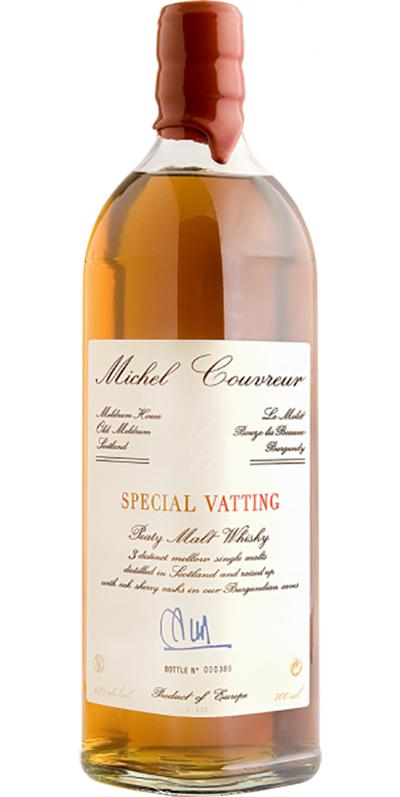
What it doesn’t say on the label is ‘single’. It’s a blend of three different single malts from Scotland. Matured in Burgundy (which also means it couldn’t be ‘scotch single malt’ anymore), in their own sherry casks. Another thing I really like. They get spirit from distilleries, and use their own casks to mature it.
Image from Whiskybase
Sniff: There is a lot of spicy sherry, with not so much sweetness. The dried fruits are there, but they are kept in check by the spices and the wood. There’s a bit of earthy peat, which smells different than your typical Islay style. It’s not even very old fashioned, but it just stays very close to the sherry that was in the casks before. Rather yeasty with some oloroso style funkiness.
Sip: The palate brings a nice kick. It’s not overly strong, but just strong enough to deliver a little bit of bite, in combination with the spices. A rather strong bitter note with date stones and plum stones, in combination with the sherry yeastiness. Dry with sawdust, tree bark, cinnamon and clove. There’s some sweetness behind it, but not a lot.
Swallow: The finish is largely the same as the palate. The bitterness wanes a little bit, but so does the sweetness. This way the baking spices, the oak and the light funky notes linger longest.
I can imagine this not scoring too highly since it’s not an easy whisky. It is, however, something I really like. I tend to enjoy bitter notes in whisky, but this one combines it nicely with the spicy sherry and a whiff of dried fruits. Good stuff (for me).
But that peaty note that’s mentioned is very, very minor.
With Van Wees being the importer of Benromach, and the massive popularity of the brand, there just had to be a private cask for Van Wees’ 100th birthday. They opted for a 10 year old at cask strength, and knowing Benromach it’s a strong one. Getting to know Van Wees more and more with these casks, it seems to be expected for it to be a sherry cask too. Just like the Strathisla and Miltonduff.
I am actually a bit surprised this is still available. Of course it’s a single cask just for The Netherlands, but they tend to go a lot faster, in my experience. Might there be a bit of Benromach product fatigue? There have been quite a few releases over the last couple of years.
Anyway, tasting notes to something you might actually get your hands on at the time of writing! It’s not that often that that happens.
Image from Whiskybase
Sniff: Funky, fruity, quite some oak. Peaches and matches. Very typical for Benromach. Hessian and dried apple, some oak and a bit of baking spices. Rich, malted barley and a whiff of chocolate.
Sip: A very rich palate, with a fierce chili heat and hessian dryness. Baking spices, dried peach, sawdust, cinnamon.
Swallow: Rather long, but quite mellow compared to the palate. There’s some malty sweetness, combined with some dried peach and apple.
If you expect this to be something extraordinary in the literal sense of the word, you’ll be disappointed. This is exactly what you would expect of a ten year old Benromach from a sherry cask.
It’s rather good, and I love that the distillery is so loyal to their style. Contrary to some other brands that cater to a lot of styles with their whiskies, Benromach does one things and it does it well. The various casks finishes, age statements and editions out there are all variations within a rather narrow bandwidth. Luckily, it’s a very good bandwidth.
The funkiness works well for me, to the surprise of approximately no one, as does the combination of a not so intense sherry cask with a great spirit. Very well picked. Although, I might have to get back with a drop of water, because it does drink quite hot.
These French spirits seem on the up and up, on my blog. I know last year saw more French stuff reviewed than ever before. And although I already quite liked Armagnac, I never expected the depth and breadth of Cognac to be such as it is.
At least, I love those Cognacs from whisky bottlers. I still don’t have much faith in those ‘old fashioned’ Cognacs, but I might be proven wrong. I’ll try to do a bit of a deep dive later this year.
Back to the post at hand.
A little while ago I got contacted by Aurélien Touzé of Authentic Spirits, to see if I was interested in reviewing a couple of spirits that are on the market under that brand’s name. At the moment, according to the website, there are two different spirits available, both of which are reviewed below.
Authentic Spirits is a very new bottler, launched in December of last year (although the label says MMXX). So far these two bottlings are the ones that are available, but I expect there will be more to come shortly.
The first spirit reviewed is a Fine de Bourgogne, the second is an Armagnac. That first category I had to look up. I had heard of Marc de Bourgogne (made of pressed grape remains after the wine making is done). French Grappa, so to say. Of course, it doesn’t only come from Bourgogne, so there’s ‘Fine de…’ of various regions.
Fine de <enter region here> is when the wine and lees are distilled and matured. So not the grape stems, seeds, pulp, skins like with Marc, but the actual wine. Interestingly, the ‘fine’ category is defined more by the process than by the ingredients. Fine de Bretagne, for example, is when apple cider is distilled, so I guess this could technically apply to more fruits.
Anyway, the ones I was about the review!
Fine de Bourgogne de Gevrey-Chambertin 9, 2007-2016, 40%, Domaine Pierre Naigeon
Image from Authentic Spirits
Sniff: Surprisingly woody with lots of grape driven flavors. White grapes, some vanilla and a bit of a woody acidity. Some coffee beans and spices too.
Sip: The palate is very light with oak and wood spices. A hint of grapeseed bitterness and white pepper. There’s star fruit, and that acidity I had on the nose.
Swallow: The finish is slightly richer, and a bit more fruity. More grapes, hints of pear and dragonfruit. Some oak but still very gentle.
With this being my first ever ‘fine de Bourgogne’, I’m not entirely sure what to make of it. I’m surprised by how much oak this already has at nine years old, but it does feel a little bit light due to the 40%.
Compared to other spirits, I’d say this would score some 84/100.
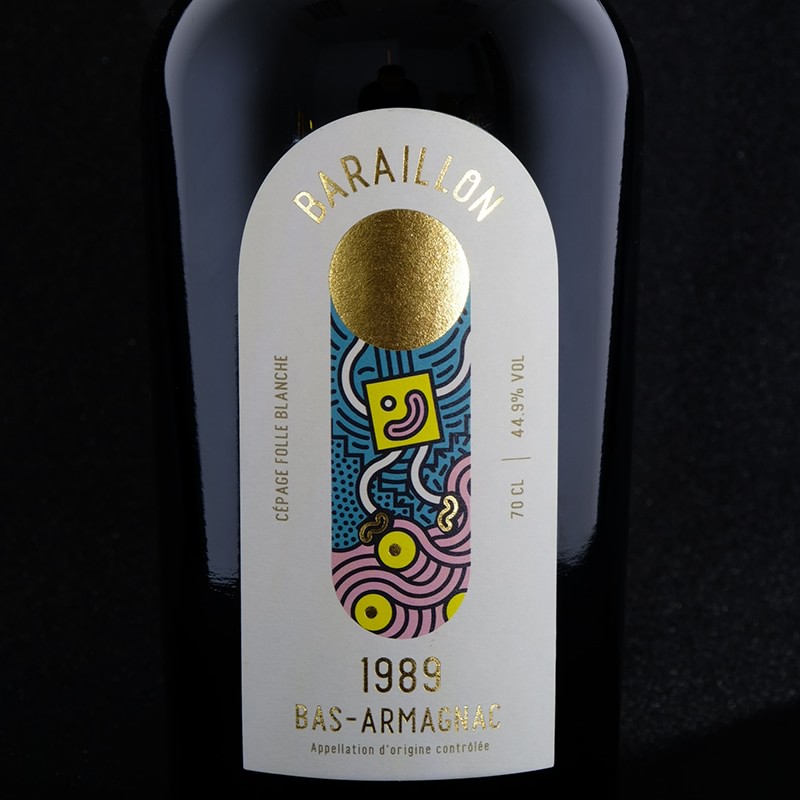
Armagnac Domaine de Baraillon 32, 1989-2021, Folle Blanche, 44.9%
Image from Authentic Spirits
Sniff: This one starts with a lot of oak on the nose, rather tannic even. Astringent with grape skins, grape seeds, hazelnuts and white almonds.
Sip: The palate again is rather woody, dry too. A bit of a peppery bite, with a hint of almond bitterness and grapeseed. Grapes, baked grapes, raisins and some mango too.
Swallow: The most typical ‘Armagnac’ part is on the finish, with richer grape brandy notes and more integrated oakiness. Quite earthy, compared to the palate.
I’m quite surprised by this one. Generally with Armagnac over the age of, say, 25, it’s all wood that you get. This was my biggest peeve in the Armagnac bottle-share I did some years ago, but that doesn’t happen here. Sure, there’s notes of oak, but the brandy itself is quite pronounced as well. There’s lots of fruit and other notes.
I guess, with me having all the wrong expectations, I should think of this in a different light than I initially did. It’s not an overly smooth Armagnac, but that does give you something to return to, which is a very good thing. I like the slight bitter notes too, although I did find it quite astringent on the nose.
It’s always nice to find background information to certain bottlings. Like this label stating ‘oakwood casks’, contrary to all kinds of whisky that was matured in other kinds of wood.
Oh, wait. That doesn’t exist in the world of Scotch…
Anyway, Mannochmore isn’t one of those high roller distilleries in Speyside. Mostly used for blending purposes by Diageo, it is perhaps most well known for the Loch Dhu whisky, which consistently scores incredibly low, everywhere. The blended whiskies it is mostly used in, are Johnnie Walker and Haig.
Until that Fable release a couple of months ago, I don’t think I ever owned a bottle of Mannochmore, and apparently have never been tempted to buy one. Even though I’ve been drinking whisky with fervor for the last decade or two, there are quite some distilleries that have never made it to my shelf in their 70cl representation.
Image from Whiskybase
This one, apart from a sizeable lack of information on the label, is an oldie of which I got a samples from Tom T., a while ago. It was about time I wrote my notes for it.
Sniff: The nose starts rather crisp with notes of fresh lemon, as well as candied lemon. There is barley and freshly cut grass. With a bit of time it gets a bit more rich, with notes of barley and some porridge. Some vanilla and oak too.
Sip: The palate is intense, which isn’t too suprising with an ABV of slightly over 60%. Not awfully hot, though. Quite fruity with lemon, tangerine and apple. Fresh barley, vanilla, biscuits and tinned pineapple.
Swallow: The finish is a bit more rich again, with more focus on oak and barley than before. Still, there’s a lot of yellow fruit with apple, pineapple, lemon.
With Mannochmore being rather under represented on this here blog, I have no idea whether or not this whisky is typical for the distillery and era of production. If so, I might have to look into getting some old Mannochmore. If not, who knows what will happen.
At least this one suits me very well. I like that there are notes of the barley that went into the whisky, the cask that contained it, but also lots of fruity notes that were not atypical for 70s distillate. Very good stuff indeed!
I have a sample of this Lagavulin coming in too, but Tom wanted to write his findings as well. Who am I to deny him his podium!
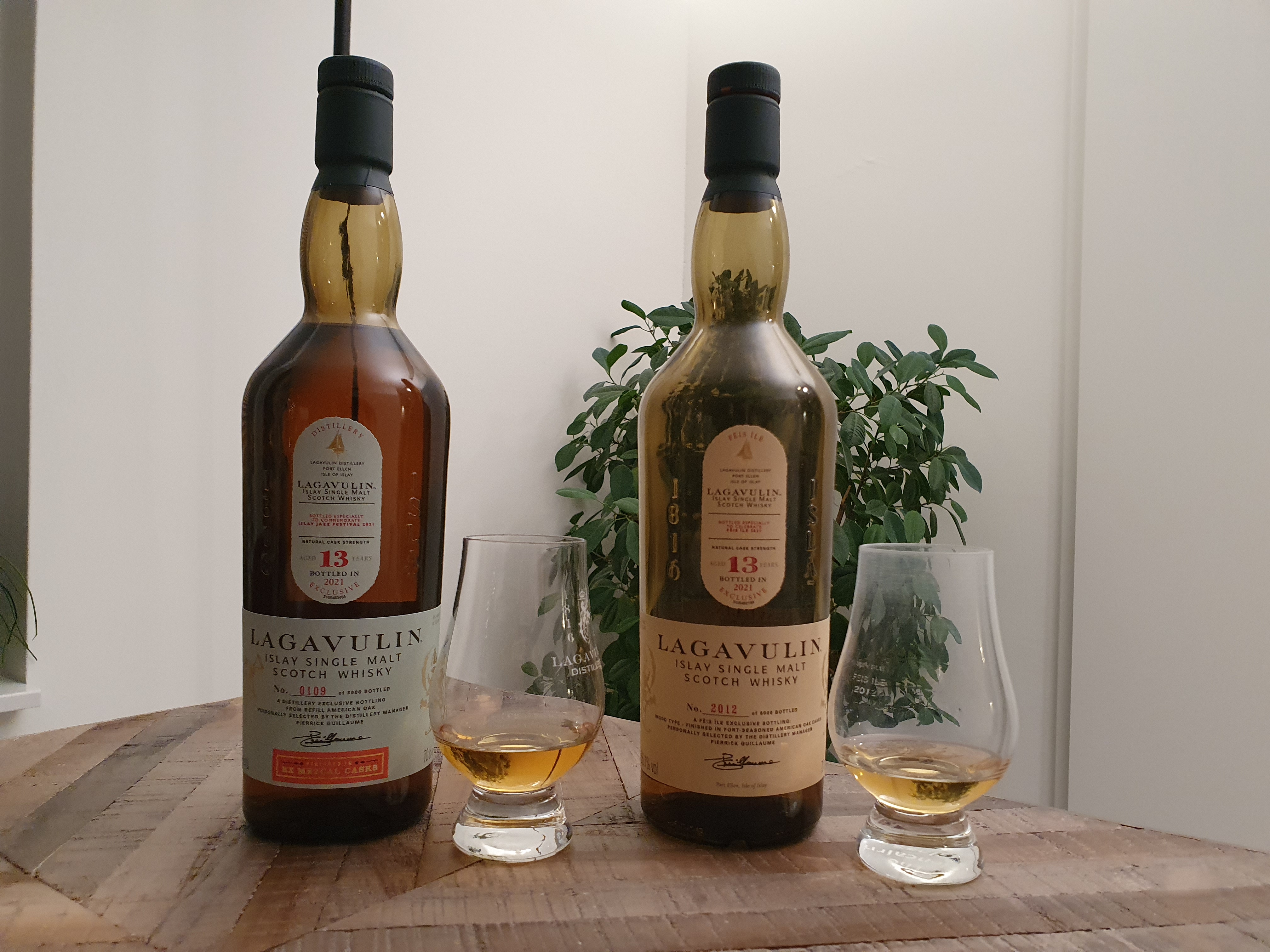
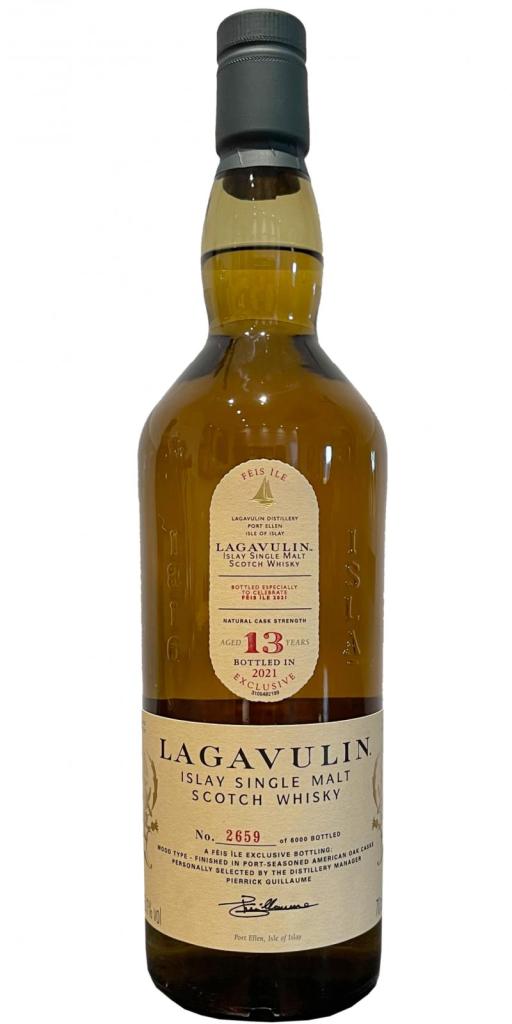
Pierrick Guillaume is the current Distillery Manager of Lagavulin, after doing some years of wonder at Caol Ila Distillery. Following in the footsteps of Georgie Crawford it must have been an intimidating task to steer Lagavulin into new waters. After all, the core range is at its peak, and the specials are not too shabby either. Georgie’s finest hour must have been the bicentennial celebration of Lagavulin back in 2016. Where do we go from there? Into the direction of exotic experimentation, it seems. The year 2021 brought us two 13 Years Old matured Lagavulin in relatively small batches. Feis Ile, not celebrated since Covid-2019 made that impossible, brought forth a Lagavulin finished in Port-seasoned American oak casks. Even more surprising was the Jazz Festival celebratory bottle with a finish in ex-Mezcal casks. The use of Mezcal casks is only allowed since a short time in the Scotch whisky industry. Today we taste the both of them!
Lagavulin 13, Mezcal cask finish, 54,8% – OB for the Islay Jazz Festival 2021
Image from Whiskybase
Starting with the Jazz Festival 2021 bottle, because of a slightly lower ABV. Now, I do not know how long the whisky was finished for. Could have been a day, could have been since mid-2019 when the new rules came into effect, which made maturing in casks that previously held Mezcal or Tequila possible for producers. Exciting new times!
Sniff: An unexpectedly recognizable Lagavulin, I must say. A delicious smokiness rises from the glass after letting it breathe for an hour. Woodsmoke, damp forest, charcoal on a steak that was prepared to perfection on the barbecue. Mighty impressive and most of all: extremely balanced. In the background a little exotic note, that I link to the Mezcal. It is subtle but it is there and adds depth.
Sip: A sour foil envelops the heart of a more traditional Lagavulin style. The distillate speaks volumes while there is indoubtably an extra layer. The integration is marvelous, I have to say. The taste has all the raw power of a single cask, but is balanced by the batch creation of just 3000 bottles. On a few more sips the integration seems to have progressed into a very meaty character. The Mortlach of Islay? The Beast of Port Ellen? It truly is.
Swallow: A continuation of the taste, a sour note always present without being a bother. A nice warm smoke lingers for ages. The finish is clean as a whistle, the Mezcal influence lifting the clean, peaty character of Lagavulin that we know and love (from the yearly Special Release 12 yo) to new heights.
Conclusion: I went in with an open mind and it got blown. A truly magnificent creation and a delight to see the Mezcal casks getting along so well with this powerhouse peat legend of a distillate. I added a drop of water so you don’t have to, it really doesn’t need it. For people who like their Lagavulin clean, this time with an extra layer.
92/100
Lagavulin 13, High Char Port Cask finish, 56,1% – OB for Feis Ile 2021
Image from Whiskybase
A bigger batch of 6000 bottles for Feis Ile 2021. Upon arrival I was surprised the color in the glass did not come close to being pink, so the Port-seasoning must have been quick, and the finish itself perhaps also. I secretly hoped for a more all-out Port influence. After all, if you go Port, why not?
Sniff: Now finally I pick up the influence of the Port, after experiencing the very clean Mezcal Laga. There is a outspoken dirty character that reminds me faintly of candy at the carnival but also the smell of berry genever mixed with 7Up barf after a long night at the pub. Thrown up in the stables I suppose. Excuse my explicit description. Never switch to mixed drinks after a load of beer. Ah, to be young again. Back to the Lagavulin, I notice the characteristic peat is hidden away under the sweet layer.
Sip: The sweetness comes out but does not manage to take away the sharpness and rough edges of the peat. I have been sipping this Lagavulin since the Summer and I can’t say anything else than that we are unable to become friendly with each other. It feels raw, like razors on the tongue, unpolished, and it made me very skeptical of the Mezcal variation initially.
Swallow: Not nice. With water more smooth but it looses its punch. More miss than hit with this one.
Conclusion: This might be one of the least favorite Lagavulin expressions I ever encountered. The idea of it does not make a lot of sense, and the execution leaves a lot to be desired. The distillate itself has enough backbone to withstand it going lower, but this felt unnecessary. The Mezcal has resurrected the experimentation. Next year Tequila and Calvados finishes?
85/100
About Tom van Engelen
I’m a writer in a variety of fields and have a soft spot for whisky, mainly malt, mainly from Scotland. In other times I enjoyed a stint as editor-in-chief of one of the first whisky magazines in the world. When not sipping a good glass I like to write some more, read, watch 007 movies or listen Bowie music. I’m engaged to Dasha, I have a sweet daughter and I live somewhere between the big rivers in the middle of The Netherlands.
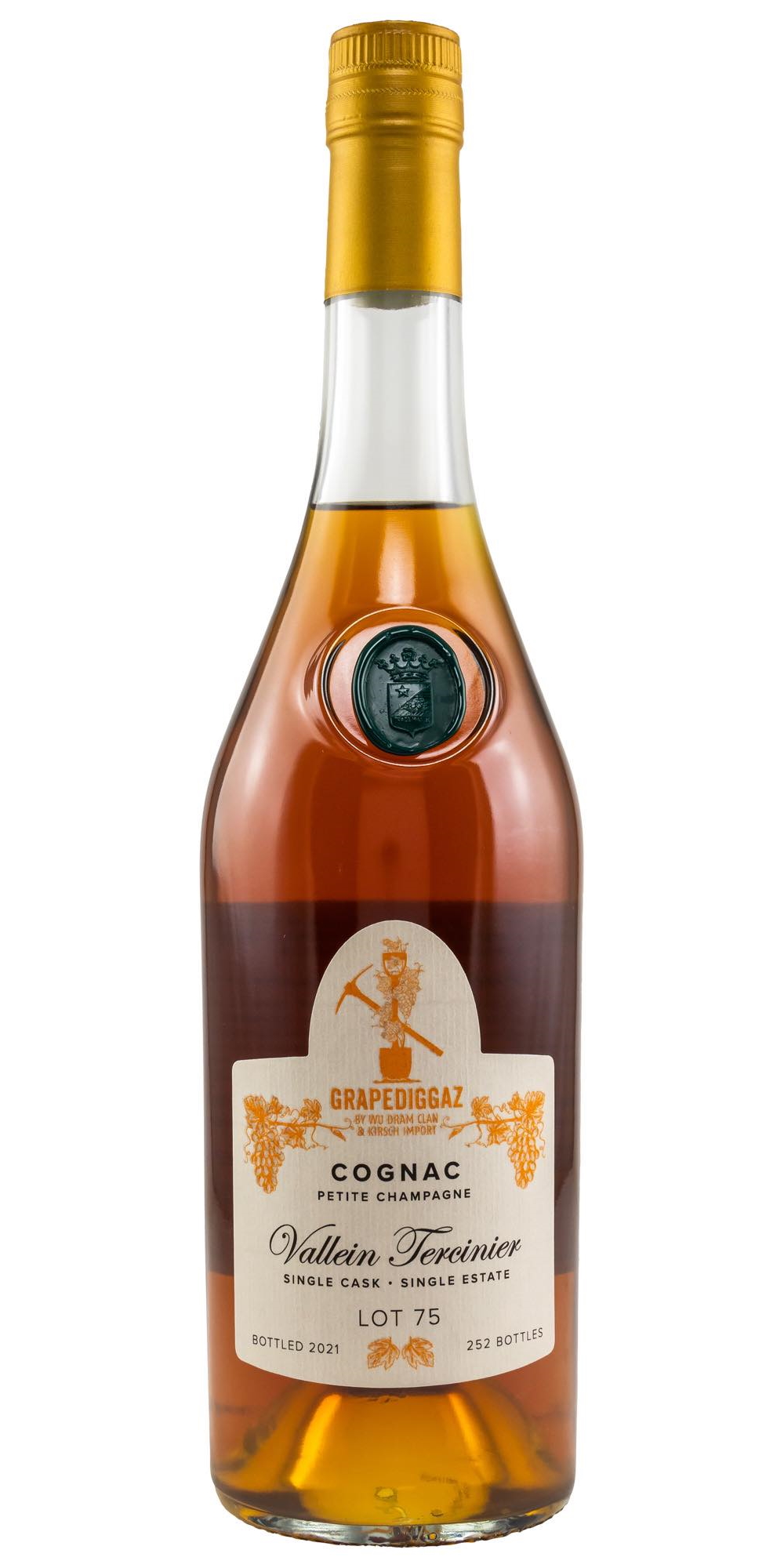
With Wu Dram Clan and Kirsch Import getting a bit of an increasing focus on Cognac, it’s not too surprising there’s a separate brand for these bottlings. And, with Grapediggaz being that brand, they’ve chosen a rather epic name, if I may say so.
What I’ve seen so far from Wu Dram Clan, and now Grapediggaz they’re in, what I call, ‘whisky drinker’s Cognac’. These Kirsch bottlings from a while ago, the 1967 for Wu Dram Clan, that 1967 one for Wu Dram Clan and Passie voor Whisky (not yet reviewed) and this one are definitely Cognac, but in their specific style they’re not the smooth, oak focused drink that I know from my father in law.
The style is a little bit more sharp, a bit more rustic and rugged, and has more of a bite than ‘old fashioned’ Cognac. In short, I love the stuff.
The premise is to make Cognac, and Armagnac later on, more available to whisky drinkers. With a plan to release a new cask every few months and bottling it as naturally as possible. No sugar, no boisé, no caramel.
On a personal note: A few years ago I dabbled in Armagnac, Mezcal and last year seems to have been the year of rum. I somehow expect to have a bit more of a focus on Cognac this time around. No idea how that has kicked off…
Today sees the release of the first Grapediggaz bottling. A Lot 75 Vallein-Tercinier from the Petite Champagne subregion of the Cognac area in France. Bottled at 51.7% (also very un-Cognac-like) it brings a bit of punch, even at some 45 years of age. These ‘lot 75’ statements mean that it was from the 1975 vintage.
Sniff: This is rather timid on the nose. There’s soft notes of pound cake although I guess that’s more a whiff of vanilla than anything else. A hint of milk-chocolate, and some ‘old wine’ notes too. The age is noticeable, and the ABV is nowhere to be found on the nose.
Sip: The palate gives us dry oak, mediterranean fruit like grapes and candied orange, some charred mango, with the fruit sugar being caramelized. Hot chocolate with a buttery note.
Swallow: The finish continues with the buttery caramel notes, together with some charred tropical fruits. Hot chocolate, oak, vanilla.
Once again, it’s not a very typical Cognac, although the smoothness on the nose was rather surprising. The notes of chocolate and fruit work very well together and make this dangerously drinkable!
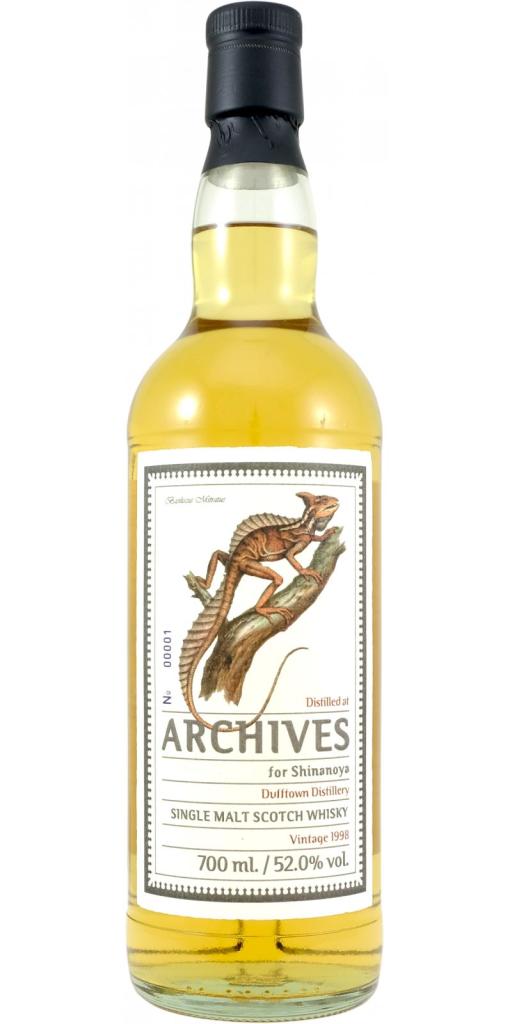
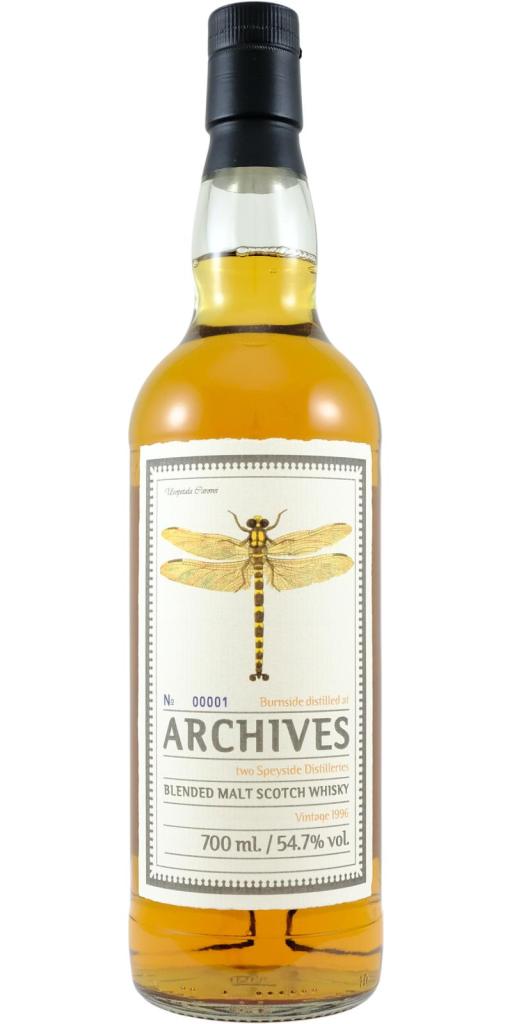
And not just any Archives, but a bottling for the Canadian market. It’s not labeled with a Samoan fish, which seems to be the main go-to style. This one has a British dragonfly on the label.
Image from Whiskybase
Burnside then. This isn’t a distillery and is usually used for tea-spooned Balvenie. This means that it, for tasting purposes, can be regarded as an independent Balvenie. However, for legal purposes, there’s a tea spoon of Glenfiddich added to it, which makes it neither a Balvenie nor a Single Malt, officially.
Interestingly, the whisky industry has more or less agreed upon the names for tea-spooned malts like this. Burnside is Balvenie, Westport is Glenmorangie, Wardhead is Glenfiddich. There probably are more that I can’t remember at the moment.
Sniff: Brioche and honey, a surprisingly sweet single malt. Toast with apricot jam and, somehow, pine cones.
Sip: Gentle without being weak. There’s a tinge of a dry, oaky bite. Definitely some sweeter oak notes, with the apricots from before. Not the toast though. Honey sweetness, pine and resin, with a syrupy mouthfeel.
Swallow: The finish brings a different kind of wood. More like old casks, some vanilla and dunnage warehouses. Still that pine and honey combination.
Generally I don’t like too sweet whiskies, but this one… damn. Perfectly balanced between all kinds of flavors, with that honey sweetness to bring it all together.
There’s virtually no information in the title of this post. No ABV, no bottler, no specific vintage or year of bottling. None of that information is available on the label of the bottle.
What I do know is that this stuff is ridiculously old. Bottled some 70 years ago according to Whiskybase, and distilled 20 years before that, it’s almost a shame to drink it before it’s at least a hundred years ago it was created. But then again, I’m not going to sit on this for a decade and have the sample go bad on me.
To the whisky peeps who know me personally, it will come as no surprise this sample comes from MvZ.
Actual age
There is some discussion on how old this actually is. On the label it doesn’t say ‘DEW’ after Tullamore, and the brand has consistently done so since 1932. This would mean that this was bottled in or before 1932, and that would mean it is distilled in 1912, at the latest.
Immediately this makes my initial point of it just being shy of a century old moot, since now it was distilled ONE HUNDRED AND TEN YEARS AGO (Intentional online shouting).
Distilled before the first world war. Before the Spanish Flue. The year Titanic sank or before that. Older than so many things. Older even than the country it comes from. The Republic of Ireland was proclaimed at least four years after this was distilled.
The distillery it comes from closed down in 1954, so even for Irish standards this is an early closure. The brand never really went away, and has been made at John Powers since the 1960. This happened mostly because the whisky used in the ‘Irish Mist’ liqueur was running out.
The history of the distillery makes the expectation of this whisky being distilled a lot earlier than the 1930s (which is on Whiskybase) likely, because the place was closed between 1925 and 1938. This closure happened because of the rise of blended scotch whisky, prohibition (and therefore having no legal customers) and the Anglo-Irish Trade War.
Tasting notes
Image from Whiskybase
Sniff: There’s a lot of OBE (Old Bottle Effect) which always makes a whisky smell like rusty iron. Luckily it is far from all-encompassing. Hints of sweet barley and some vanilla. Other baking spices like clove and cinnamon. It’s very ‘Irish’ in that old pot still style, with green malt as well as malted barley. Quite a lot of gentle fruits too, very different to how fruity whisky tastes nowadays.
Sip: The palate is rather light, with a little bit of a grainy dryness. Again, much like Irish whisky, with malted and unmalted barley. It does take a minute of ‘swimming’ before it starts to reveal its full potential, initially it seems a bit flat. However, if you give it that minute it becomes a glorious combination of barley, wood, baking spices and fruit. There’s a whiff of OBE still, but that only adds a layer of ‘interestingness’. Dry grape seeds, tropical fruits without being typically sweet.
Swallow: The finish is rather similar to the palate. Not overly long, but in style it veers a bit more towards Single Malt than I’d expect. So, less ‘fresh barley’ like.
Honestly, I was a bit skeptical when I poured this sample. Whisky of this age is more often than not completely destroyed by being in a bottle for too long, and not being properly stored. Now I’ve seen images of the bottle itself I could have guessed it to be in rather good condition since not a lot has evaporated.
This is stunning stuff. If it was a Marvel comic, it would have been called ‘unobtainium’, but I’m very thankful for having been able to try this.
The age shows nicely in the whisky and has given it time to coax out the fruity flavors that combine so well with the spirit. I also love that it is very unlike modern whisky in any category. There’s far less cask influence than there would be now, and therefore the barley and greenmalt get a bit of a spotlight. Gorgeous, gorgeous stuff.









 Malt Fascination