Hot on the heels of the Maltstock bottling, Archives released a Milk & Honey as well. Not from a mix of casks, but from a single bourbon barrel. What’s not to like? Well, the rocket fuel ABV, maybe?
While I didn’t shy away from high ABVs a couple of years ago, I tend to prefer lower cask strengths nowadays. With my prefered ABV being somewhere in the high fourties (let’s say 48 to 50%), this is a lot more. A lot more than anything I have in my collection, I think.
Of course, high ABVs like this aren’t too rare in the high end bourbon section, with Buffalo Trace’s George T. Stagg regularly crossing the 70% line. Interestingly, this indicated once again that very dry climates make the alcohol percentage go up instead of down with the angel’s share taking more water, in comparison to the much wetter climate in Scotland.
Image from Whiskybase
Anyway, a review of this bottling that came out only two days ago!
Sniff: This might not be a good choice to have as a first whisky of the day. The nose bites. It’s super sharp and I really need time to warm up… There’s a lot of wood influenced sweetness, not unlike the Maltstock bottling. Some roasted bell peppers, pork marinade, grilled mango. Lots of chipotle peppers too.
Sip: The palate is expectedly hot too, with roasted bell peppers, chipotle and sawdust. A second sip is slightly more welcoming, but still dry and hot. Dried spices, smoked paprika (in heat, not in smokiness). Oak, pineapple skin, grilled pineapple and dried mango. Some ginger too.
Swallow: The finish is surprisingly gentle, but only compared to the heat on the first sip. It’s still dry as hell, but the heat is quite diminished. A long finished with the spiciness lingering longest. There’s some fruitiness here too, similar to the palate.
While it has some similarities to the Maltstock bottling, there is less sweetness going on due to not having any rum casks in the mix. Also, the flavor profile is not all over the place due to the total randomness of casks being used. While that might sound like less complexity, it does make for a tasting experience in which it is slightly easier to indicate flavors and aromas. All in all, a very solid dram from the Israeli distillers, even though the heat is slightly challenging.
I am very bad at reading things in time. Or reviewing things in time, but that’s another discussion.
I knew this bottle was coming out due to the Wu Dram Clan making some noise about it on Social Media. Of course, I immediately decided I’d keep an eye on Passie voor Whisky’s website, since they’re the go-to dealer for bottles from the Clan.
What I should have done is read the whole announcement post and actually see that this would be available only to people who subscribe to their newsletter. Also, it was a very strange way of finding out I hadn’t subscribed to said newsletter.
So, apart from getting a sample in for reviewing, my window of actually getting my hands on a bottle had passed before I even realized what I had to do to buy one. A shame, as you’ll soon read.
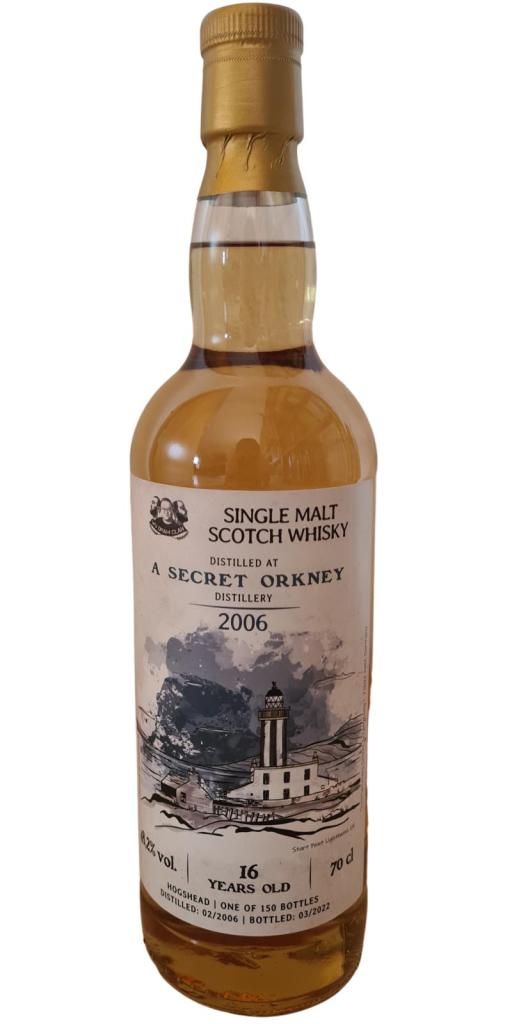
To people frequenting this blog, or those who know me personally, it may not be a surprise that I am quite partial to Highland Park. Unfortunately, their official bottlings of high enough quality are out of my league, but those Secret Orkneys are quite rampant nowadays.
Of course, the whisky community has decided that all Secret Orkneys are Highland Park, since Scapa is hardly available in its regular form, let alone as indie bottlings.
Image from Whiskybase
Let’s dive in!
Sniff: There’s a thick and sweet smokyness to it, like smoked honey. Heather and some oak too. There’s a sea shell salinity to it as well. It’s very Highland Park-y, but everything is amped up to 11. Very intense, but without the boozy heat.
Sip: White pepper and sawdust at first. It mellows a bit to show hay, heather, honey. There’s smoke, but not a lot. The same goes for salinity. Wood, a minor note of tar.
Swallow: The finish shows similar note to the palate, but is different in regard to balance. More white oak, more hay. Similar for heather and salinity.
It’s very hard not to compare this to the recent Whisky Nerds bottling (which IS still available), even though they are quite different. The ‘Nerds one, while still being very Highland Park-y, was a bit more cask driven, and showed more notes of fruit.
This one is more ‘terroir’ driven, with the whisky showing more of what is the situation on Orkney. Heather, coastal salinity, some smoke. Things like that.
I regret not getting a bottle even more after tasting it, since this is as gorgeous as the Whisky Nerds bottling. Very different, but equally good.
So, no further info in the title, because it would have gotten too long:
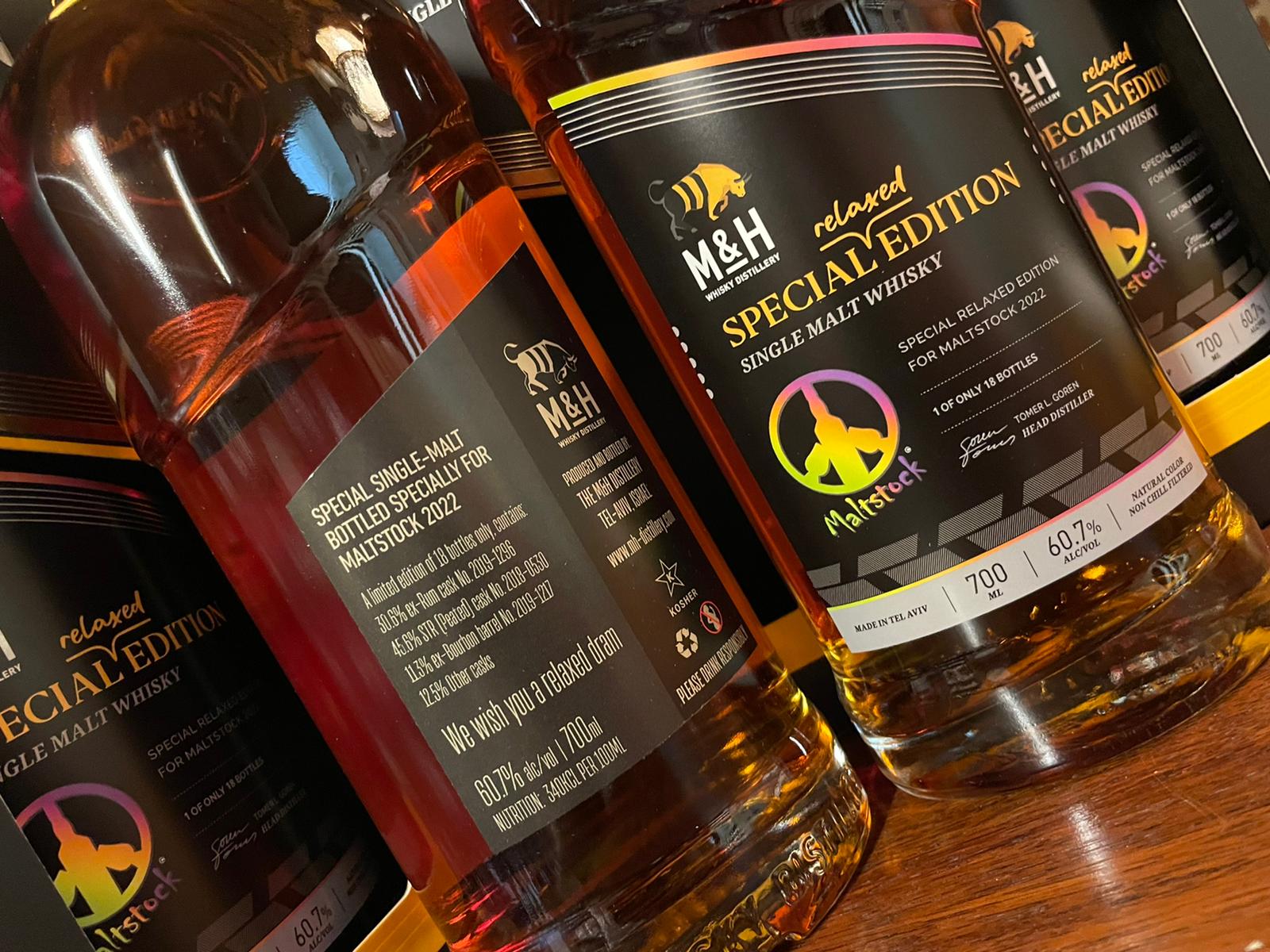
18 bottles in total
30.6% ex-Rum cask
45.6% Peated STR cask
11.3% ex-Bourbon cask
12.5% other casks
Also, the vintages are either 2018 (the rum and bourbon casks) and 2019 (the STR casks), so it is technically 3 years old. And, in case you aren’t familiar with Milk & Honey Distillery: It is a distillery from Tel Aviv, Israel. So being three years old isn’t as ‘young’ as it would have been in Scotland.
Maltstock is nearly upon ‘us’. Not me, since the postponing of last year’s Dutch Whisky Festival made me already have a whisky festival in September, and with other things my calendar was pretty clogged anyway. Fingers crossed for next year.
The dates of Maltstock got pushed back a little bit, to the end of the month instead of the second weekend in September. The venue that has been the venue for years decided, correctly, that housing Ukranian refugees is more important than having 200 whisky nerds over that get way too hammered.
But, there is at least a festival bottling, and Teun was kind enough to give me a sample when I met him last Friday!
Sniff: It’s very spicy, with lots of roasty notes. Some black pepper, very dark toast. There’s some caramel sweetness and bitterness behind the roasty notes. There’s a paprika and marinade note going on too, barbecue style.
Sip: The palate is surprisingly fruity, and rather sharp. It has a massive peppery bite, which isn’t too surprising with 60% ABV. There are berries, and some plums. There’s that ‘wet rub’ style of sweetness too, paprika, molasses, ketchup. Very interesting, and very unique.
Swallow: The finish shows the youth of the whisky a bit more than the palate did. It’s a bit short, with less pronounced flavors. The mix of casks makes for many flavors, but not many outspoken ones.
A pretty solid dram, which I honestly didn’t really expect. Not entirely sure why.
The combination of casks is interesting, but does make things a little bit all over the place towards the end. The marinade like notes are very interesting. I can imagine this working rather well at the Maltstock barbecue 😉
86/100
Bonus review:
Milk & Honey new make spirit, 50%
I got a sizeable sample of this when I met some of the guys from Milk & Honey and a few of their friends at Maltstock a couple of years ago. I wrote tasting notes ages ago too, but was waiting for a better moment to post the review. You know, when you can also compare it to a matured whisky instead of just a random spirit.
Sniff: Insanely feinty with lots of oil fumes and engine smells. Shoe polish and somehow, the stuff that the dentist uses for fillings. Way too heavy, in a way that reminds me of all kinds of other ‘try hard’ spirits. It gets a bit more fruity after a while, with canned pineapple, but the gasoline and engine oil scent stays on top.
Sip: The palate is dry and on point in sharpness. The engine oil and petroleum doesn’t translate too much to the palate, luckily. There’s more fruit, with mango and pineapple, and granny smith apples too.
Swallow: The petroleum stuff carries on in the finish. I’m not sure if that is it, but it is just a bit too much for me.
Interestingly, the spirit was, to be honest, pretty shit. I am not trying to say the quality was bad, because as we’ve come to know with the matured whiskies, it turns out quite well. However, it obviously isn’t meant as a drink on its own.
But, with some extra years of experience and the massive amount of new whiskies that have flooded the market, I think it generally makes for more interesting older whiskies, if the spirit itself isn’t too smooth. So, again, interesting, but if it was a product for sale, I wouldn’t pick one up and go for the matured version instead.
And no, not just Springbank from Sauternes casks, there’s also the Longrow and Hazelburn. These three bottles were released some five years ago for the Springbank Society. They are all about the same age, with the Hazelburn being a few months older, and from 2018 instead of 2017.
What you would expect is that a distillery, when releasing a tryptich of their products like this, would keep as many parameters the same as they can. So the same ages, same year of bottling, same cask type. But in this case none of these things are similar.
The Longrow and Springbank were drawn from fresh Sauternes hogsheads, while the Hazelburn comes from a refill cask. The Hazelburn was bottled at 10 years old in 2018, while the rest was bottled earlier at 9 years old. Of course, those details are very minor, but if you’re reading my ramblings, I dare assume you’re a nerd like me.
Anyway, tasting notes. Let’s find out how the funky Campbeltown drams hold up in sweet wine casks!
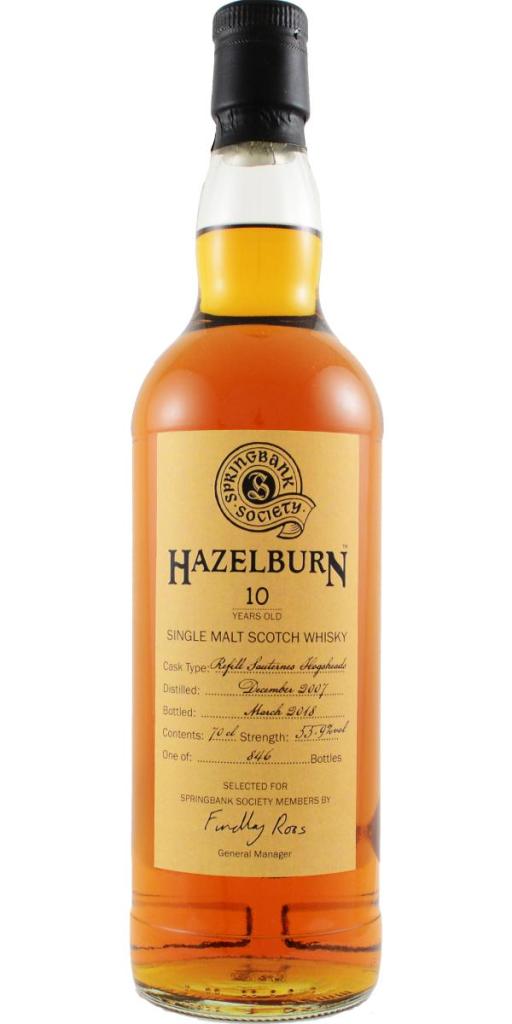
Hazelburn 10, 2007-2018, Refill Sauternes Hogsheads, 55.9% – Springbank Society
Image from Whiskybase
Sniff: Nutty, with quite some floral hints. Violets, dried lavender, yeast and some hessian. Heather and oak too.
Sip: Quite sharp with alcohol. Quite dry with oak. Quite floral, straw like too. Comparable to the nose, but slightly more barley. Hazelnuts, brazil nuts.
Swallow: The finish is, like the nose, very floral, perfumy, FWP even. It makes for a far less interesting drinking experience.
Yeah, this is not that great. It’s quite acidic for what I’m used to from Springbank distillery, although it’s not very uncommon for Hazelburn to get a little sour. The perfumy notes are not the floral notes you hope for from a good Rosebank. They’re more like the laundry detergent notes that people tend to ‘dislike’ in 80s Bowmore (to put it gently).
78/100
Springbank 9, 2007-2017, Fresh Sauternes Hogsheads, 57.1% – Springbank Society
Image from Whiskybase
Sniff: Some vanilla and fruitiness, with sweet pastry notes. After a while more acidic, fruity notes start coming through. Grapes, and a whiff of red fruits.
Sip: The palate is fairly generic. Strong, young-ish Springbank with some sharp edges. Passion fruit, unripe mango, hessian, barley and wood.
Swallow: The finish is very consistent with the palate. Dry, but slightly less sharp.
This is significantly better than the Hazelburn, although I still am not enamoured with the Sauternes casks for this distillery. In short, you spend quite some money on a bottle like this, and the regular 10 year old is a lot more enjoyable.
85/100
Longrow 9, 2007-2017, Fresh Sauternes Hogsheads, 56.3% – Springbank Society
Image from Whiskybase
Sniff: The wine is prominent, as is the coastal whisky. Interestingly, the smokiness is very diminished. A slightly acidic fruitiness, eith things like unripe mango and green banana.
Sip: Sharp, and dry with lots of chili pepper. Some oak, lots of fruity acidity and, again, almost no smoke.
Swallow: Again, quite acidic, not very long. Not very consistent, with the acidity not really cooperating with the whisky.
This is weird again. There’s some acidity like in the Hazelburn, luckily it’s not as floral. Strangely, but this might also be because the bottle had been open for quite a while, the smokiness had diminished quite a lot. Or, it might not have been as prominent to begin with. It didn’t strike me as a typical Longrow.
84/100
The summary of this can be quite short: I’ll be avoiding Springbank’s output from wine casks like this. Port and Sherry work fine, but the other stuff doesn’t. At least, not in my opinion. I seem to remember a Longrow from a Chardonnay casks that didn’t sit well with me either, and Longrow Red (the non-Port ones, that is) isn’t for me as well.
Or at least, their whisky. I visited the place in spring, at which point a sizeable bottle share with a tasting to accompany said share could not not happen. Of course, writing actual tasting notes for the drams themselves takes far longer, because I am a lazy sob.
Eventually, namely last weekend, I sat down to taste the four bottles I had picked up for the tasting. The 1494 (or MCDMDMASALKJDLKASJLF in Roman numerals) was tried earlier, when still in Scotland, as was the Aqua Vitae.
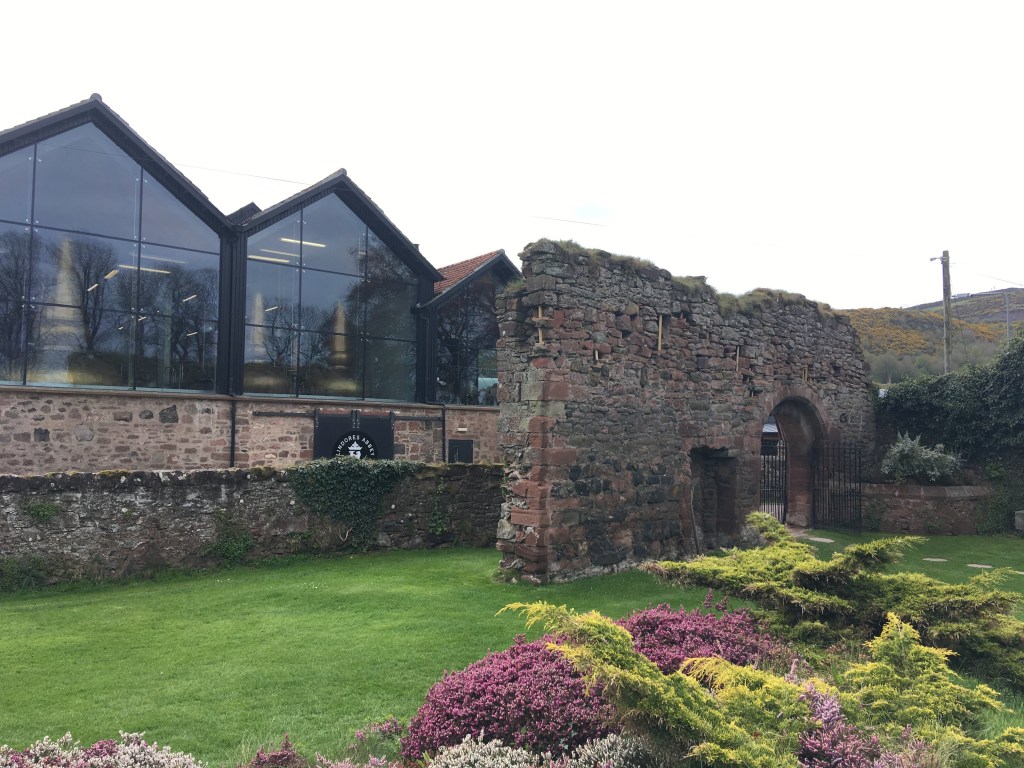
I’m not going to write about the distillery itself, because that’s going to be a thing at another time. Let’s dive in!
Lindores Abbey Aqua Vitae, 40%
Image from Master of Malt
Sniff: There are lots of herbs and spices, on a fruity and sweet backdrop. I’ve got a hard time pinpointing things, but there certainly is some apple and honey. It also reminds me of Myrthe, in style and herbaceousness.
Sip: A very gentle palate, very similar to the nose. There still is a honeyed sweetness, but the herbs make it slightly more bitter, with more twig like notes.
No rating, since I have nothing to compare this to. It’s too strong for a liqueur, and there are far too many ingredients to be in the vicinity of whisky… Still, it’s an interesting drink. More a gimmick than a product to appease the whisky fanatics.
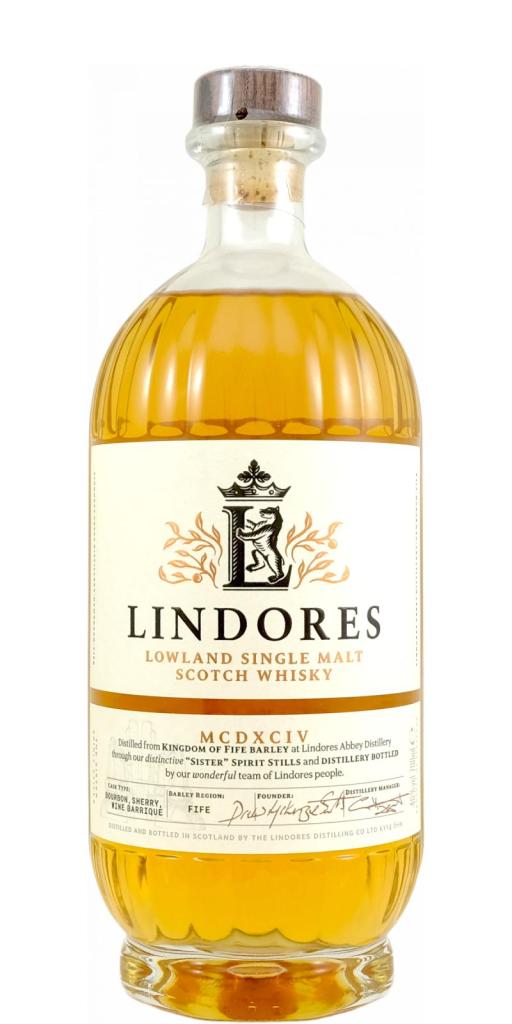
Lindores Abbey MCDXCIV, 46%
Image from Whiskybase
Sniff: A young, but farely complex note. A definite layer of bourbon cask influence, but subtle notes of sherry spices and dark wood. The whisky has a floral and lightly fruity background. Gorse, apple, very ‘local’ to the distillery.
Sip: The palate is a tad sharper than I expected. A touch of black pepper and chilli spices. Some syrupy sweetness, a bit of vanilla, straw, dried flowers. Dried apple, apple pie, the coconut-y thing Gorse smells like.
Swallow: The finish brings the young spirit back to the front. A bit new-make like. Less sweet and more floral and ‘green’.
I rather like this stuff. The floral notes are nice and not too common, nowadays. It’s not overly complex, but it is quite a bit better than a lot of new-distillery-output that I come across.
83/100
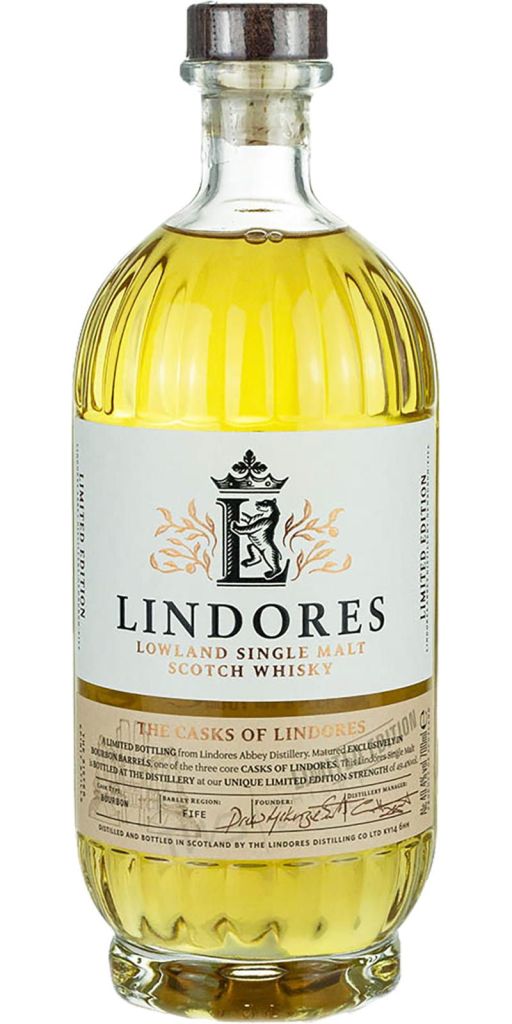
Lindores Abbey, Casks of Lindores, Bourbon casks, 49.4%
Image from Whiskybase
Sniff: Young, with quite a lot of straw and apples. Very orchard-like, with dry leaves and twigs and such. Quite boozy and, surprisingly cognac-y, somehow.
Sip: A bit of bite, straw, dry apples, grass. Dry, fresh and slightly autumnal.
Swallow: The finish is more dry. More straw and dry apple, a whiff of bitterness.
A very decent young whisky with quite some cask and distillery character. A tad simple with not too many layers to peel back, but it’s a nice indicator of the direction they want to go in.
84/100
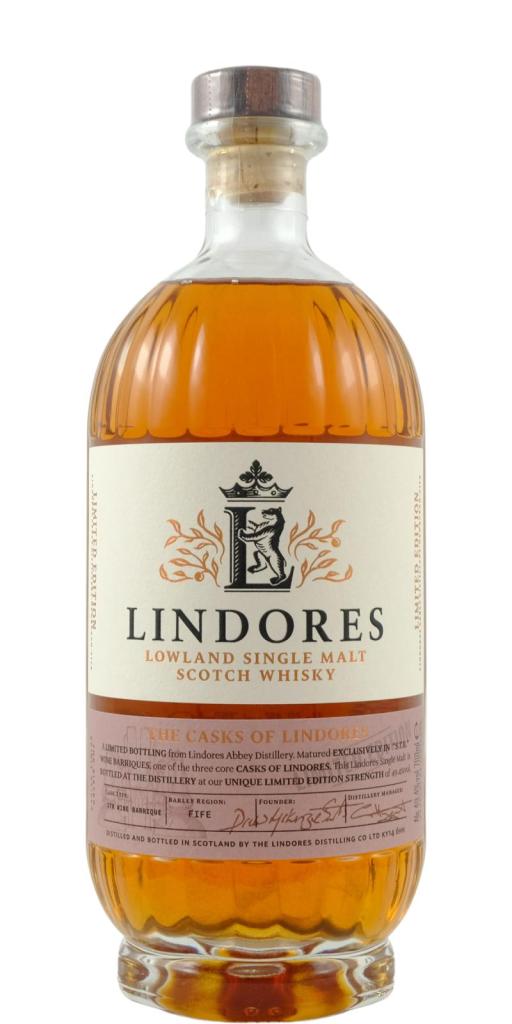
Lindores Abbey, Casks of Lindores, STR wine barriques, 49.4%
Image from Whiskybase
Sniff: The wine cask is quite obvious. There’s still fruit, but it’s not the orchard stuff like the bourbon cask. It’s also not the dried fruits from a sherry cask. It’s different, more grapes and fermentation and such. There is a crisp scent too, fresh fruits, maybe a sangria thingy?
Sip: The palate is quite fierce and almost tastes like light red wine on steroids. Lots of grape flavors, wine flavors, some oak. Tannines, grape skins. Grape seeds for a touch of bitterness. Not very whisky like.
Swallow: The finish continues down the same road. Some fruit, some bitterness, some wood driven flavors.
Not very complex at all, but much better than when I had it earlier… During the tasting we weren’t thrilled with this, and while I’m still not over the moon it’s far from a bad whisky.
82/100
Lindores Abbey 2018, Exclusive Cask for The Netherlands, Sherry Butt 18/577, 59.1%
Image from Whiskybase
Sniff: A cloyingly sweet sherry, with date puree and plum flesh. There’s a yeasty, chocolatey thing going on. Vegemite like, maybe?
Sip: A very syrupy texture that mitigates the fierce ABV somewhat. Still there’s quite some alcoholic bite to it. Date puree again, with plum flesh. Very PX-y, but with a LOT more alcohol, and some oak. There’s some straw in the background but otherwise not much whisky to be detected.
Swallow: Same as on the palate, with a little bit of a sulfur note to it.
This is the style I refered too earlier, with there being far too much wood influence. It’s a bit like Annandale is releasing their stuff. The distillery character is completely obliterated. It’s just sherry on steroids, with no whisky references to speak of. While that’s not too bad a drink in itself, it doesn’t leave much to be discovered.
78/100
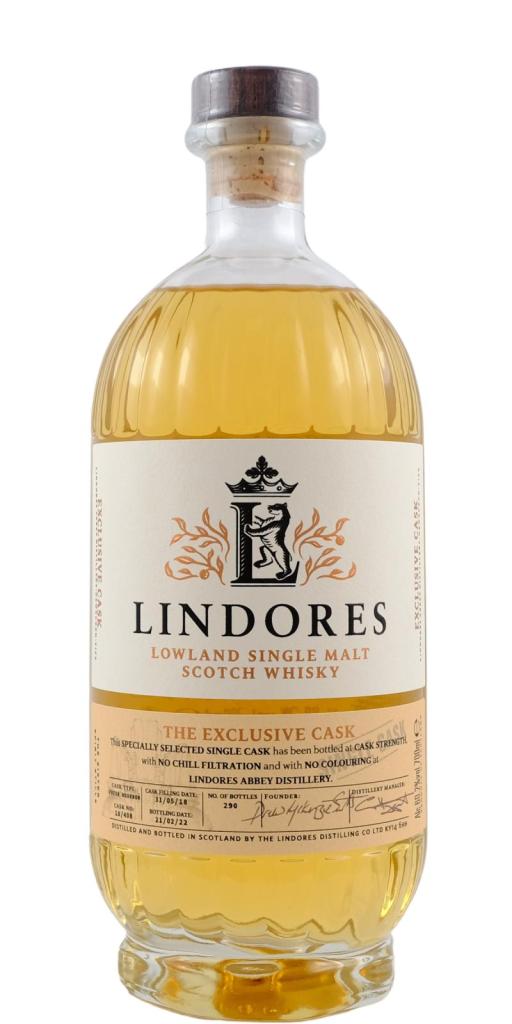
Lindores Abbey 2018, Exclusive Cask for The Netherlands, Bourbon cask 18/408, 60.2%
Image from Whiskybase
Sniff: A very clean and light nose of bourbon matured spirit. Not a lot of depth (it being three years old and all). Straw, barley, a touch of coconut and lemon.
Sip: This bites! Even after the last ond this one is incredibly hot. Lot of white pepper and chili, a whiff of oak. Some simple syrup, a bit of vanilla, coconut and candied lemon.
Swallow: There’s a note of glue on the finish which diminishes the dram a bit. The heat remains a little bit. Candied lemon, some apple and straw.
The ABV is in the way of the flavor. The whisky is insanely sharp and while that can be an interesting experience, it’s just too much. So far, the bourbon one at 49.4% was a lot better.
80/100
So, five whiskies and something else in, I still don’t really know what the angle is. The MCDXCIV seems to be a bit more at the core of what they’re trying to do and that’s actually a rather nice, albeit young whisky. The bourbon matured version leave some room for the distillery character to develop, bt that insanely sharp stuff is not something I’ll be going for anytime soon.
A short side note: The ‘Casks of Lindores’ were supposed to be exclusives to the independent stores in the UK, according to the tour guide we had. A sort of thank you for helping them out when they were still building fame. Strangely, they’re widely available now, so that does feel like a bit of a rip off if you scouted them out based on this premise…
Yet another new distillery. I must have read about it somewhere, but when I saw the bottling in a newsletter I was still surprised. There are quite a few new-ish distilleries, so it’s hard to clearly see a single tree in the massive forest and keep track of everyone of them.
Anyway, a highland distillery in the vicinity of where I’m hoping to travel in the near future. I thought I would investigate a bit more. I didn’t do a bottle-share, because I have been doing quite a few too many of late, but I just got my hands on a sample.
When reading the website I was hoping for a bit of an artisan approach in the way the Thompson brothers are doing in Dornoch, and it looks quite promising. There are a lot of technical details on the website, as well as information to the ingredients and production process. Small stills, local barley, long fermentations. All good things!
It doesn’t say anything about the philosophy behind the products though. What are they aiming to produce? Are they aiming for modern whisky that will sell quite well, or going for a rather old fashioned approach?
Image from Whiskybase
Anyway, the information about the production process should result in a decent product. Of course this one is only three or four years old, so I’m not entirely sure what to expect. Let’s dive in!
Sniff: There’s quite a bit of oak for such a young whisky. Barley, some straw, sponge cake and a surprising amount of lemon. Some fresh fruitiness all along.
Sip: Spirity, in a not sweet way, with a bit of white pepper. Lemon with a bit of a pithy bitterness. Wood, barley, straw. It tastes mature in a much more old fashioned highland way.
Swallow: A dry and gentle finish, with some length to it. Straw, dried lemon, pith, seeds. There’s a rye like spiciness to it too.
I am very surprised by this youngster! I didn’t have too high hopes with the ratings on Whiskybase being pretty low (currently a low 82 points). But the massive lemony fruitiness and crisp flavors, with the wood not resulting in too much vanilla or too much pushed dried fruits make me very enthusiastic.
At this time I regret not buying a whole bottle and having some more whisky to go back to, because I am much more wowed by this whisky than I expected in general, and based on the Whiskybase ratings… I think this is very promising!
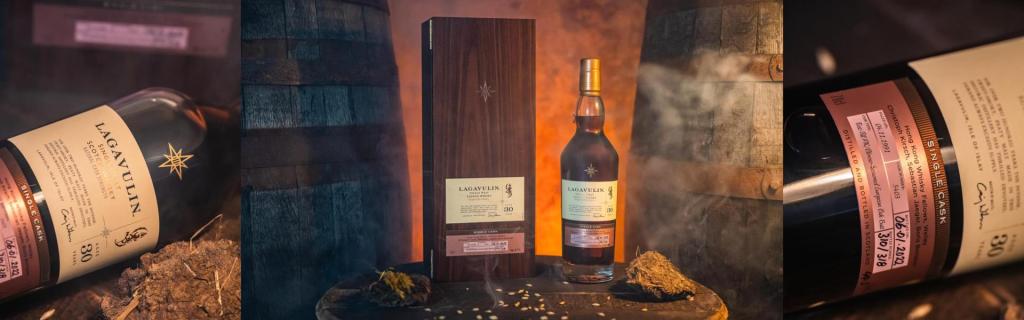
Apart from some cask samples at the Warehouse Tasting at the distillery, I don’t think I ever had a Lagavulin this old. In fact, I know that for sure. Of course, that’s not too surprising with there only being six older bottlings with a higher age statement on Whiskybase!
This ‘Cask of Distinction’ was bottled for Hong Kong Whisky Fellows, House Welley Whisky Bar, Christoph Kirsch,Sebastian Jaeger and Boris Borissov. The last two are part of what is colloquially known as Wu Dram Clan, and there we have a bit of explanation how I got my grubby mitts on a sample of this! So let’s start there, by saying thanks to these lads!
What is also interesting to know is that while this is a PX and Oloroso seasoned cask, it is not officially a sherry cask. I’m not entirely sure why, but it’s interesting. There are quite a lot of sherry casks out there, but this one is made from European oak, and that is becoming a rarity as the years crawl by. Most casks are made of American oak, even when they’re sherry casks. A good thing to know!
I don’t think we need to discuss Lagavulin and its awesomeness too much. Nor the rarity of the age of this whisky, so let’s dive in!
Sniff: A gentle whiff of briny smoke, followed by slightly bitter caramel and marram grass. The ‘brownness’ of European oak, with hints of dark dried fruits, mulch and a bit of sherry, the oxidized kind. Leather, after some time.
Sip: The palate is super gentle at first. After a few seconds there’s some black pepper. It’s a bit more sweet than I expected. Dried dates and plums, with an almond like bitterness. Hay and marram grass.
Swallow: The finish is surprisingly dry. Almond flour, yeasty sherry, a bit of briny richness. Iodine, and some bandaids, dates.
This is a very traditional Lagavulin. It’s not unlike the Distiller’s Edition, but with infinitely more depth and class. The gentleness is surprising, although the low ABV should have given some of that away I guess.
All in all a very gentle giant, with lots of flavors to be discovered. It does very well what Lagavulin is known for, and that is a very, very good thing to be doing!
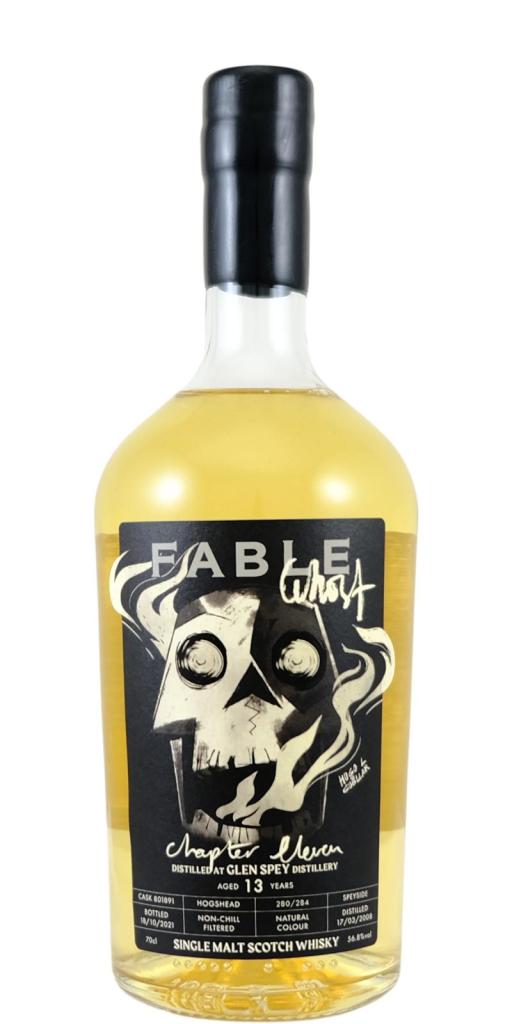
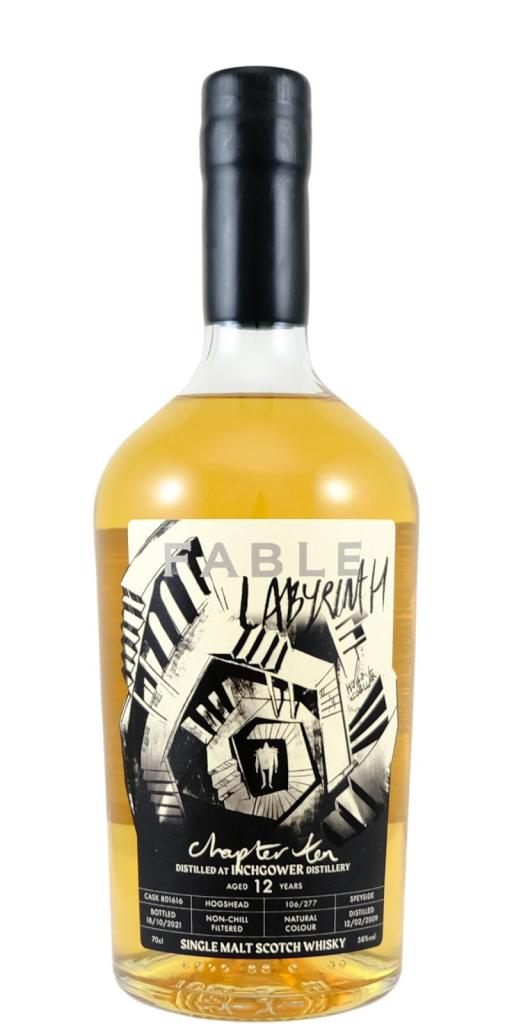
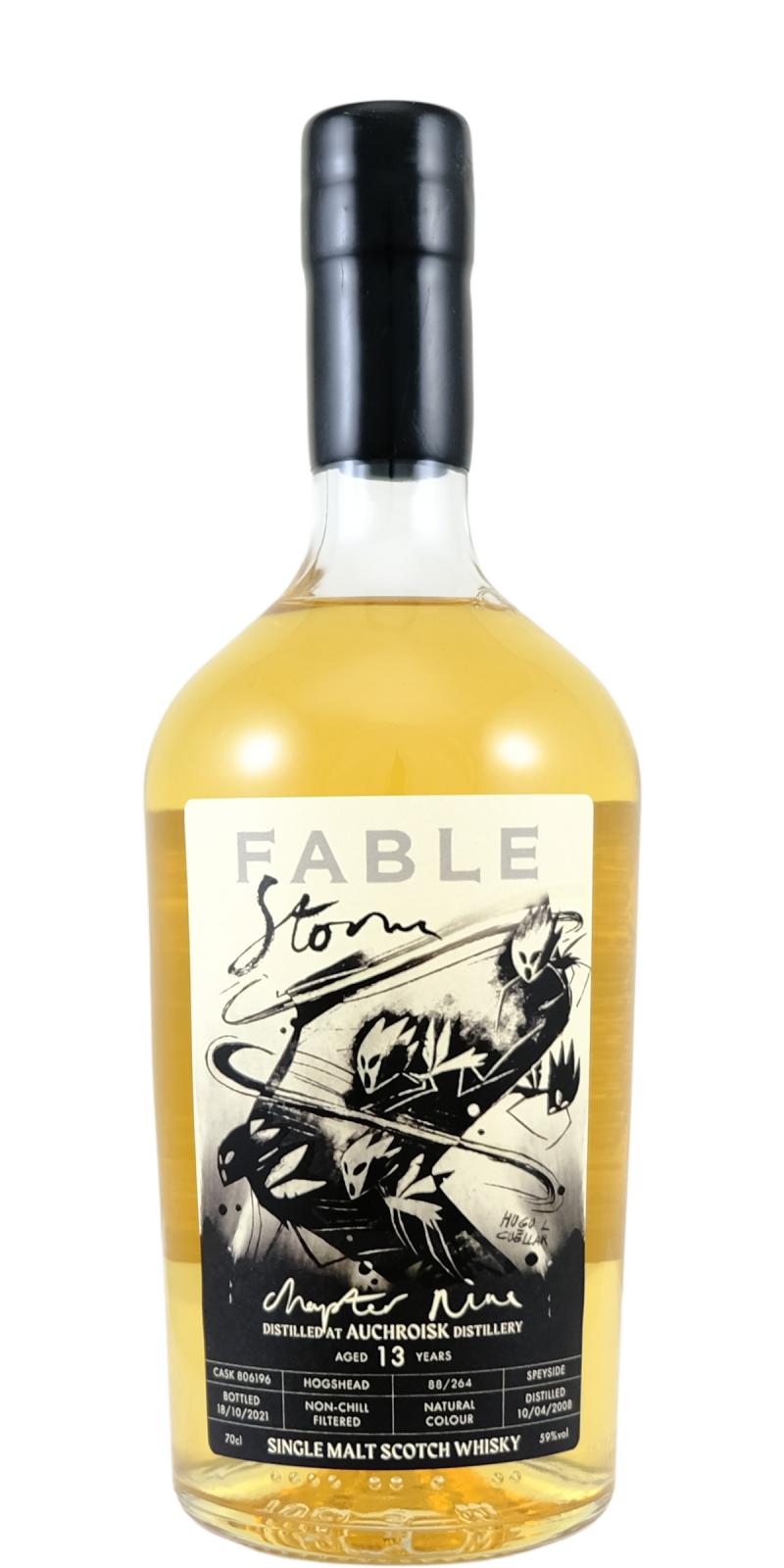
Some time ago, a new bottler showed up in shops without much fanfare. At least, it went quite unnoticed until the Mannochmore was rated with 90 points on Whiskyfun. Suddenly, things looked up and I went looking for a bottle. Of course, what I found was that there was an entire swell of bottles available, in line of ‘The Ghost Piper of Clanyard Bay’. The fable accompanying the brand name.
The entire batch was bought, tasted and reviewed, and I was rather enthusiastic about it all. The marketing, the labels, the whisky, the works.
The second batch of Fable whisky came around sometime last winter, and with the first batch being so well received, a bottle-share and a tasting was quickly organized. Things got very confusing with some chapters of the story being reused, distilleries being switched from one to another and such. Apart from that they also re-imagined the chapters themselves. Batch one was all chapter one, but batch two was spread over Chapter X to Chapter 11. I have no idea where it started and what was available when.
I decided to not buy some bottles because I figured I already had tried them in the first batch, but that turned out to be untrue, since new casks were bottled with the same labels and chapters. In short, I completely lost track of what was what. As a geek, I can tell you this is hugely annoying.
Anyway, the whiskies…
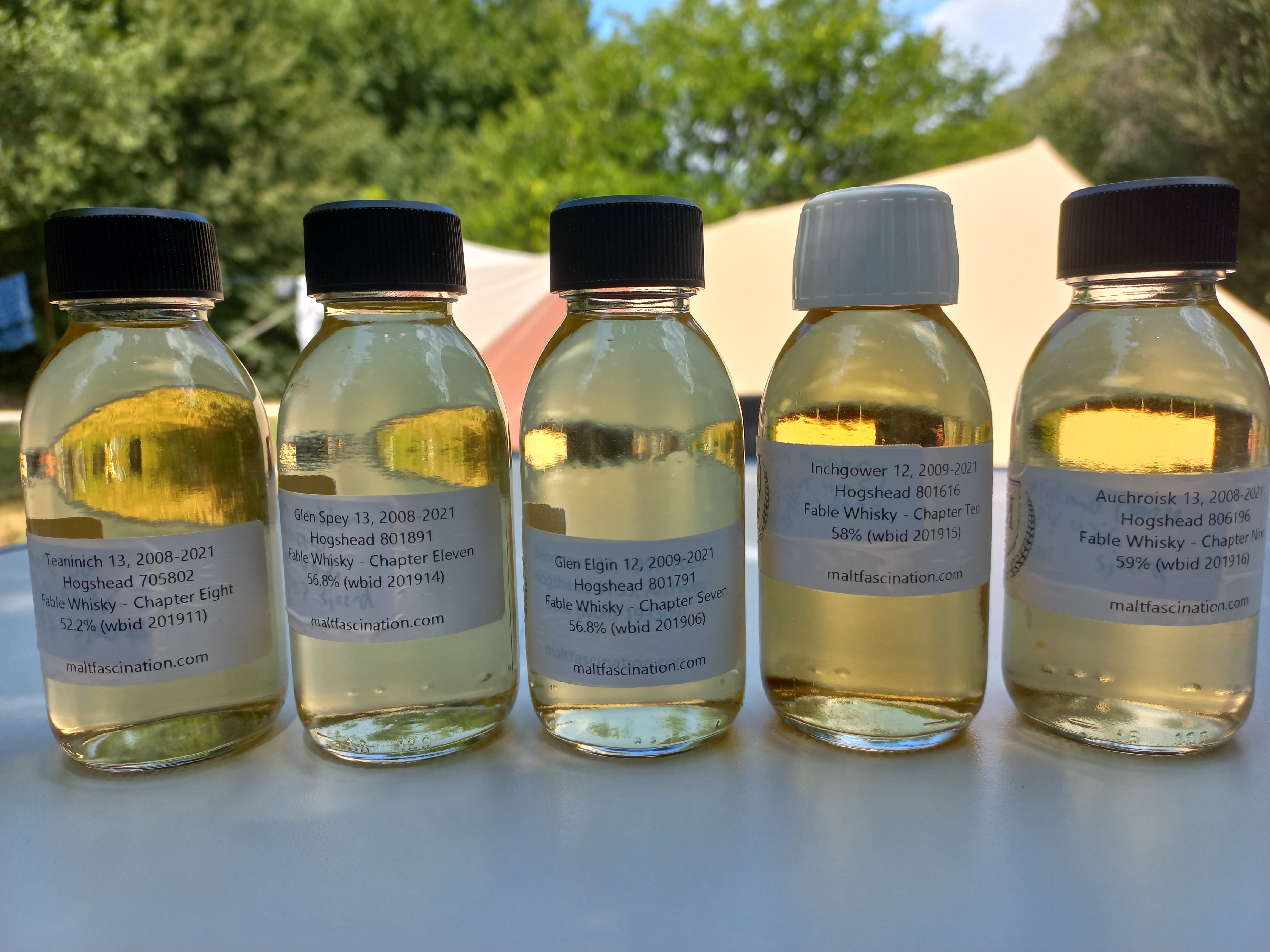
On my holidays I tried them again on a quiet afternoon. An initial lap was done in February when I did the online tasting with all six of them. This time I tried only five, since I didn’t have enough clean sample bottles to also bring the sixth. So, the five bourbon casks were had, and the sherry cask remains for a later time. Let’s dive in.
Sniff: Very clean, but it pushes the notes of grass, hay and straw to the max. Slightly acidic, with some milky notes, and a whiff of oak.
Sip: Straw, barley, white wheat bread, hay. Some vanilla and, again, a very fierce palate. Massively dry on top of the heat. Not a lot of flavor going on, though.
Swallow: A lingering heat of dry barley and, very surprisingly, a note of blackberries and cassis. After that it’s back to the barley, but not entirely without some fruitiness.
The finish corrects a bit of the blandness that came before. The red fruits are rather nice. Before that it’s just a bit of a buttery and sharp whisky, that doesn’t do much for me. Very generic, and therefore quite boring.
Sniff: That lactic acid note is here too, with the green ferns and moss, but accompanied by a moldy note. Like wet linnen left too long without drying. Some oak and vanilla, again.
Sip: Still a strong palate, but it takes a little longer to really start the burn. Lighter than the Teaninich, with less caramel and more leafy greens.
Swallow: Barley and leafy greens, with a rather strong presence. Warming, and slightly sweeter than before.
Luckily that moldy note didn’t come through on the palate. But unfortunately there is no surprising fruitiness anywhere. Again, the buttery note and sharpness come through fiercely, and apart from the missing fruit it is not overly distinguishable from the Glen Elgin
Sniff: Strong with lots of barley, green leaves and a bit of lactic acid. ‘Roomboter babbelaar’, as that would be called in Dutch. Some Caramac bars, with that creamy caramel style. Only after a while slightly sweeter, cask driven nites of wood and vanilla start showing up.
Sip: The palate is quite hot, far more so than the ABV or the nose suggests. Lots of white pepper, with a lot of dryness too. Green leaves like ferns and moss, a touch of oak and some barley. That slightly acidic note adds to the heat and dryness, but is far less caramel-y than before.
Swallow: The finish is much more mellow, but not more outspoken. Some oak, some lactic acidity, some ferns, some barley.
Very generic, with no distillery character to speak of. I’m starting to doubt the bottles at this point. As in, isn’t it all the same whisky? Is this some kind of prank that has been pulled on me (and hundreds of others)?
Sniff: Back to a moldy one! Some vanilla at first, but then it’s back to the wet linnen, hay, and old barley. The lactic acid is it on the up-tick again as well.
Sip: After the first three, this one still brings razorblades. Why are these whiskies so ridiculously hot on the palate? White pepper, chilly pepper, some oak, barley, dead ferns and brittle, brown moss. A bit of milky caramel again too
Swallow: Still pretty hot on the way down, but the slightly increased richness due to the note of caramel helps.
With the ABV going up, the flavors are not getting more interesting. Unfortunately the moldy flavor is back here, and while I tend to like a bit of funkiness in my drams (Springbank, anyone), in this case it doesn’t really work since there’s not a lot going on to back these flavors up.
Sniff: Warming with baked barley, some pastry cream. A bit of a juniper note too, with straw and hay.
Sip: Straw, dry gin, some oak, hay, ferns in autumn. A lot of heat, dryness, peppery bite.
Swallow: The finish is warming, but not hot. It’s quite generic though.
It’s a rather generic whisky and, while a rather naked distillate, there’s not a lot that points in the direction of Auchroisk. The fiery ABV doesn’t help and it drinks very hot, even for the 59%.
81/100
As you might be able to tell, I got a bit annoyed towards the end. That’s not a good sign.
Five high ABV drinks in and I am far from thrilled. The fruitiness on the Glen Elgin was the best part of the whiskies. After that things went straight into genericness. While I don’t think the whiskies are bad per se, they are very very similar to each other. That makes for the most uninteresting tasting I have done in a long time.
I really don’t see the appeal of these drams and feel a bit ripped off compared to the first batch.
Why still the 81/82 scores then? As said, the whiskies aren’t particularly bad, and if you would have one bottle it might be nice for a change of pace. But when things get realeased in batches, you expect some diversity and the bottles to be interesting next to each other. That is absolutely not the case.
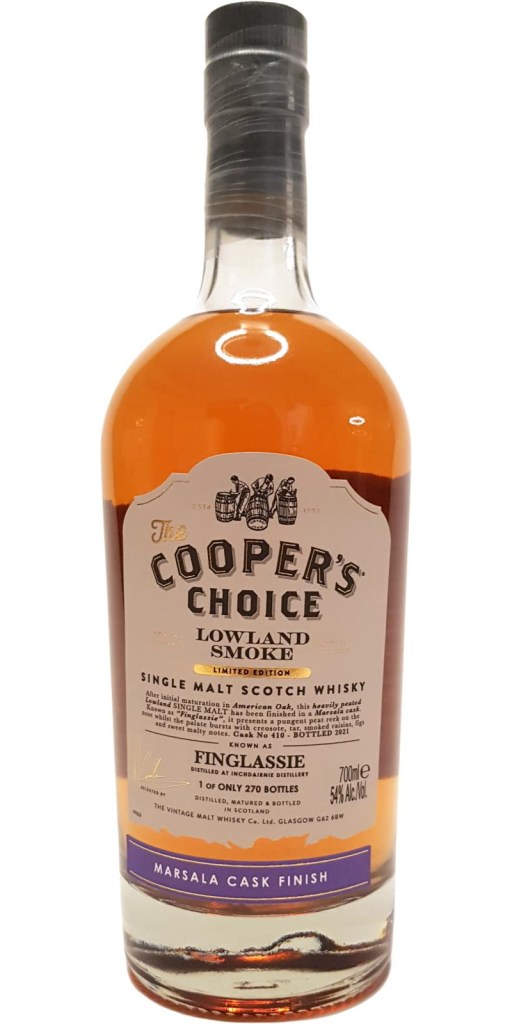
To close of a short series of undisclosed single malts we’ll try this one. Of course, it’s not really undisclosed, since the subtitle of the whisky says ‘distilled at Inchdairnie Distillery’, but Finglassie is close enough.
Inchdairnie Distillery is a lowlands distillery in Scotland, in the Kingdom of Fife and has been operational since 2016, which means this 2021 release is, at its highest, 5 years old. According to www.scotchwhisky.com the distillery is set up to maximize flavor. I guess they mean that it’s a very technologically advanced distillery, because otherwise a statement like that doesn’t make much sense.
This Finglassie is a heavily peated version of their distillate, and it’s not the only one from Cooper’s Choice. There are two other ones that are also finished in wine casks. One in a Madeira and the other in a Sauternes cask.
Image from Whiskybase
To me, this generally is a bit of a warning sign, since very young whisky from new distilleries should nowadays be able to be rather palatable, like Torabhaig, Raasay, Waterford, Lochlea, Lindores Abbey and so on. For these drams they decided to use casks that impart lots of flavor, and while I might be too cynical about this, I tend to think that that happens to hide the spirit behind.
In short, I would never have bought a bottle of this, but my friend Tom (van Engelen, from the guest posts) did, and sent me a sample.
Sniff: It mostly smells young, peated and sweet. The marsala is rather noticeable, with lots of grapy sweetness. A straw like smokiness. Blue grapes and jam.
Sip: Dry with a lot of peppery heat. Some surprisingly oily smokiness, but quite harsh. Sawdust grist. It’s very, very hot. Some wine cask stuff too, but that bit of fruitiness is pushed back by pepper and alcohol.
Swallow: An oily smoke again, with some lingering dry heat.
Not surprisingly, it tastes like young whisky with a lot of cask influence forced upon it. After having tried this, I literally have no idea what Inchdairnie spirit would taste like at approximately four years old. I do understand a bit more about what four year old whisky from a very active Marsala cask tastes like, but that’s not what I hoped for.
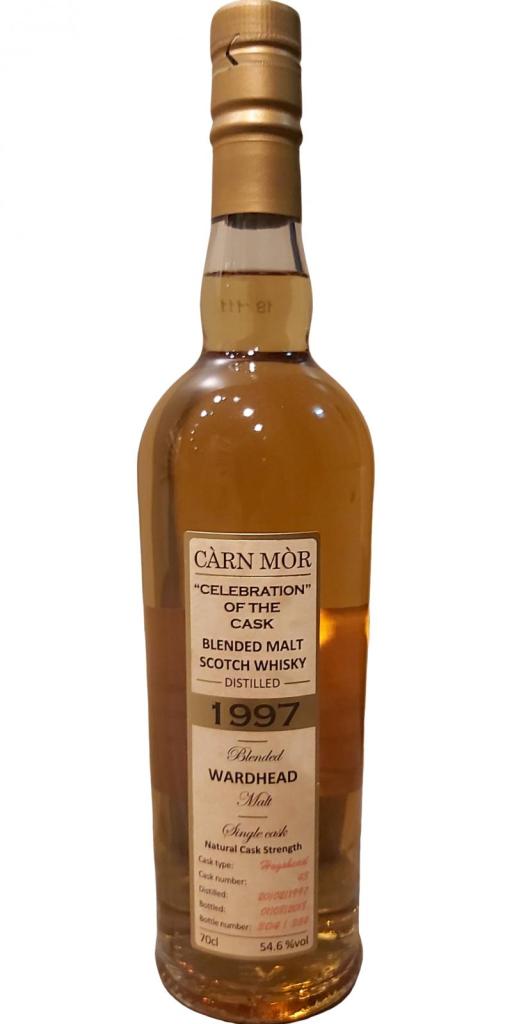
Which distillery is this, this Wardhead? Well, as most whisky nerds know by now, there are some code names for distilleries that don’t want their name used on labels. Westport is Glenmorangie, Burnside is Balvenie, ‘Secret Orkney’ is Highland Park, and Wardhead is Glenfiddich.
Most of these code names are for blended malts, and in this case that doesn’t mean a blend with multiple significant components, but just one that is teaspooned. And by that the industry means that there is some minuscule addition of another distillery to a single malt that causes it to not be a single malt.
And of course, since there is only a minuscule part of something else, you won’t taste that, and that means that ‘the industry’ can do that or they can’t and just say they did. So, we might as well call this a single malt for all purposes.
Image from Whiskybase
Anyway, this Wardhead was bottled by Càrn Mòr, which was a part of Morrison and Mackay. That company no longer exists with the Mackay family having sold their part to the other. Morrison Whisky has also built a distillery in Aberargie, just south-east of Perth. Not a company to welcome visitors, or produce single malt for releasing as such, nor do they seem to be participating in the community in which they built their distillery (according to a few locals).
But, how’s the whisky? Because that, in the end, is what matters when you have already gotten your mitts on a sample.
Sniff: The typical fruity notes of Glenfiddich with quite some banana, mushy pear, applesauce. Topped off with a bit of oak and apple crumble, including the vanilla custard.
Sip: Dry with green plant notes, as well as grass, straw, pastry and fruit. Apples, pears, unripe banana, star fruit. Less sweet than I expected based on the nose. Wood, barley husks.
Swallow: The finish is very consistent and quite compkex. Well rounded with greener plant notes, as well as fruit and the ‘ingredients’ of the whisky: oak and barley.
Interestingly, the nose didn’t show the plant-like notes that came through on the palate. However, that didn’t make it inconsistent, it just made for some development in the glass. So, how’s the whisky? It’s very good indeed!
I love the gentle fruity notes and it’s not overly sweet, which I consider a lot of Glenfiddich to be. It’s still available, surprisingly, for € 149 in Italy, and that is very well spent money. Highly recommended!








 Malt Fascination