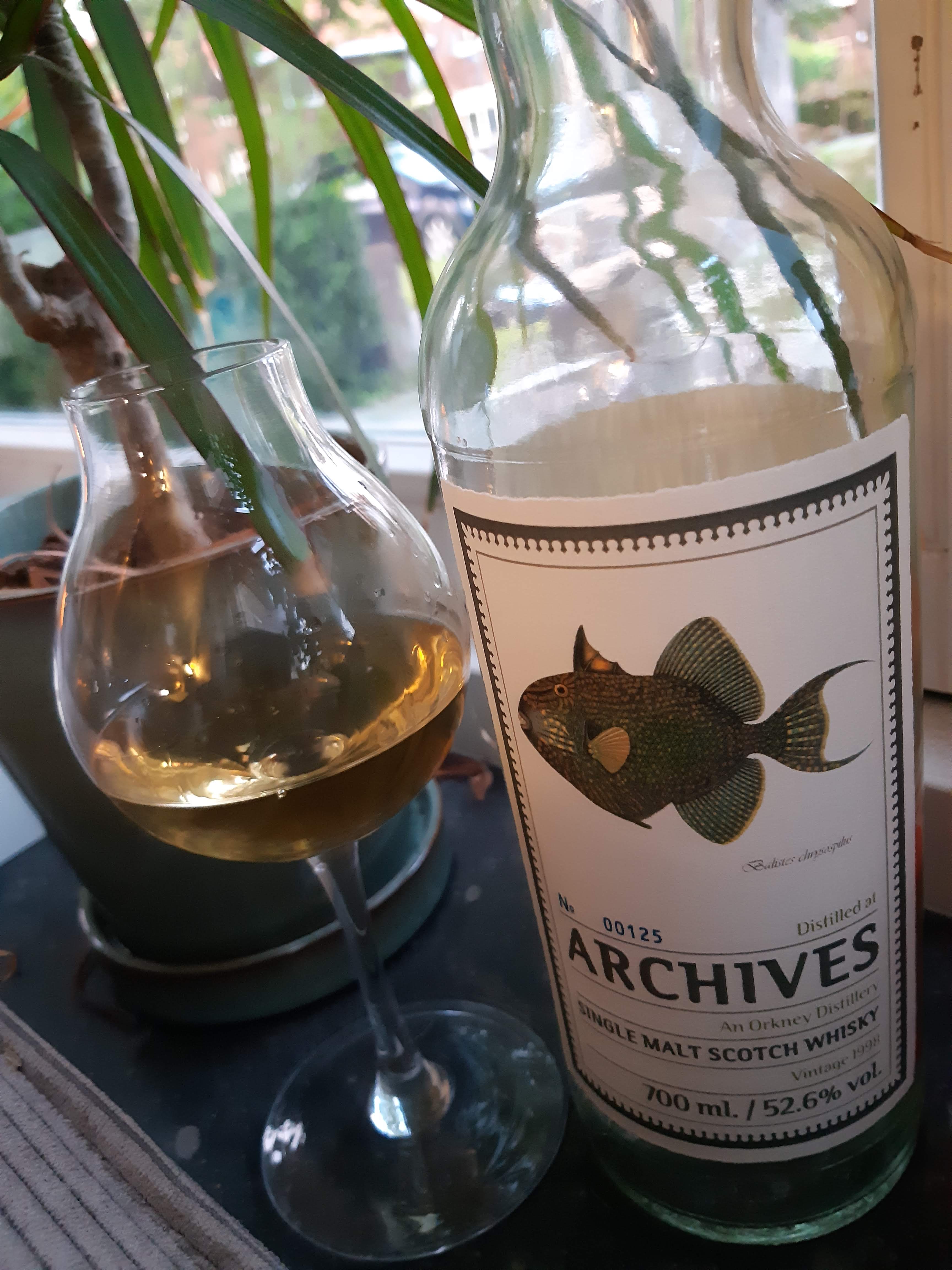
This secret Highland Park at a very decent age was bottled last year by the guys at Whiskybase. I even drove there to pick it up, if I recall correctly, which also happened to be the first time I ever visited the Rotterdam store.
Strange, to have such a great store at a drivable distance, and never go, but the only times I am near Rotterdam is when we’re going on holiday and I’m with my entire family. So, Whiskybase had never happened yet, but now it has.
Anyway, Highland Park with an age statement. This is a rarity, if the name of the distillery is on the label and in this case it is not. From a bourbon cask, which should be a recipe for success. Let’s dive in!
Sniff: Lots of straw, heather, hay and a whiff of smoke. It is quite a light whisky, but herbaceous and mature. Dry white oak, some coastal salinity.
Sip: Dry on the palate, almost coarse. White pepper, sawdust, straw. Some heather and a touch of honey. A little bit of smoke too.
Swallow: The finish is a little bit more sweet, more honey. There’s still that coarseness, but not just that. Quite a long finish, with straw and barley husks.
This slightly dry and peppery profile is something I truly enjoy. It is also why I really like these indie Highland Parks since they all fit the mold. The complexity by having the coastal influence, a whiff of highland peat and a light austerity suit me very well. Cracking stuff!
Once upon a time in the east, about 150 years ago there were a couple of farmers who bought some land in Queensland, Australia. These two Englishmen wanted to build a cotton plantation, but they didn’t. It turned out creating a sugar cane farm was far more lucrative than cotton.
The farm was facing the Albert River, and on that river there was a riverboat captain called James Stewart who was running the S.S. Walrus, a floating sugar mill. This combined quite well, especially when the ship washed up on the shores near the distillery with a copper pot still on it.
A rum distillery was born.
Of course, there was a bit of adversity too. The S.S. Walrus got it’s license revoked at some point, but ‘Australians being Australians’, they just kept on going for years before washing up on the banks of Albert River in 1884.
In 1887 there was a flood which washed away the entire distillery, including a part of the stored rum. Beenleigh had to buy another still, and they supposedly did from another closed distillery in the area, the ‘Ageston Distillery’.
The S.S. Walrus (image from Australian Food Timeline)Beenleigh Distillery (image from Beenleigh Distillery)
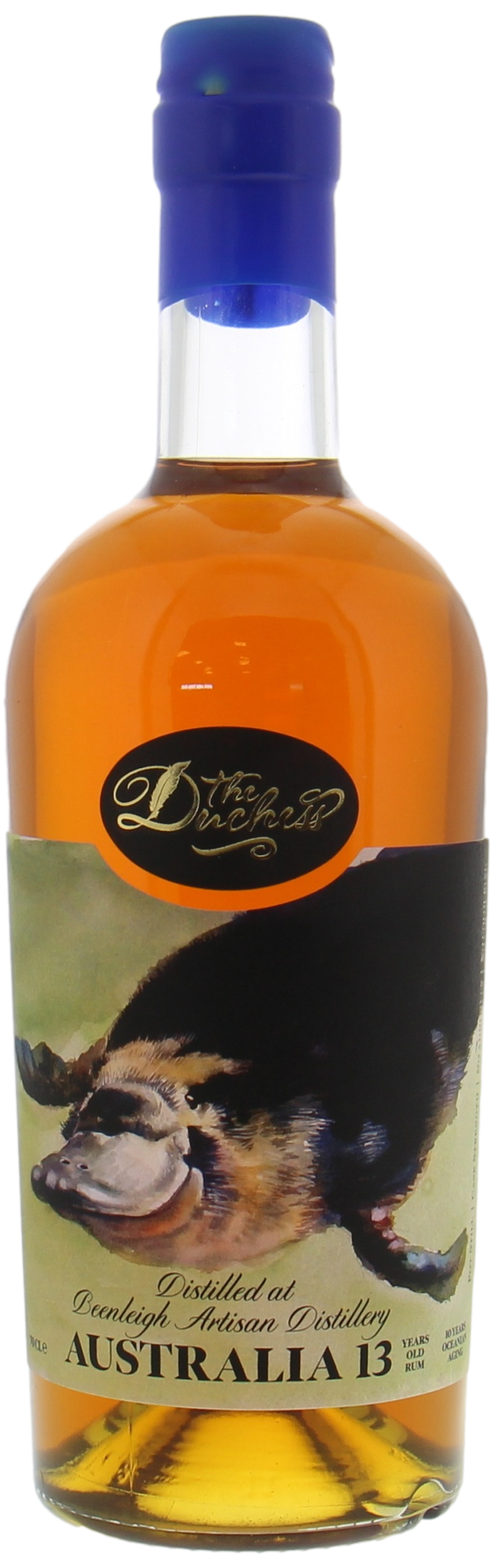
Image from The Duchess
Beenleigh is Australia’s oldest still working distillery, and produces their rum in what is called a ‘Vat Still’. Guyana’s Port Mourant Distillery has a similar setup, and this is where one of the previous distillers learned their craft.
This specific bottling was done by The Duchess, at a whopping 63.4% ABV. It’s 13 years old. 10 of those years happened in Australia, well over their legal minimum of two years.
The distillery, or ‘The Big Red Shed’ dates from 1884 and is operated by four people. All parts of the process are done in house, from fermenting the sugar cane to the maturation.
Sniff: Weirdly funky with paint stripper and oak. Sweet sugarcane, quite chemical, but also with some red fruits, and apricot.
Sip: The palate isn’t too sharp with some warm-up (as in, you should work up to this). Peppery heat, chemical paint stripper, but other things too. Fruits, grassy notes of sugarcane. Apricot, cherries and strawberries.
Swallow: The finish is more typical of good rum, a bit sweeter. More herbaceous than sweet, but all on steroids.
While this paint-stripper stuff sounds negative, it actually is not. It does remind me a little bit of the gentler St. Lucia rums, and those are quite lovely. It’s a bit like peated whisky differs from unpeated whisky.
All in all this is quite a lovely drink, and because of it’s history and rather unique origins (yes, I know Bundaberg rum exists) it makes it all the more interesting.
I’m seriously considering getting myself a bottle, when it comes out this Friday. I can’t tell you what the price will be yet, as I don’t know so far.
87/100
It will be available from Best of Wines. They sent me the sample, so thanks a lot!
It’s been quite a while, since this actually happened. And the way I participated doesn’t make any sense.
I had nothing in my agenda on April 30th yet. And since I like Mezcal, but don’t want to buy too many bottles of it, a masterclass seemed like the ideal way to go. So, the night got blocked, samples were ordered and I was looking forward to it!
Then some friends asked to go camping the week after and that seemed like a good idea. We got enthusiastic about that camping trip, and the epic level of beers had during that short holiday. Enthusiastic in a way that we decided to extend things to a full week.
Without checking the agenda, of course.
Of course, we’re in a civilized country so, even though I had now double booked the Friday night, I would just bring my samples along and stream the masterclass. Wifi on campgrounds and all.
Then we found out there is no Wifi on the campground. And when we arrived there, we found that 4G coverage was of a level that you might be able to receive a whatsapp message. You might. If you don’t walk more than 10 meters away from our spot.
As you might imagine, there was no mezcal masterclass to be had at the time. Luckily things were recorded and I could follow along at a later moment, but that does take some joy out of it. No interaction, whatsoever.
Anyway, booze!
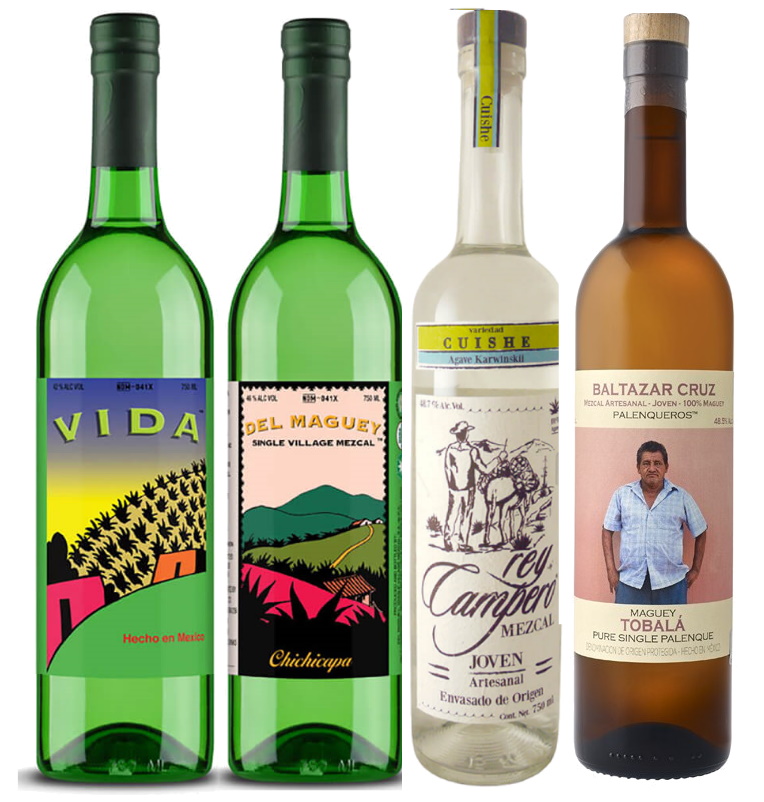
Del Maguey Vida, 42%
Sniff: Very aromatic, smoke, burnt sugar, some green notes of agave or cactus. There’s some rich fruity notes of grilled pineapple.
Sip: The palate is gentle and rich. There’s still that green, planty notes, and the smoke starts coming through. There’s a whiff of salinity, grilled pineapple, apple.
Swallow: The finish is again rich, but still bright. It’s full, with fruit, green notes and some smoke.
I had it years ago, and I should have had it more. It’s very solid, and as an entry level drink, the bar is set quite high!
86/100
Del Maguey Chichicapa, 48%
Sniff: Somewhat lighter than the Vida, with more green notes. But the green notes are a bit more ripe, a bit more sugary. Also some stewed granny smith apple, soft pears, a whiff of smoke. Olives, and some olive oil and some ashy notes, maybe?
Sip: Quite syrupy on the arrival, but light. Aromatic floral notes, some sugary notes. It gets drier after a while, and a bit more smoky and ashy. Gets a bit more plant-green like after a longer time. More cactus and agave like.
Swallow: The finish is slightly more typical for Mezcal. Green, smoky, fruity, but mostly plants and flowers.
87/100
Rey Campero Cuishe, 48.3%
Sniff: A bit darker with hints of dark chocolate and mole. Still slightly smoke, but with cocoa powder, some spicy chili like notes. Maybe some refried beans. A bit of chalkiness.
Sip: Some burnt lemon or grapefruit peels, with the oil from them as well. Again, some cocoa powder, dark chocolate, espresso. Also some vegetal notes, and dryness.
Swallow: The finish brings more of the vegetal notes and tones down the other darker notes I had earlier. It’s still not overly light, but also not as heavy as on the palate
With this one I had the idea the rest was having something else than I was having. There were such different notes it was ridiculous.
86/100
Baltazar Cruz Tobala, 48.5%
Sniff Slightly chalky with lots of agave notes. Some smoke, some lemon and lime notes, some salinity.
Sip: The palate is, again, slightly sugary, syrupy. Slightly dry with notes of agave, lemon balm, chili pepper, some wine gums and boiled candy too.
Swallow: The palate is more crisp with hints of lemon, apples, flowers and grass. Quite long and it gets some notes of wine gums.
87/100
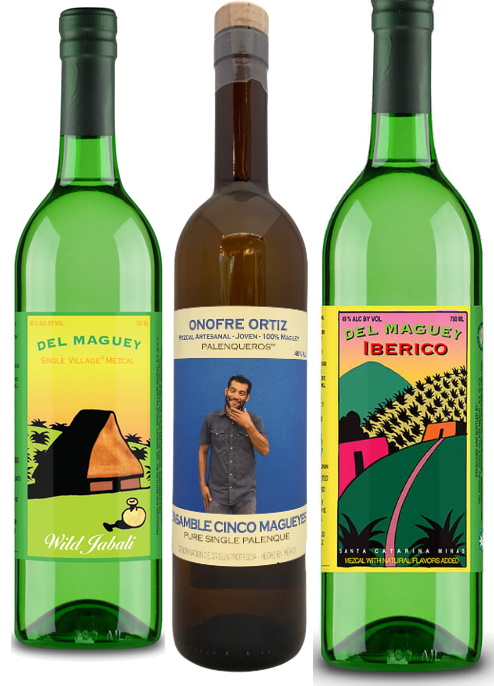
Wild Jabali, Del Maguey, 45%
Sniff: Big flavors, although it’s hard to pin down. There’s a weird conflict between floral and green flavors, and rich almost chocolatey flavors.
Sip: The palate is very smooth, and rich yet dry. The dryness is very vegetal and floral, the sweetness brings quite some fruit and a different side of floral. It’s lighter than the nose, but still has some mole notes.
Swallow: The finish goes even more dry, and more straight forward agave. Lots of floral and plant notes. Lots of agave and a whiff of smoke as in all of them. Quite a long finish.
86/100
Onofre Ortiz, Ensamble Cinco Magueyes, 48%
This mezcal is a blend of different species of agave: Bicuishe, Espadin, Madrecuishe, Mexicano, Tepeztate.
Sniff: Strangely grainy, almost whisky like. Pound cake, with a whiff of green plants, cactus, agave, smoke. The salinity of previous ones is here too, but it is slightly brothy, somehow.
Sip: On the palate is gets insanely fruity with apricots, strawberries, sweet apple, pear, pineapple. A mineral thing too, some clay, or slate. It’s still quite heavy, but in a different way than before. Not chocolatey or something, but the minerality works really well.
Swallow: The finish carries on down the line, a heavy way of fruity. Not overripe, but berries and apricots, apples and pears.
87/100
Iberico, Del Maguey, 49%
Sniff: The meaty salinity is ridiculous in this one. I have no idea how to describe this. It’s like a meat-distillate. Strangely, I’m getting some stewed red fruits too. Wild boar with cranberry sauce? In a drink? Aniseed, nuts, fruits. Ridiculous.
Sip: The palate is surprisingly biting, with the meat and salt kick in a different way. There’s fruit and spices too. The ham is surprisingly recognizable, and that’s just weird. Fruity, spicy, meaty, plant like.
Swallow: The finish starts with lots of lemon, lemon balm, but again the meatiness.
I have no idea what to do with this. It is insanely tasty, but it’s just so weird…
88/100
In review, then!
Timon has an almost encyclopedic knowledge of Mezcal, and that is quite noticeable. All in a good way, since the tasting was absolutely never dull or boring, and there still was a lot of information to digest.
I already wanted to visit Palenque in Gent, and now I want to do so more than before. I also want to try more mezcals again, and might be doing a bottle-share in the near future. That Iberico thing, though. It’s very, very tasty, but it’s so weird. I never drank ham before!
In short, this was an awesome tasting and I’ll make sure to keep my eyes open for follow-ups
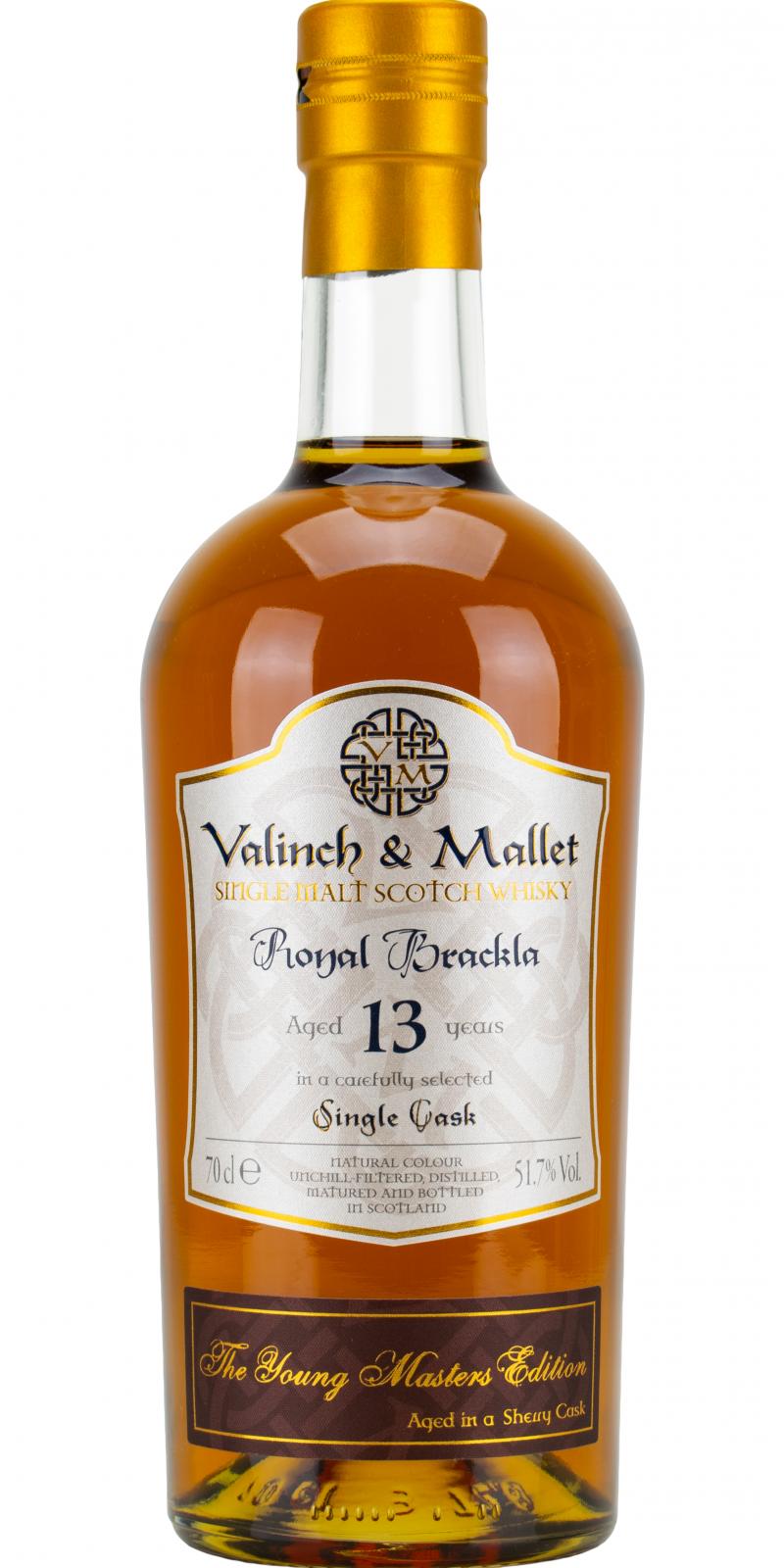
I don’t try many Royal Bracklas, for some reason. Even though they seem to be getting a bit more regular from independent bottlers. And then this one recently showed up in the bag of a whisky buddy. Of course, a sample was drawn and I tried it.
Image from Whiskybase
It’s from the ‘Young Masters Editions’ by Valinch & Mallet, but I’m not sure what that means. It does sound luxurious/pretentious, but the proof is in the pudding, in the case of booze like this. Is it worthy of being called a ‘young master’?
Sniff: Ridiculous amounts of sweet sherry, lots of tropical fruits. Peach, apricot, wood pulp, a bit of wood rot and mulch. Some caramel too.
Sip: Fierce on the arrival, lots of chili heat with a lot of alcohol. Drying because of it. Sweet oakiness, peaches, plums, dates. Pound cake, some pastry cream.
Swallow: Lots of fruit on the finish too. Dried fruit, cooked into some kind of fruit mix with sugary caramel.
While this is by no means a bad thing, this whisky is one of these modern sherry casks that have become more prominent over the last couple of years. These casks impart more flavors of sweet fruit syrup instead of the more old fashioned spices and a more gentle fruitiness.
I guess that is also in part by these modern casks often being made from American oak instead of the far more rare European trees.
Having said that, this is a very tasty dram. It’s a bit on the sweet side with all the syrupy fruits, but quite drinkable. Secondary market prices put this at € 129 and I think that’s a bit on the high side.
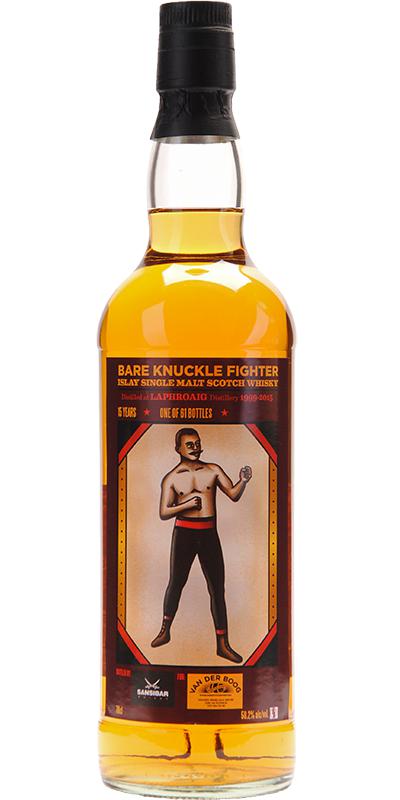
Whisky-friend and Longmorn Brother GvB came by to pick up some samples, and generally we swap a few samples more when that happens. He brought this bottle for me to try a sip of, at which point I started wondering why I didn’t buy that myself, back in 2015.
You know, decently aged Laphroaig, cask strength, renowned bottler. All good things, so why did I skip it?
It turns out that this bottle was about € 200 when it came out and six years ago that was a LOT for a 15 year old Laphroaig. That explained.
Having said that, I was quite happy to be able to try it!
Image from Whiskybase
Sniff: Briny peat smoke, with seaweed, marram grass, heather. Earthy, some dried peaches and apricot. Almonds, pound cake. Sweet pastry, dried fruits, dark brooding smoke.
Sip: Quite strong on the arrival. Black pepper, fierce oak, some bitterness of almonds and heather. Salty smoke, quite briny and hints of tar.
Swallow: The finish is slightly more fresh, with fruit, herby plants. Gentle smoke, some citrus, even.
Strangely, I kept getting notes of dried peaches and apricot. Some almonds too. I would have guessed this to be a refill sherry cask based on those notes. However, since this is from a ‘hogshead’ it’s not out of the question although a bourbon cask is far more likely.
It’s a very good dram, and based on other Laphroaigs that came out around that time, one that stood out quite a bit. It’s complex and deep, with lots of awesome flavors to offer. What I also really enjoy is that it is quite a fierce dram, but not because of the high ABV. It’s the peppery notes and oak that make it intense. Very good stuff!
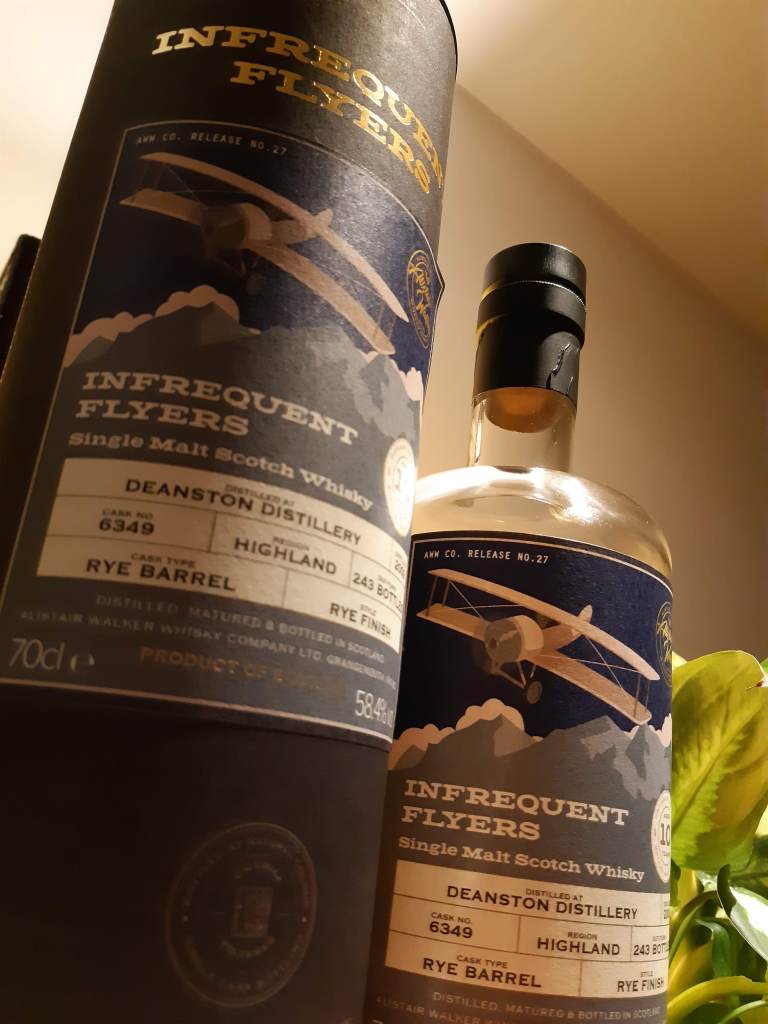
Generally, Deanston is regarded as a technically well made whisky, but also a rather bland one. Most of the available releases are bourbon-cask-driven vanilla bombs, or are focused heavily on another type of wood that the whisky matured in. As in, I wouldn’t be able to tell you what the distillery character is.
Of course, that’s not necessarily a bad thing if that happens to be what you like. I tend to prefer a whisky that is a bit more singular, and shows more of a typical note for a distillery, or a provenance if you will.
So, this one popped up last year. I didn’t really expect this one to change all that, but what made it stand out was the fact that a rye whisky cask was used. This doesn’t happen in Scotland, or at least I’m not aware of this. And as you might know, I generally like rye whisky, so when the rye spices get added to a normally rather sweet and vanilla driven single malt, my interest piques.
Let’s see what it’s about, shall we?
Sniff: A dry coconut-y bourbon cask influence, some vanilla too. After that there’s a massive spiciness. Dry grains, nutmeg, sawdust, black pepper. Some bitter orange pith.
Sip: The palate is a tad hot because of the very strong spiciness. Chili heat, black pepper, dry oak. Some orange, vanilla.
Swallow: The finish is a bit more gentle, warmer with a bit more vanilla. A bit more typical of Deanston.
The rye influence brings a lot of spiciness. Otherwise it’s a typical Deanston, a bit bland. It’s interesting that the cask influence is so noticeable, but that the vanilla comes through in the end.
It makes it a bit more interesting that ‘ye olde 10 year old Deanston’, but it’s a bit less awesome than I expected. There’s a lot of heat from the rye spices, but not much of the orange, mint and other flavors that I tend to associate with the style.
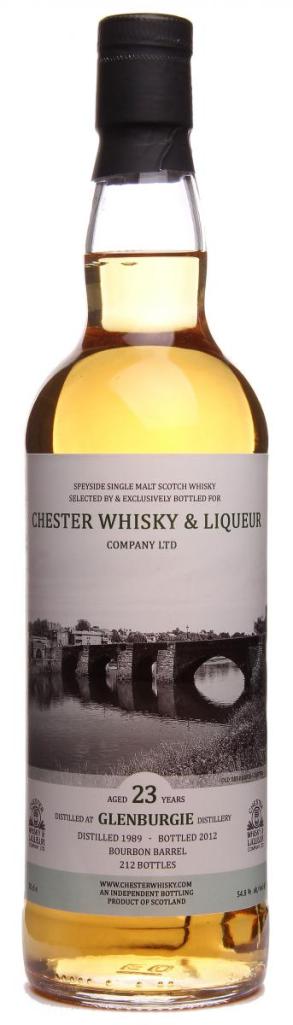
I like old(er) Glenburgie. The last couple of years there have been quite some 20-ish years old releases that were very good. Lots of fruity scents and flavors, on top of a gently malty backbone.
Of course, those are all from the late nineties, because of math. But what happens when we backpedal another decade, and go for the same age bracket, but distilled and bottled 10 years earlier?
That’s what I tried to find out with this bottle I bought from MvZ. Of course, it was a bottle-share since the velocity of stuff coming in isn’t affordable on my own, so yesterday I sat down with my brother-in-law and we finished the bottle just after writing tasting notes.
Sniff: Lots of malt, slightly austere with hints of iron and minerals and apple. Straw, toast, some licorice root, fresh ginger.
Sip: The palate packs much more punch than expected. Heaps of white pepper and chili flakes. More focused on the miberals, without the fruity apple that was there on the nose.
Swallow: The finish is back to the malt. Lots of steeped barley, straw, toast and such. Still austere, but the slight fruitiness doesn’t return.
Of course, this is just a single example, and experiments with a sample size of one don’t count for anything, but this one is not like the others. This one doesn’t belong in the light and fruity bracket.
It’s a beater with lots of bone dry austerity. Iron, minerals, a minor note of apple. I’m not sure what was so different about this one, but it didn’t meet any of my expectations, and I honestly don’t like it a lot.
Generally I don’t mind austere whiskies, but in this case there’s not much to back it up. I would love for this to also have some fruitiness in addition to the iron-y notes. Bummer.
A couple of weeks ago Norbert, of Whisky4All, hosted a whisky tasting with several drams from FEW distillery and Widow Jane distillery.
Of course, when it comes to tastings of American Whiskey, or Whisky, as he puts it, you are best off with him, since his knowledge of the stuff is almost encyclopedic, and he knows how to present it too!
I’ve tried whiskies of both these places before, and with FEW I even did a bottle-share several years ago, with their bourbon, rye, some gins and a single malt. Of course, with product being still young things should be different by now.
Of Widow Jane I only tried one whisky earlier, and while the whisky itself was pretty good, there were so much nonsense claims and statements on their website, it was pretty hard to wade through to get some information on what I was tasting.
Let’s just recalibrate and see what these fledgling distilleries are up to now, abour 7 years later than my last encounter.
FEW Bourbon, 46.5%
Image from Whiskybase (different batch, though)
Sniff: Crafty bourbon with a bit of coppery harshness, fresh oak and less sweetness than ‘regular’ bourbon. Some pine resin, a bit of paint stripper. After a few minutes vanilla gets added to the mix, with some fruit syrup.
Sip: The palate is very dry, with that hint of resin again, quite sharp and peppery. A hint of copper, iron, crisp apples.
Swallow: The finish is very gentle, compared to the palate. It goes very smoothly. Slightly less dry, some sweetness but not a lot.
I think it is quite a bit more mature than it was years ago. Not that the whiskey is older, but it seems they’ve evened out some rough edges. All in all, a very good and easy drinking bourbon.
84/100
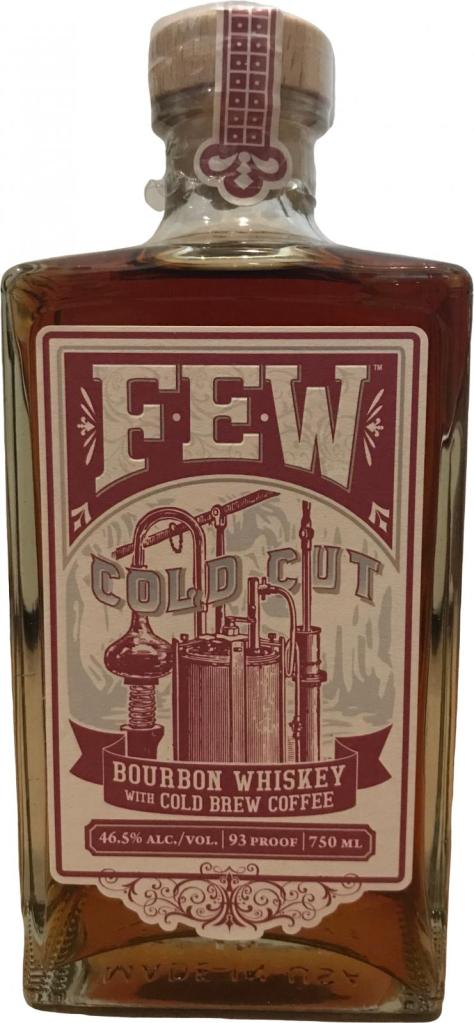
Few ‘Cold Cut’, 46.5%
Image from Whiskybase
I intentionally don’t say this is a bourbon, since it isn’t. What they’ve done here is take their cask strength bourbon and use cold-brew coffee to bring it down to 46.5%. Generally, I’m very much not enamored by ‘weird things done to whiskey’, but in this case…
Sniff: This one is a bit more chocolatey on the nose. The cold brew coffee is noticeable, even though it’s a very gentle note. A whiff of vanilla and a soft note of oak.
Sip: The palate has that cold brew sweetness before the dry oak and grain kicks in. A slight bitterness of chocolate and coffee.
Swallow: The finish does show the coffee again, but it’s definitely not ‘just any cup added’. ‘Haagse Hopjes’, a bit mocha like.
I am actually surprised by how this works. As in, the coffee is definitely noticeable, but not overpowering the whisky. Even though there are quite some cups in every bottle, if I’m not mistaken. This is one of the most innovative things I’ve seen in years and I actually love it!
87/100
Few Rye, 46.5%
Image from Whiskybase (different batch, though)
Sniff: Not overly spicy, but does get some more crispness with a little bit of time. Some orange waxiness, a hint of pith, some menthol too.
Sip: The palate is a bit waxy too, but has some more dry spiciness. Tobacco, orange zest and pith, some cherry stones. Some pear, menthol.
Swallow: The finish removes some of the sweetness and focuses more on the mint and spiciness. A whiff of licorice, mint, orange.
A very decent rye whiskey, although the dryness and spiciness aren’t as pronounced as with some other recent releases. It’s a rather low-rye whisky, I think. Having said that, it’s still tasty enough with lots of interesting stuff going on. And as always, the mint and orange bit is present which I like a lot anyway!
85/100
Few ‘Immortal Rye’, 46.5%
Image from Whiskybase
As with their bourbon, they decided something needed to be tried with the rye as well. In this case FEW brought their rye to drinking strength with ‘Eight Immortals Tea’, an Oolong tea from China.
Sniff: A bit darker than the regular rye, more autumnal with some dry leaves. Slightly dusty, a bit more citrus than before. Lime, lemon.
Sip: Quite dry, leafy, dusty. Tannins with a bit of bite. Fallen leaves, a bitter note even. Lime zest, some mint (but not that menthol note). Keeps building and does remind me a bit of these tea IPAs.
Swallow: The finish has a lot more oomph than I expected. There’s a lot of spices, rye, oak, orange, but also the lime, mint, tannins. Very ‘drye’.
Once again, subtle changes to an already very decent whisky, and these changes work very well. In this case the whisky gets a bit drier than it already was, which is an interesting twist to get the added dryness without the added spiciness that comes from higher rye mashbills.
87/100
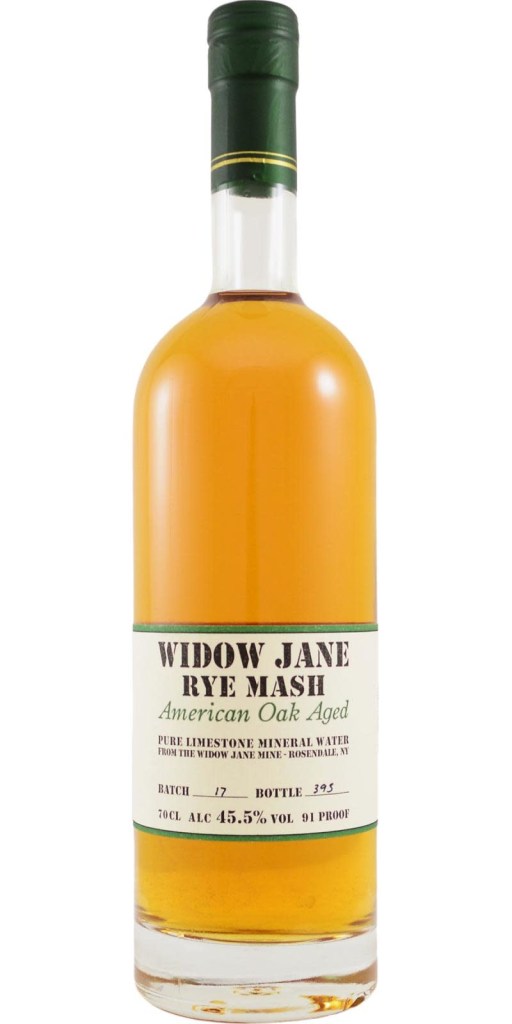
Widow Jane Rye Mash, 45.5%
Image from Whiskybase (different batch, though)
Again, something that is not technically a Straight Rye Whisky, but a ‘rye mash’. In this case because the spirit wasn’t matured in new oak casks, but in reused casks. A minor technicality, but one that defines a category.
Sniff: Lots of dry rye bread and rye spices. Dry oak with some red fruits, some cherry stone bitterness. Quite some leafy spices. Dark, crusty bread, roasted pumpkin seeds. It gets more flowery, heather and lavender.
Sip: The palate has the same spiciness, with burnt sugar and mashed red fruits. Dry oak, a whiff of bitterness.
Swallow: A hint of coffee and some red fruits, dry crusty bread, roasted pumpkin seeds.
A pretty good drink but, as with the FEW rye, not overly spectacular. Still I’d happily go through a bottle and wouldn’t regret getting one. As in, it’s a good rye.
85/100
Widow Jane 10yo, 45.5%
Image from Drinks & Co
Sniff: This bourbon is the sweetest whiskey of the night, Some notes of sweet tea, cornbread, plums, oak.
Sip: The palate is dry and has quite a bit of pepper, both black and red. Sweet tea, corn, plums, oak. Rather quintessential bourbon with not too much sweetness.
Swallow: The finish is slightly fiery, with dry oak and some pepper.
This one was a bit too sweet for me. Especially after six less sweet whiskies, even though it might not even stand out as a sweet whisky on it’s own. I expected it to be drier and more woody because of the rather long aging.
84/100
After these six whiskies it was time to call it a night, it being a school night and all. It was a good tasting, as expected, although I can now state once again that I don’t care too much about Widow Jane, and I still love what FEW is doing!
Even though this is an older Laphroaig in two ways, both well aged and from quite some years ago, my mate TvE shared it at a very acceptable price. I didn’t have to think for long to decide whether to get a share or not!
Especially back in those days, Old Malt Cask was a very well respected brand by Douglas Laing. Not that they’re not now, it’s just that they’ve become quite expensive and the whisky has gotten less fascinating.
It seems Douglas Laing is focused more on their Big Peat and affiliated brands now than they are on bottling single casks. I might be very wrong with this, of course, but I’ve not seen many new releases pop-up here lately.
Image from Whiskybase
Sniff: Bandaids, straw, seaweed, briny smoke. Quite medicinal, compared to modern Laphroaig. Some baking spices, and a bitter note.
Sip: Quite a bit of sharpness, white pepper and brine. Seaweed, oak, some corky apple and a note of bitter almond. Salty smoke, marram grass, reed.
Swallow: A gentle finish, and a long one. Slightly smoky and slightly more woody than before. Straw and grass, slightly briny.
It’s got the slightly medicinal note of bandaids to it, although I didn’t get anything in the iodine or tar department. Mostly briny, which makes it quite enough typically Islay. So, a lot of good things are happening!
Spices, brine, some medicinal notes, pepper. This one does exactly what people lament Laphroaig for not doing anymore in contemporary bottlings. So, yes, this is very, very good. And by very, very good I mean incredibly good.
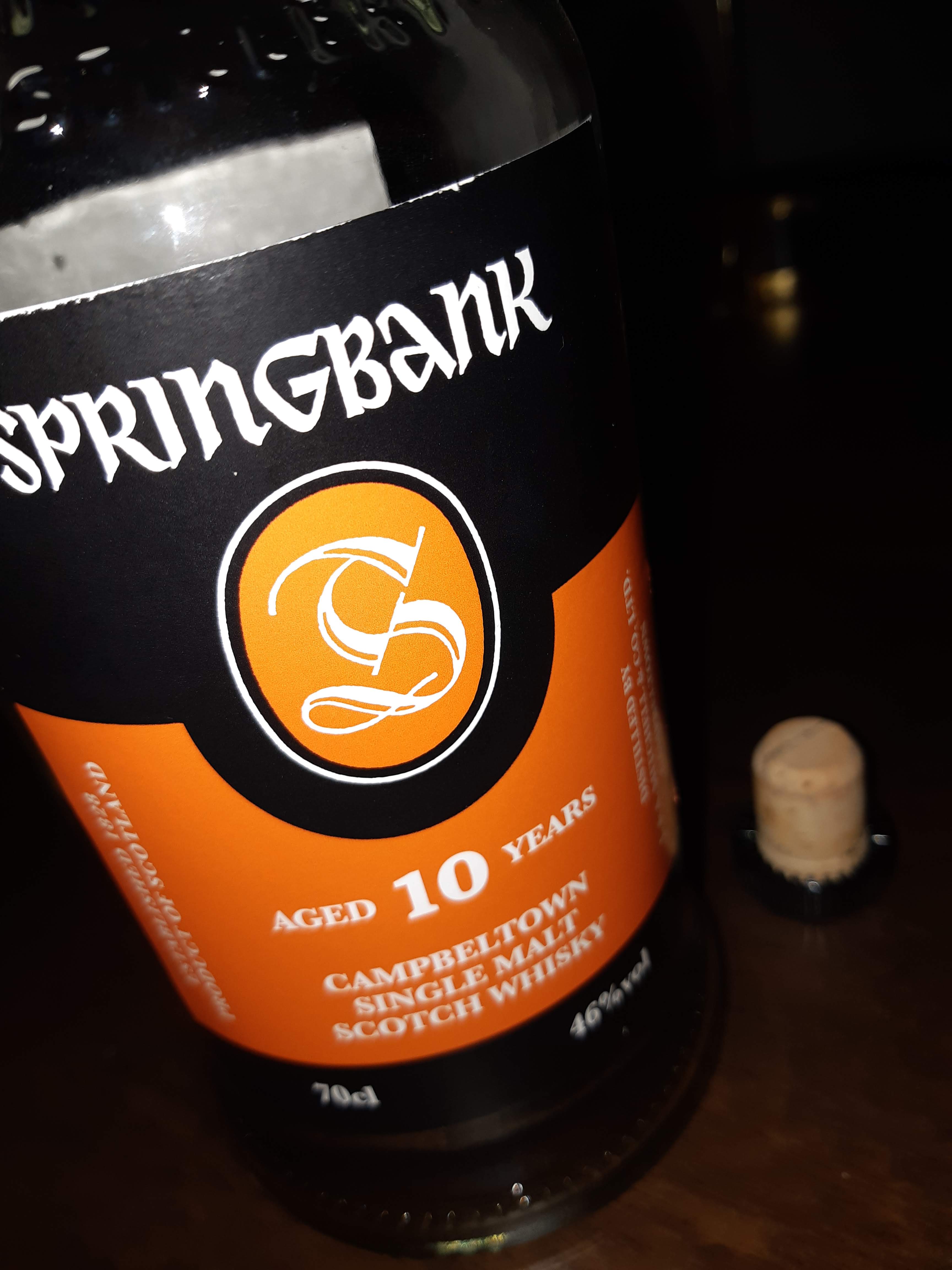
Currently, due to COVID-19 and Brexit, it’s pretty hard to get a bottle of Springbank 10 in The Netherlands. A lot of bottle-shops are running out since it’s a quite popular whisky, the distillery hasn’t been able to bottle casks for a large chunk of last year and it’s a lot more complicated to get stuff into the EU, apparently.
So, recently I decided to do a bottle-share with a bottle I did manage to get, from last September’s batch. The whisky is made up of 40% sherry casks and 60% bourbon casks.
As with every Springbank 10 I have quite high expectations, as this is a € 50 whisky that consistently outperforms many bottles that are twice as expensive. It’s a benchmark if there ever was one.
Sniff: A whiff of smoke, with a lot of harbor scents. Tar, rope, salinity, basalt. Some straw and hessian, a bit of iron too.
Sip: The palate is dry, with a bit of straw-like bite. Oak, iron, apple, sate, salinity, grass. A lot is happening.
Swallow: The finish is a bit more sweet, but still dry. Quite long with hessisn and cracked leather. Straw, grass, oak, apple
It’s always a bit challenging to properly score this. Technically you cannot taste the price of a bottle of whisky. On the other hand, having to pay for booze generally is part of the experience.
If you take in account I got this for little under € 50, this is a 90 point whisky for sure. As is Benromach 10, Lagavulin 16, and some others that shouldn’t technically score that high either.
If you just look at the liquid it still sits comfortably at 88 points, since it is just a very good, complex and interesting whisky. It’s easily quaffable, but also offers room for exploration. There’s layers of flavors, with just enough of everything to be very, very good.








 Malt Fascination