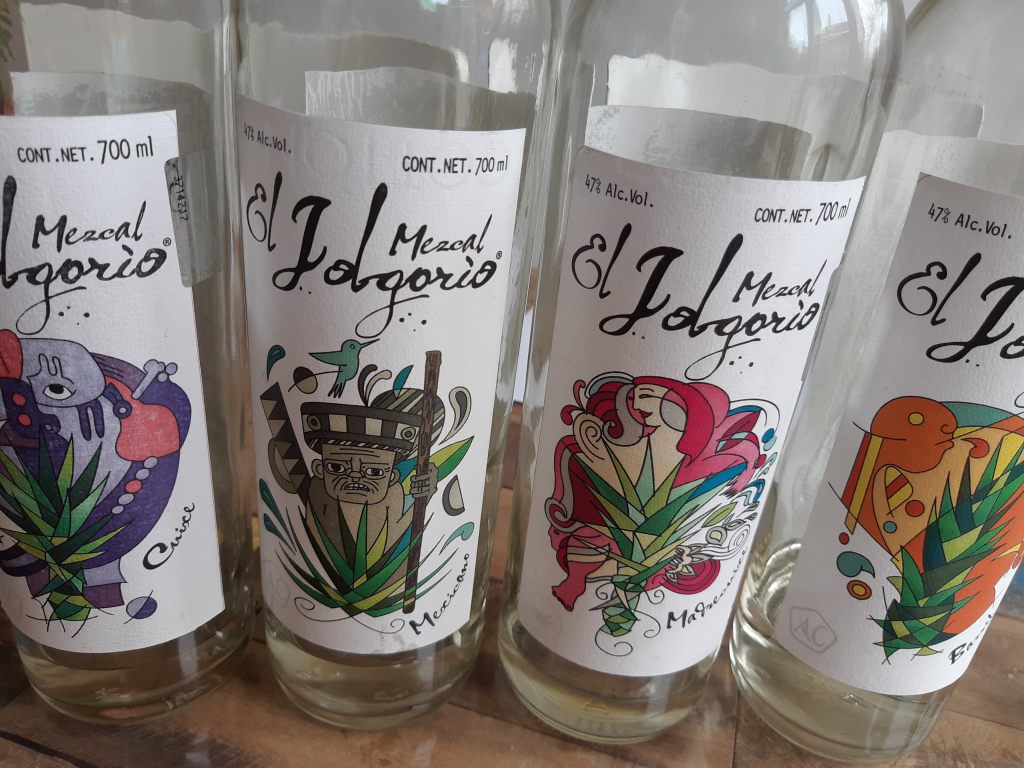
Five Mezcals by ‘El Jolgorio’

Some years ago when whisky was going through another massive price hike I decided it was time to broaden my horizon, and after some dabbling in jenever and rum I ended up with a bottle of mezcal. I found this spirit hugely interesting and orthogonal to whisky.

Apart from some smoky flavors there are virtually no similarities, especially when going for the joven (unaged) where there are no wood influences yet.

So, I bought a few bottles that I shared (reviews here) and when I got a sizable promotion at the end of 2015 I bought these five bottles. Of course, right when that happened, I also lost interest. As in, I tried them all, and started to realize that the flavors, however different to those of whisky, are not as varied. And, again personally, less to my liking than those of whisky.

This resulted in these bottles not doing much apart from gathering dust. Until recently, because of corona. Corona sounds Mexican.

Well, of course that’s not it. What IS it, is that I spent quite some time in my den, playing Magic the Gathering with a webcam and some friends. While sitting there I wanted a drink that I had open, and wasn’t near its end, so I didn’t have to write notes as well as keep track of about a hundred variables in a game.

These bottles caught my eye and then they went rather quickly. In part because it’s easy to lose track of how much you’re drinking when you’re mainly doing something else, and in part because I found it quite tasty again. Different, so to say.

But, last Friday I decided to spend the afternoon going through the tail ends of the bottles. Kid one was playing at a friend’s house, kid two was also out, and kid three was napping. A moment of PornHub-free me-time!

Mezcal El Jolgorio, Cuixe, 46.4% (2014)
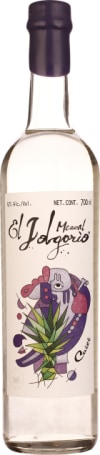
Mezcal Joven, Cuixe Silvestre, Karwinskii, 13yo
Producer: Gregorio Mtz. Jarquin, Santiago Matatlán

Sniff:
Pretty thick and heavy on the nose, with a bit of diesel-y smoke. Smoked agave, obviously, with lemon balm, dirt. A slight sharpness of new make spirit.

Sip:
The palate is rather intense too, with some peppery heat. As on the nose, it’s much heavier and more oily than a white spirit makes you expect. It’s smoky, and rich with agave, cactus and diesel.

Swallow:
The finish is a bit more crisp. Still with agave, and those kind of ‘succulents’. There’s a herbal touch to it that wasn’t there before. Also, a smoked lemon peels and a hint of lime show up.

85/100

Pretty decent stuff, this. It’s not ridiculously complex, but there’s nothing to complain about. I think it’s good I started with this one, since I think this is the most typical of the bunch.


Mezcal El Jolgorio, Mexicano, 47% (2012)
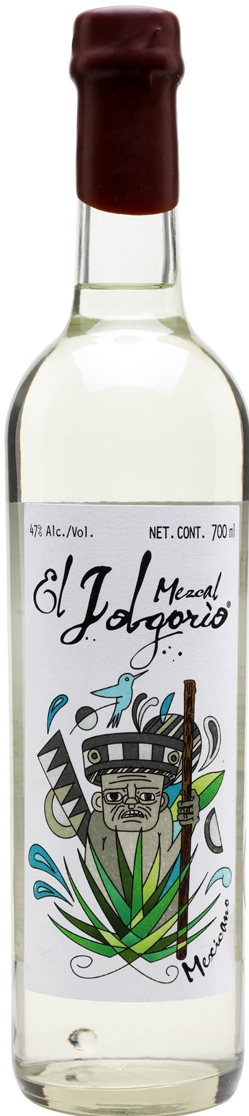
Mezcal Joven, Mexicano Silvestre, Rodacantha, 10yo
Producer: Valentín Cortes, Santiago Matatlán

Sniff:
Far more green than the Cuixe, with more plant like scents. More cactus, agave, lime, almost to a level that it smells like washing up liquid. A very slight smokiness.

Sip:
The palate loses much of that greenness, and goes to the mushy, pulpy stuff that is needed for fermentation. Somehow it reminds me of rhubarb. It’s quite warming, but also a tad flat in regards to the flavor.

Swallow:
The finish opens up a bit more, with more of these lime and cactus notes that I also got on the nose. The lingering alcohol tingles like carbonated water.

80/100

This one is a bit flat. There’s just not much happening on both the nose and the palate. The flavors that are there are the ones you encounter in most mezcal anyway, so it doesn’t stand out.


Mezcal El Jolgorio, Madrecuixe, 47%

Mezcal Joven, Madrecuixe Silvestre, Karwinskii, 14yo
Producer: Ignacio Parada, Santa Maria Zoquitlan

Sniff:
This is very crisp, with lots of herbal and citrus notes. A whiff of smoke again, but mostly lemon, orange, lime. The more typical agave notes come a tad later, with a second sniff.

Sip:
The palate, again, is slightly less crisp than the nose, but the difference isn’t as big. There’s some peppery heat added. The lemon and orange notes continue, and get a little bit sweeter.

Swallow:
The finish is slightly dry, with a whiff of alcohol, agave and more citrus and herbal notes. Leafy greens, with copper.

87/100

This one is rather similar to the first one, with a bit more focus on the citric flavors, and the herbaceousness of it. A tad more summery and light, because of it.


Mezcal El Jolgorio, Barril, 47%

Mezcal Joven, Barril Silvestre, Karwinskii, 13yo
Producent: Gregorio y Gonzalo Hdz., San Miguel Ejutla

Sniff:
Quite grainy on the nose, almost like a whisky new make. Heavy in the smokiness, with hints of wood, barley, rye.

Sip:
The palate carries on in the same vein, but the agave is a bit more pronounced here. Slightly more green, but not unlike whisky spirit, still. The texture is rather oily, compared to the others, with a different heat than in the others too. More like alcohol instead of peppers.

Swallow:
The finish is spicy, with hints of dark bread, rye, grilled peppers and agave. Very dark, maybe even some cocoa.

88/100

This I find very interesting. As said, there are some whisky like qualities, which make this slightly less unique, less different. However, (if my info is correct) this wild agave is something quite interesting. Pretty dark stuff.


Pechuga El Jolgorio, Espadin, 47%

Mezcal Joven, Espadin Silvestre, 10yo
Producent: Gregorio Hernandez, Ignacio Parada, Valentin Cortes, Santa Maria Zoquitlan and Santiago Matatlan

Sniff:
It might be suggestive, but it does seem to be a bit more meaty. Of course, there’s much more than just chicken in the basket that is put in the still, if my info is correct, so that might just be that: suggestive.

Meaty, dry and rather intense. There’s a lot going on, with slight bitter notes like twigs, but also the green notes of agave, cactus, moss even.

Sip:
The palate is a tad fatty, with hints of bitterness and peppery heat. There’s some meaty weight to it too. Rich, but in a different way than before. Bitter oranges, some other tropical fruits too, maybe even passion fruit. Also some suggestion of splintered wood.

Swallow:
The finish is a bit more green than the palate was, and finds more connection with the nose than the mouthfeel. It’s warming, with hints of meat, fruit and a whiff of steamed vegetables. Green notes of agave too.

87/100

Then the most unique of the bunch, at least in it’s recipe. I don’t think I got much of the effects of the turkey used in distillation, which I found a bit of a downer. Apart from that, the palate is quite interesting in other flavors. Good stuff!


Concluding, I find it a bit more interesting than I thought the last couple of years, but it still is not whisky. What also doesn’t help is that this stuff is made in such small batches and in such an artisanal way, it’s ridiculously expensive.

The Pechuga sits at € 110 in a discount, and the others clocked in around eighty euros each. While it’s nice to have a bottle around, I find it way too expensive for much more exploration.

I can imagine getting another bottle of the Barril, or the Madrecuixe, though.
Posted in - Mezcal | Tagged , , , , , , , , | Leave a comment

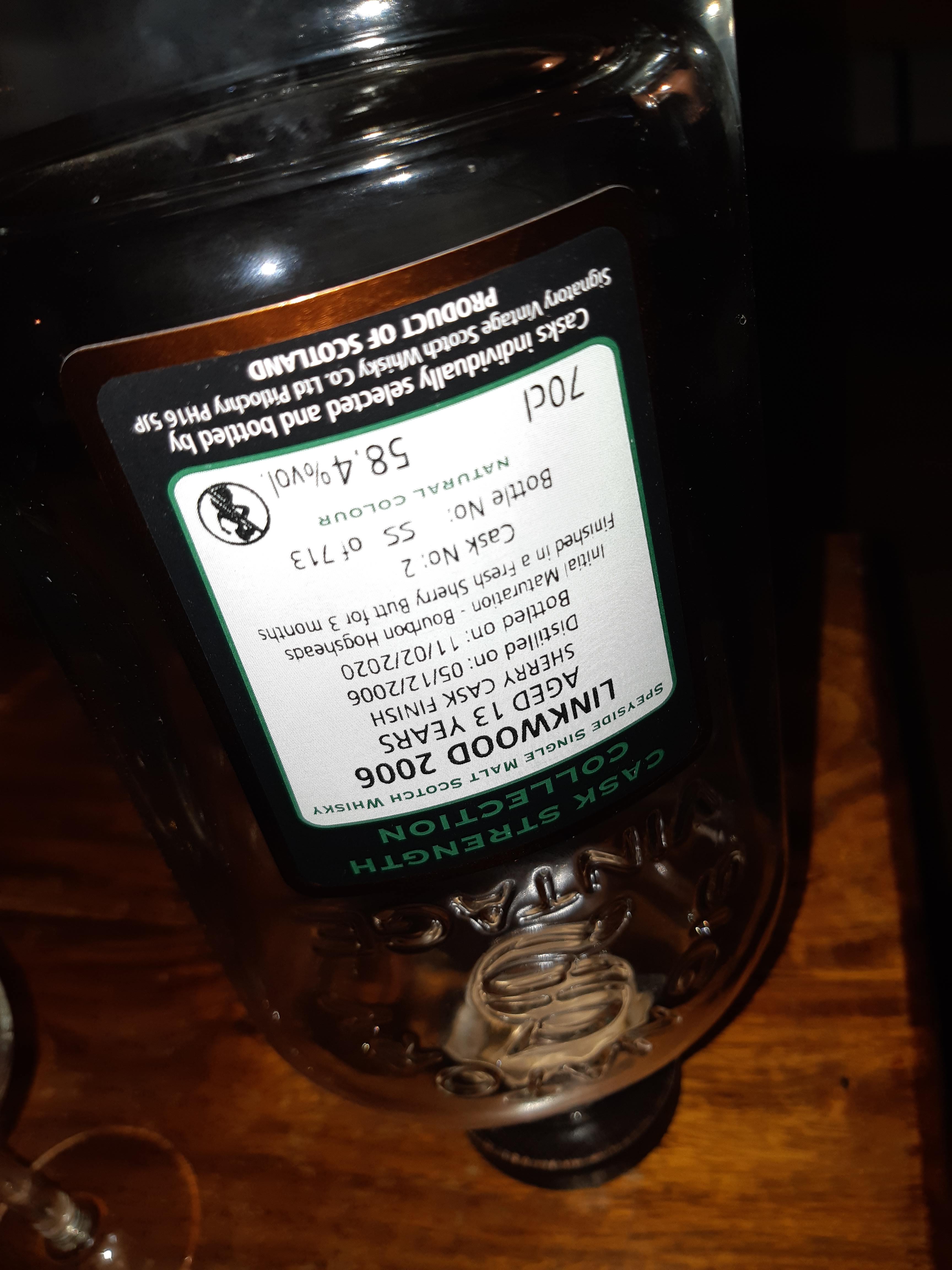
Linkwood 13, 2006-2020, 58.4% – Signatory Vintage

I think this was the first Linkwood in my collection, ever. It’s a recent release that came out a month or two ago, when the lockdown was just in place and my passion for whisky was rekindling. I might blog more on that later, but I saw this bottle pop-up and based on the color, the cask strength-ness and the bottler, I decided to buy a bottle.

It set me back about € 100, which isn’t too crazy nowadays. It’s not cheap either, but with some samples sold, it’s not too bad to drink half a bottle of this myself. Which I did. Rapidly.

The last couple of years I’ve been veering away from these heavily sherried whiskies, especially sherry finishes. I consider them often to be rather delicious, but obfuscating the distillery character, and that’s what I’m more interested in.

I decided to buy this one anyway, and I can’t even say why. However, with it already being empty, you might guess in which direction this review is heading.

Linkwood is a bit of a strange distillery, who’s character I generally describe as ‘beery’. There’s a bit of a floral/herbal bitterness to it that I’ve not found in many other whiskies.

20200517_214547Sniff:
Orangy sherry with cloves. Baking spices and citrus fruit. Candied lemon, oak, hints of Gouda cheese. After a while there’s bayleaf, some laurel. Dried basil.

Sip:
The palate has some bite, with spicy sherry and quite a lot of oak. There’s a lightness, too, somehow. It keeps the richness from becoming too much.

Swallow:
The finish is a bit more straight forward with lots of spices, dried fruit and lots of oak. A long finish with orange seeds, candied orange peel, hints of chocolate. That weird cheesy note.

I think in this case the combination of bourbon maturation and sherry finishing works very well. There’s enough typical sherry notes with citrus fruits, baking spices and dried fruits to accompany the rather strong spirit with other herbs, lighter fruity notes and that bitterness that is present to a lesser degree.

What makes this a very dangerous whisky is that you barely taste the rather high ABV. As in, you notice it’s high, but I’d never guess this to be almost 60%, and therefore you’re quickly inclined to drink a second or third dram of it.

All in all, this is a cracking whisky that I thorougly liked. It’s rather complex with both the spirit and both cask types making for an intriguing and unique whisky.

89/100

Linkwood 13, 2006-2020, Bourbon Hogshead, with a Fresh Sherry Butt Finish #2, 58.4%, Signatory Vintage. Still available in Germany for € 135 (up a third already)

Posted in Linkwood | Tagged , , , , | Leave a comment

Guest post: The Battle of the Benrinnes (1979 vs 2000)

It’s been some time, but I’ve got another guest-post lined up for you! My friend Tom van Engelen wrote about his experience comparing two Benrinnes to each other. Their distillation date is more than two decades apart so there should be some differences based on only that!

Take it away, Tom!


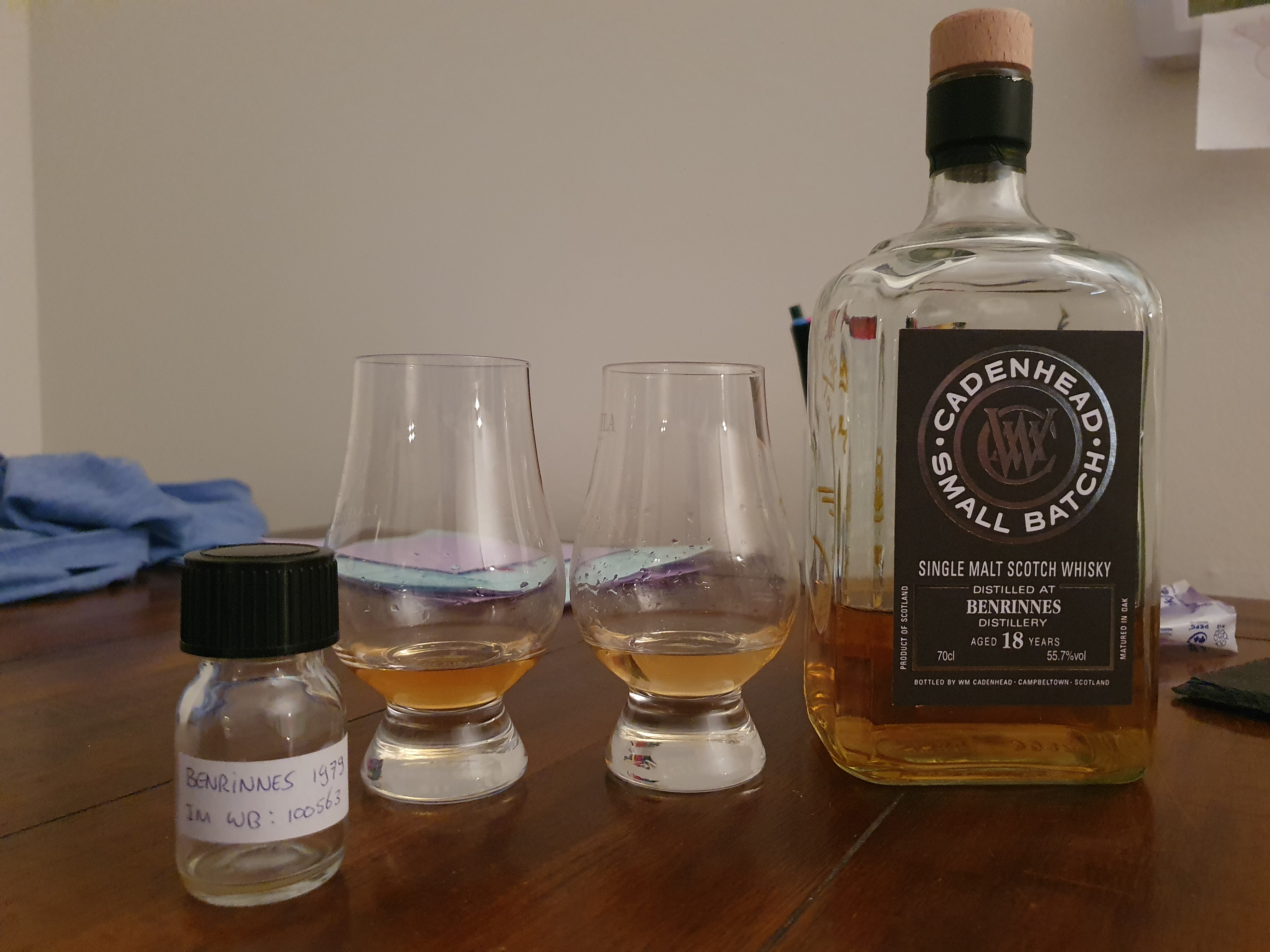
Ever since I visited the Benrinnes Distillery high up on the slopes of this famous Speyside mountain, during the Spirit of Speyside festival 2019, I keep on gathering information and (of course) booze from that Diageo production site. In times past the distillery was one of the few to have a weird distilling regime of more than 2 times per go. Like Mortlach and Linkwood still do. Turns out, as workers told me, in these days Benrinnes is made in a more traditional two-time run. The meatier ones have my interest, so when I had to chance to buy a sample of a 1979 vintage, I put it together with a Cadenhead Small Batch from a 2000 vintage that I own myself. The first expression was bottled when the second was distilled.

20200511_220818 (1)

Benrinnes 1979-2000, bottled at 46% by Ian Macleod

Benrinnes 20 1979 Dun BheaganSniff:
A slight touch of glue covers a delicately wood smoke character. Very interesting. Something fruity in there too. A fine balance.

Sip:
Fine spirit-driven mouth feel in a good balance with the 20 years maturation. After holding it a little it turns peppery and hot in the mouth. Probably a good decision to bottle this at 46%. Very elegant mouthfeel though, softer and more gentle than I expected.

Swallow:
Here is the punch I was waiting for. A good, malty finish that keeps on lingering long after it’s gone down. I get a better impression from the texture of the distillate now than upon sipping.

Very nice that the wood maturation plays second fiddle to the spirit. Feels like an old-style whisky, with a good dash of smoked fruit (is that a thing?) to bind it all together.

88/100 points.

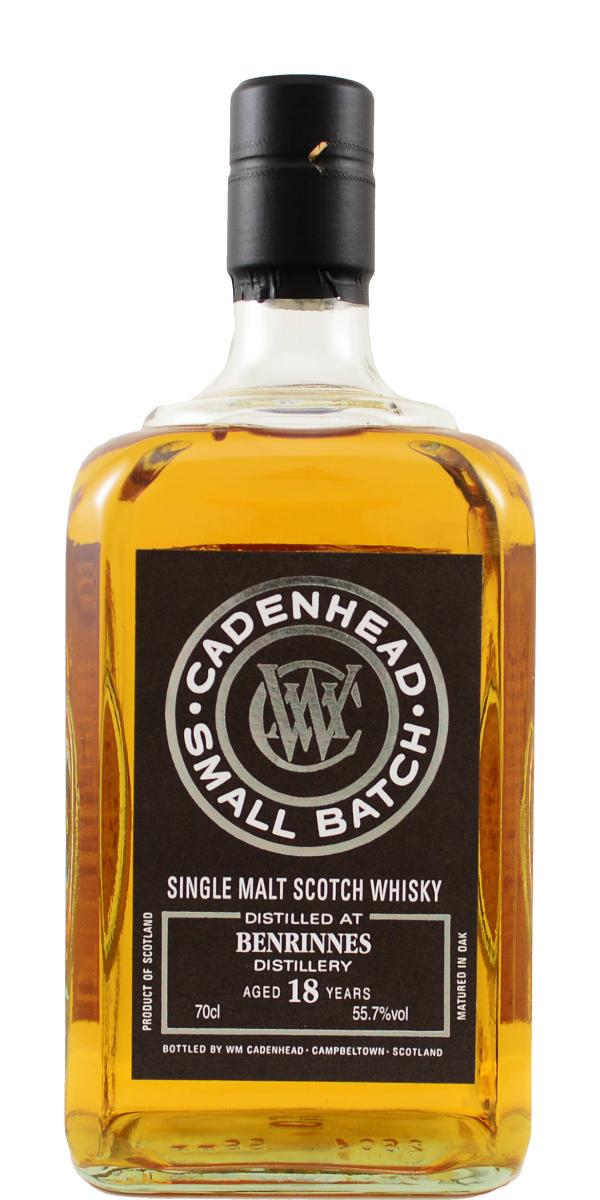
Benrinnes 2000-2019, bottled as a Small Batch by Cadenhead at 55,7%

226590-big

Image from Whiskybase

Sniff:
Remarkably similar but a lot more “glue” scent to the front. Is this what Ian Macleod wanted to tone down in the 1979? I like the candy shop smells that emerges from under the glue tones. If smell would have a color, in this Benrinnes it would be pink. I don’t detect smoky notes though.

Sip:
More active wood has given this expression a sweet tooth but also some vanilla dominance. Just on the right side of what I like, so it’s positive. Remarkably consistent production actually, but this one is more “fat” than the 1979.

Swallow:
Here the wood influence, 4 bourbon barrels according to the label, shows some nice spices.

It is a rather waxy finish, I have to say, not totally unrelated to what I like in Clynelish actually.

87/100 points.

I had the Cadenhead at 86 points but diluting it for honest comparison really improved the finish with some nice lemon notes. The Ian Macleod does come out on top for a better balance, perhaps due to a wise choice not to go for cask strength.

The Cadenhead is still for sale at some retailers, like The Shining Dram


WhatsApp Image 2020-05-18 at 16.35.41

About Tom van Engelen

I’m a writer in a variety of fields and have a soft spot for whisky, mainly malt, mainly from Scotland. In other times I enjoyed a stint as editor-in-chief of one of the first whisky magazines in the world. When not sipping a good glass I like to write some more, read, watch 007 movies or listen Bowie music. I’m engaged to Dasha, I have a sweet daughter and I live somewhere between the big rivers in the middle of The Netherlands.

Posted in - Guest Post, Benrinnes | Tagged , , , , , , , , , , | Leave a comment

De Struise Brouwers, anno 2020

When I started drinking craft beers some years ago, De Struise Brouwers were right at the top of everyone’s list. They made innovative beers that broke the Belgian mould (The Belgian Mould being Blonde, Double, Tripel, sometimes a Quadrupel).

They made a stout, a fisherman’s ale, they did barrel aging, you name it.

They even had a high end range of the more expensive barrel aging and exclusive beers, sitting around € 40 per big bottle, and some € 25 for a small bottle of Black Damnation (from the top of my head). Pricy stuff, but apparently insanely good beers.

I never had those, but what I did do was buy more of the Pannepot Reservas in different vintages for aging several years and comparing how these hold up.

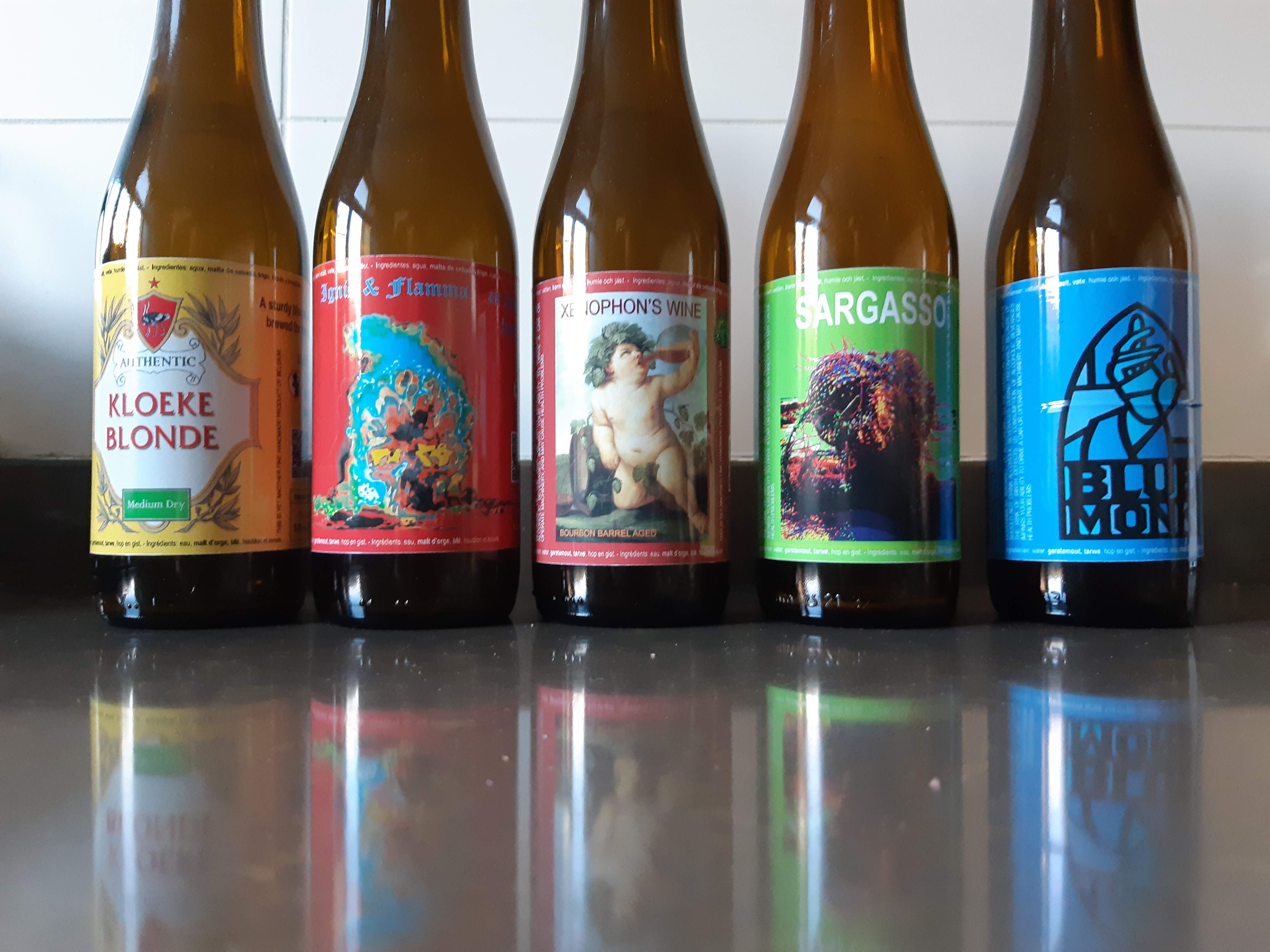
Then, a week or two ago, Drinks & Gifts, my local bottle shop, had a huge amount of new releases from De Struise Brouwers, and I decided to get all nine bottles of them. There were some more, but those were the really expensive ones. I wanted the more approachable lot.

I spent two weekends trying them all, to see where De Struise Brouwers now stand on my personal list of breweries.

20200512_075329

When trying these vintage Pannepot Reservas for a while, I found I was less and less enthusiastic about them. Aging didn’t do too much to them, and there’s a funky flavor that is unique and sort-of attractive, but also gets very one dimensional.

Unfortunately, I found that flavor in Kloeke Blonde as well. And in Xenophon’s Wine, and to lesser extent in the Ignis & Flamma, Sargasso and Blue Monk.

The Kloeke Blonde wasn’t very blond and didn’t really fit the category because it’s too rich, too funky. The Xenophon’s Wine and Sargasso are, honestly, a tad forgettable. One has a rum barrel aging that didn’t really give it that ‘barrel aged’ flavor profile that is what you want from it.

Ignis & Flamma, an IPA, was rather interesting though. I might be wrong but to me it tasted like an old fashioned English style of IPA, contrary to the hugely popular American style that every brewery makes nowadays. A bit more smooth, with a bit less focus on crispy hoppiness. I quite liked this one.

The Blue Monk is one I remember fondly from several years ago when it came out, but didn’t do anything for me this time around.

Interestingly, I did rate the beers rather highly, because they are still well made brews. They’re just not exceptional (as in, not 4+ on Untappd).

20200512_075404

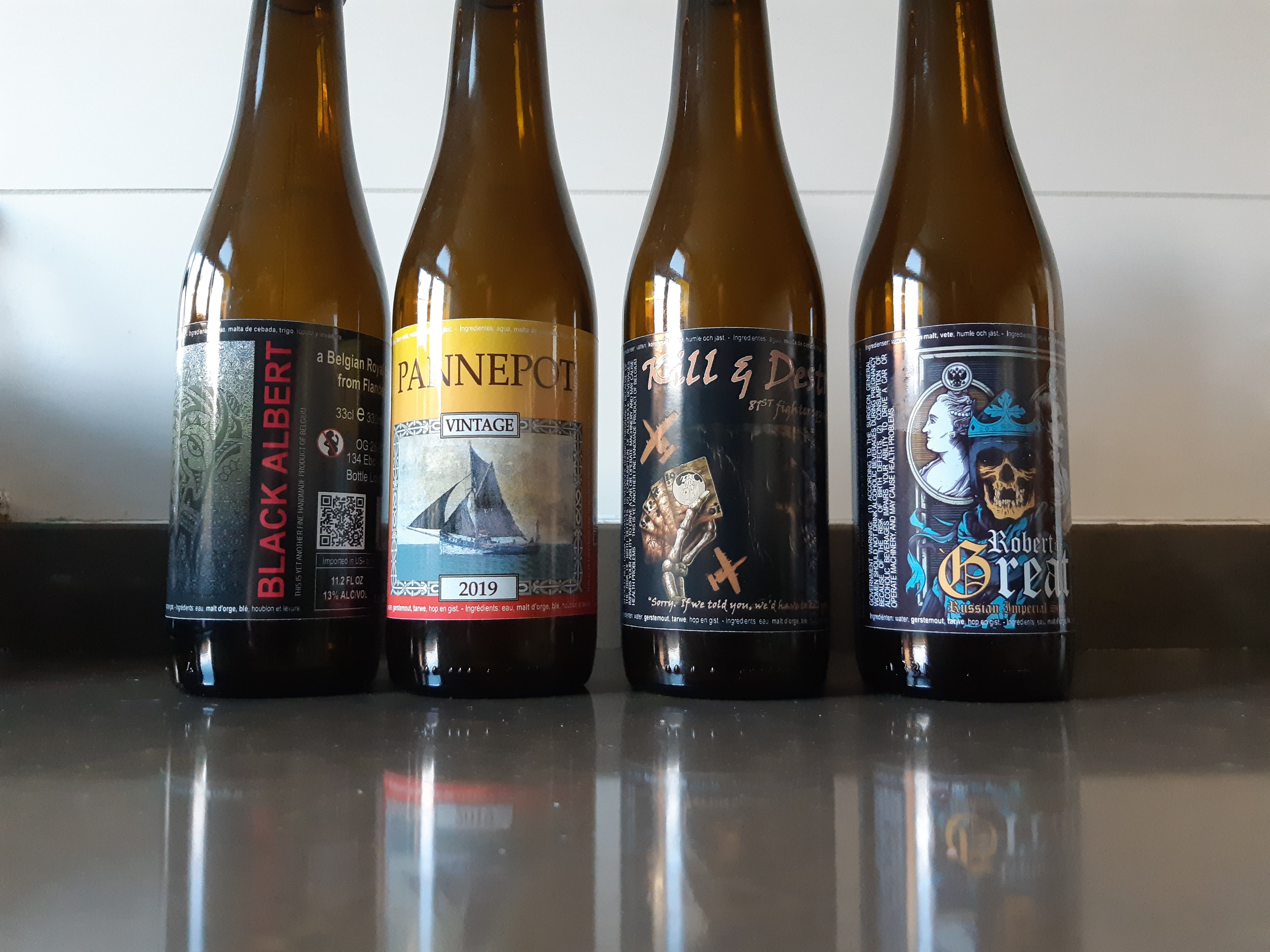
Then the second weekend rolled around and I tried these four.

I started with the Pannepot Vintage. Mind, not the Pannepot Reserva Vintage! As I found out, I vastly prefer this one at the moment. It’s more rich and chocolatey, with far less of the funky, moldy style that comes with the Reserva.

The Black Albert has always been a favorite of mine, but I’m just a huge fan of English style beers, and big stouts like this fit that bill. This one is no different, although I have gotten spoiled over the last few years, with this making somewhat less of an impact than it did before. In regards to flavor that is, because the 13% ABV is still not something to scoff at.

Kill & Destroy is an IPA again. I figure I’d have an IPA last Saturday afternoon, because who doesn’t like an IPA in the sun? Luckily I checked the label before opening it, because I had never done so before and didn’t know this one sits at EIGHTEEN % alcohol. Holy shit this is some beer. Of course, it’s a tad gimmicky at that ABV, but it’s a nice change of pace with the high ABV beers from the usual stouts and barley wines. Big flavors, with the malt and alcohol bringing some sweetness to balance out the mountain op hops that are in it.

Robert the Great closed the line, and it is yet another stout. A bit different from the Black Albert, in this being a bit more malty, and a bit more rich. Another good beer, and also, as with all these four beers, far less focused on that funky flavor that I had come to associate with De Struise Brouwers.

Concluding:

While they didn’t exactly fall of their pedestal, they did take a step down. I’ve grown a bit tired of such a brewery specific flavor profile that pushes a lot of styles into a confusing middle ground.

Some beers are very good still, luckily, although it seems they’re better off brewing the English style compared to the Belgian style. A mixed bag, all in all.

The ones worthy of attention:

  • Robert the Great
  • Black Albert
  • Pannepot
  • Ignis & Flamma

The ones I’ll not be buying again:

  • Kloeke Blonde (just not a very good beer)
  • Sargasso (too dark and rich for a saison)
  • Blue Monk (already forgotten)
  • Xenophon’s Wine (already forgotten)
  • Kill & Destroy (too gimmicky)
Posted in - Beer, - News and Announcements, Struise Brouwers | Tagged , , , , , , , | Leave a comment

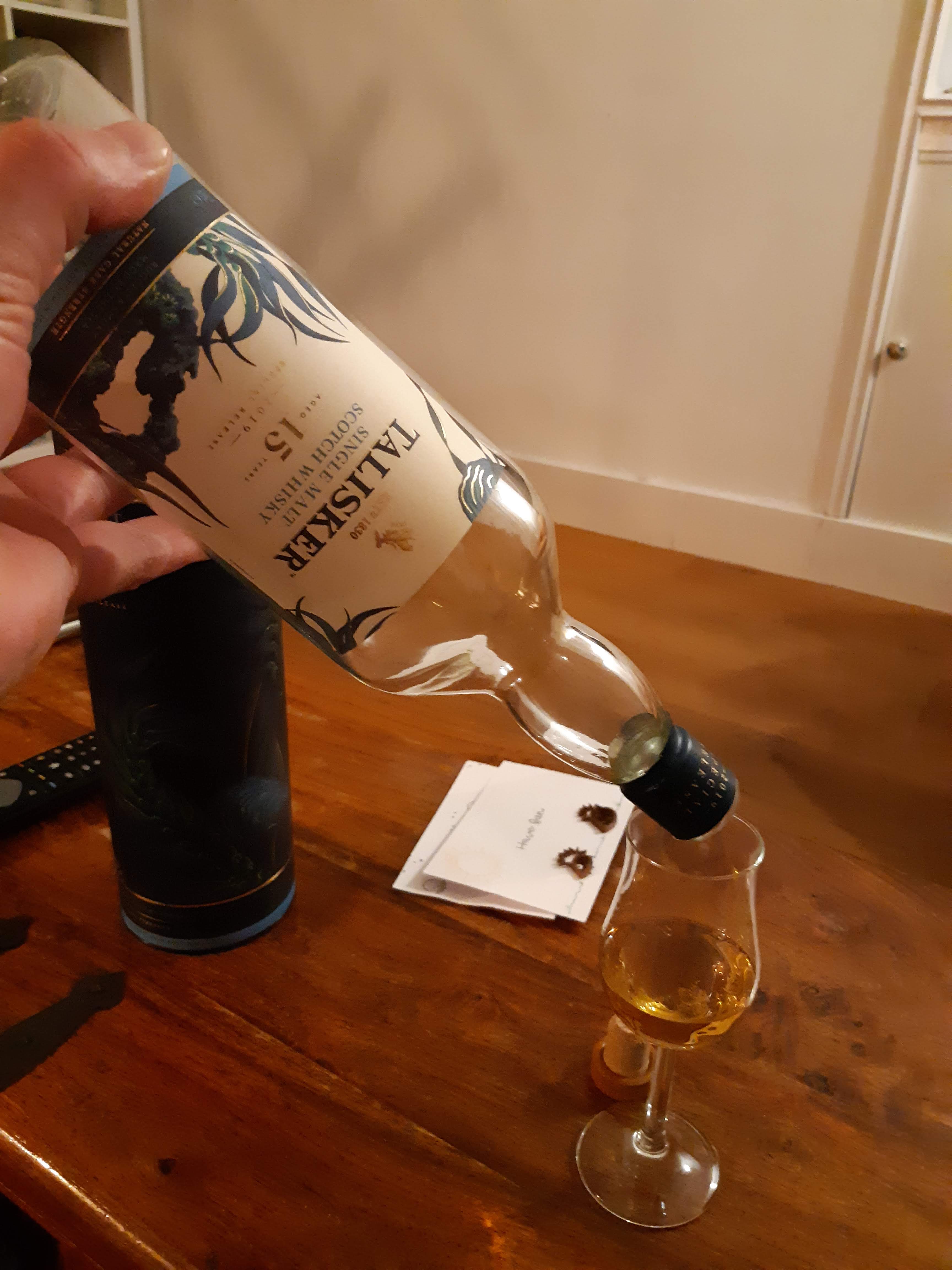
Talisker 15, 57.3% – Diageo Special Releases 2019

The Diageo Special Releases are always a thing to look forward to as summer approaches. As in, that’s generally when the announcement happens or there is some marketing leak in which they releases are listed.

When it happened last year, I was pretty happy with there being a Talisker 15 on the list, because that suggested an sort-of affordable whisky in that list that is not Lagavulin 12. Of course, until then there were heaps of Caol Ila Unpeated releases, but that was the one who shined in absence last year.

Eventually, when the Special Releases were actually made available, it was autumn, and I got my bottle of Talisker in the mail. Luckily, I had some friends over for a drink that same night and the cork came of withing 4 hours of receiving the bottle.

20200507_231429Sniff:
Herbal crispness, some cracked black pepper, dried grass, a whiff of smoke and some barley. There’s a very sweet scent behind it all, like moscatel with hints of vanilla.

Sip:
The palate is a bit more gentle compared to expectations based on ABV. More oak than on the nose, and more barley and grass notes. The sweet, moscatel note is smaller here than on the nose, luckily. Some orchard fruits like grapes, pears, but with the typical note of black pepper.

Swallow:
The finish has a bit of an after-burner with the alcohol leaving your mouth. More oaky, more coastal notes and a more prominent role for the peat than there was on the palate.

I think there are two clear sides to this whisky. First of all, it’s a real Talisker with enough black pepper, coastal hints and peat to not leave anybody wanting. Which is a good thing because there have been some shit Talisker releases the last decade.

On the other hand there is that weird sweetness on the nose, which carries on a bit on the palate. When I initially tried it, all three of us trying it pulled up our noses because of it. Another six months in a fairly empty bottle didn’t help, unfortunately.

So, summarizing, it’s a whisky that will not leave you very grumpy, but it also doesn’t really put a smile on your face. And at € 120 a pop, I expect there to be some happiness after a few sips.

84/100

Talisker 15, Diageo Special Releases 2019, 57.3%

Footnote: I’m glad they call these ‘special’ releases, instead of limited releases. There’s over 40,000 bottles of this stuff… I honestly didn’t know the outturn was this huge.

Posted in - News and Announcements, Talisker | Tagged , , , , | 1 Comment

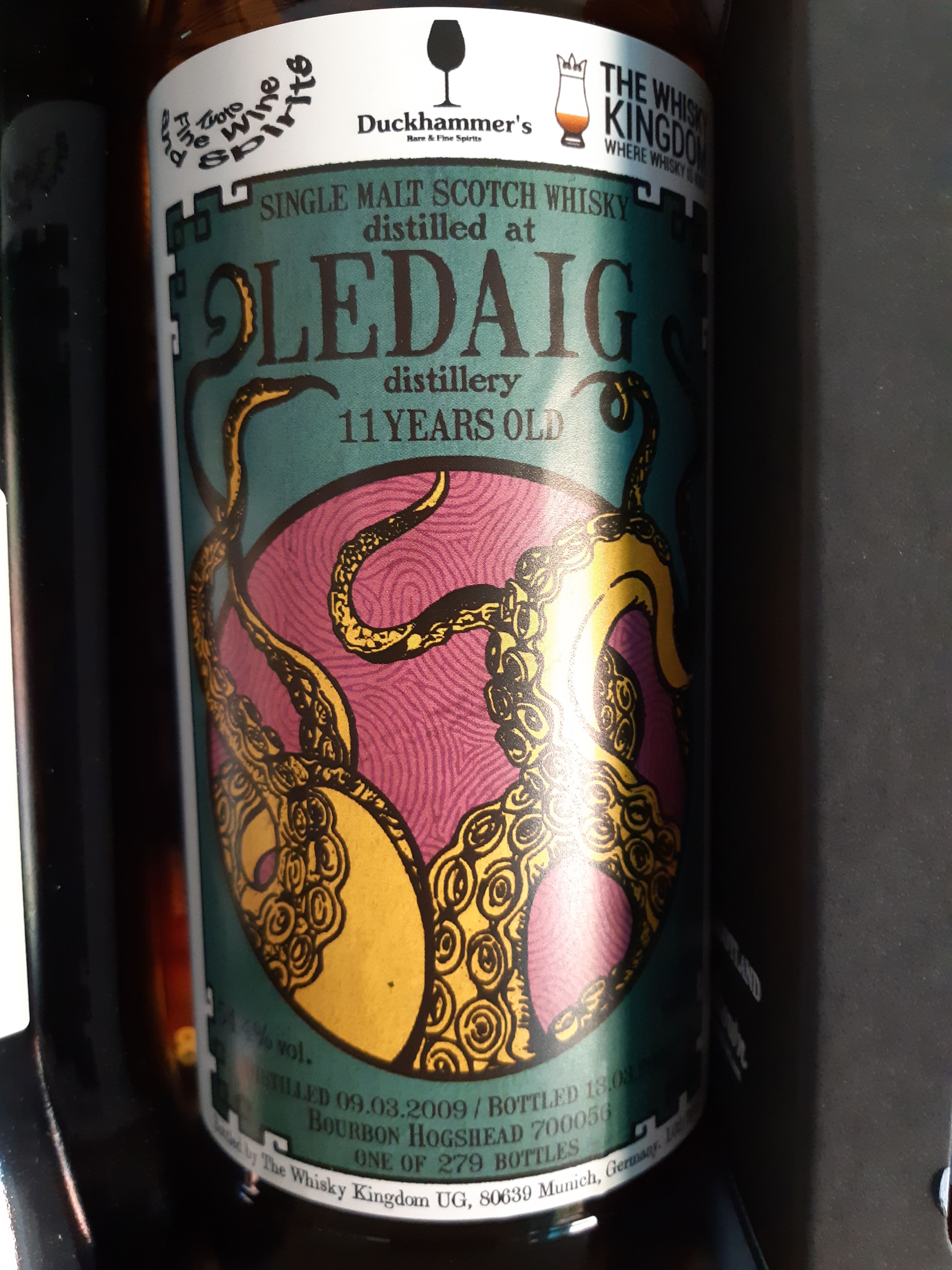
Ledaig 11, 2009-2020, 54.4% – The Whisky Kingdom

Yet another bottling for the German ‘Wu Dram Clan’. I guess Wu Dram is striving to be forever.

This time it’s a Ledaig, or peated Tobermory if you will, from a bourbon hogshead. I was a bit apprehensive about it since there are quite a few 11-ish year old whiskies from this distillery available, and most of the ones I’ve tried were only so-so.

However, after talking to the guys of the Wu Dram Clan, and some people who had already tried the release, I decided to get in on the action and buy a bottle for a Zoom Tasting, or as I like to call them ‘The #staythefuckhome Tastings’.

What made it more awesome was that upon receiving the bottle I also found a free sample of it, for reviewing purposes.

I don’t know much about Tobermory, or Ledaig, which I will hopefully remedy next year when our family holiday to Scotland can actually happen, and our current plans of spending a week on Mull will come to fruition.

20200506_113520Sniff:
The style of peat, quite mellow and rich for the age, is like it’s a mix of highland peat and coastal peat. There’s some earthiness, and some dry oak. Fairly gentle, with some hay, some lemon balm and heather. The coastal notes of brine and sand are present, but gentle.

Sip:
The palate is fairly sharp and dry, with heathery peat and some earthiness too. Some lemon balm, pithy orange peel with some bitterness.

Swallow:
A warming and dry finish, with warm orange and lemon oil. Hay and oak, with heather and peat. Embers and moss.

Well, apparently there is a huge difference between one cask and the other (duh!). I tried several supposedly comparable whiskies over the last few years and none were as good as this one. It made me even reconsider my general feeling towards the releases from the Mull distillery.

I love that there’s a bit of coastal notes, joined by the heathery peat style of the highlands. It works well and makes it far less of a ‘trying to be like an Islay’ whisky. The citrus notes work well with the other flavors as well, and there’s enough room for the spirit to shine through. A great pick!

90/100

Ledaig 11, 2009-2020, Bourbon Hogshead 700056, 54.4%, The Whisky Kingdom for Wu Dram Clan. Available in Germany for € 125

Posted in Ledaig, Tobermory | Tagged , , , , , , , | 3 Comments

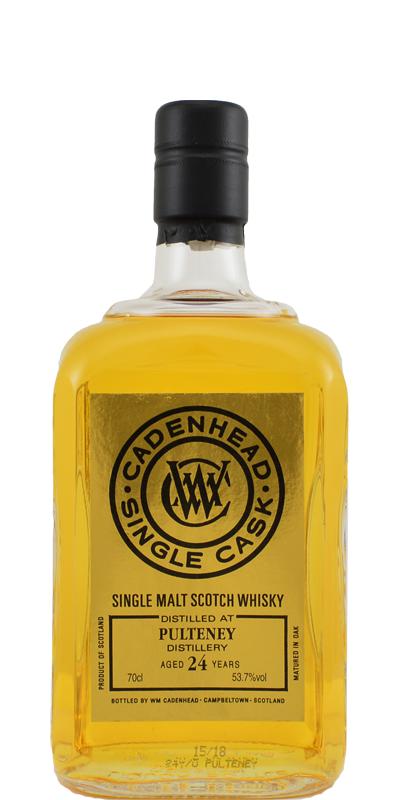
Old Pulteney 1990-2015, 53.7% – Cadenhead

I’m looking north again, in regards to whisky. Not necessarily to Scotland, which is entirely north of The Netherlands, but mostly to Orkney, Sutherland, Caithness and the Highland Council regions of Scotland. Distilleries like Balblair, Old Pulteney and Highland Park are the obvious ones that come to mind.

I’ve always had a bit of a soft spot for these distilleries, however most don’t show up often in my collection. For Balblair it’s pretty simple why that is: it’s just not that easy to get in The Netherlands. You don’t run into it.

Old Pulteney is available, but the good ones have gotten more expensive and the cheap ones are shit. Or at least, they were shit when I did some investigating of them. The Lighthouse series of around 2013 existed, but I’m not sure why.

Highland Park had gone a bit mental with their viking stuff, and the prices soared too. It seems that recently the waters around Orkney have calmed a bit though. At least some single casks are rather affordable, and the quality of their entry level whiskies seems to have gone up.

What made me focus on these whiskies again, though, is that I’m quietly planning a trip to the region with my in-laws. We’ve been talking about going to Scotland with ‘the men’ for several years now, but between the younger generation having kids the last decade meant that had to be postponed. 2021 seems to be an option, though. Maybe 2022. And then it would be Inverness and up along the coast. At least, that’s what I’m aiming for.

This Old Pulteney then! It’s a Cadenhead bottling, so that heightens my expectation a bit! I’ve had it for years in my cupboard and only now I’m drinking it. I like finding these things. It does mean this is the last month or two of finding things…

101711-big

Image from Whiskybase

Sniff:
Quite a bit of vanilla, with a really tiny whiff of smoke in the background. Oak, barley and straw, with fresh apple and pineapple. A tinge of salinity to make for a coastal distillate.

Sip:
The palate is reasonable with not too much bite from the alcohol, even as a first dram. The vanilla pops up first again, with the dry notes from lots of barley and oak right on its heels. The fruit is a bit subdued but still present, more fresh apples and pineapple. The straw notes are quite prominent. Some marram grass and sandy beaches.

Swallow:
The finish continues down the same line, with lots of dryness, a very warming feeling too. Straw, oak, barley, some fruit and some pastry notes.

This is exactly what I expected it to be. A well matured Old Pulteney that shows what the distillery does so very well. Fruity spirit, with grassy notes and some coastal influences make for a well balanced whisky that I wouldn’t mind having a bottle of!

A quick check tells me I can, but not unless I want to part with € 350, and that is too much for what this whisky is. Especially since new ones like it still pop up semi-regularly.

All in all, a cracking whisky that feels rather summery even though it’s from the north of Scotland, with lots of fruity goodness backed up by spirit and cask influences. Luckily, the vanilla isn’t too much of a distraction and makes for a rather nice hint of familiarity, even.

90/100

Old Pulteney 1990-2015, 24yo, Bourbon Barrel, 53.7% – Cadenhead Single Cask

Posted in Old Pulteney | Tagged , , , , | Leave a comment

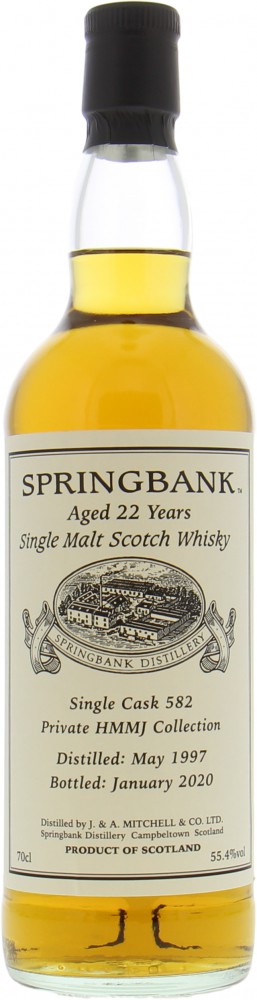
Springbank 22, 1997-2020, 55.4% – Private cask for HMMJ

Private casks are a bit more rare these days, than they were a decade or so ago. This is in part because it’s much harder to purchase casks from Springbank, and in part because Springbank started buying casks back year ago. Probably when they found out whisky was getting ridiculously popular, and not many distilleries more so than Springbank.

Luckily, not everyone sold their casks and now and then a private cask makes it’s way to market. Of course, I missed this one in the shop and was only made aware of it because of the sample I received from Best of Wines (thanks a million!). It was apparently hard to not miss it, since it sold out almost immediately.

Anyway, a 22 year old Springbank from a refill sherry hogshead. That’s a recipe for success in my book, and I waited a while before tasting it. This is not something to drink on a random Tuesday night, when you might be too tired to properly assess it.

20609_bigSniff:
With the first sniff I get straw and grass and barley. A fairly coastal scent of sand and brine as well. Pear skins, hessian and more graininess. There’s some oaky sweetness with a hint of honey as well. Lemon balm, minerals, sea shells, and a bitter kind of orange.

Sip:
The palate is fairly sharp, but there’s some sweeter orange coming forward right away. There’s quite a lot of oak and barley too, with some waxy lemon peels. Some hints of espresso too, with a very dry texture. The longer you taste it, the more it mellows, and the citrus sweetness becomes a bit more pronounced, although I also keep getting pears on the palate.

Swallow:
The finish is that of a very classical Springbank, with warming hessian notes, a whiff of smoke. The sherry cask adds some orange and lemon, but the spirit keeps pushing the briny notes forward. Sand, sea shells, barley. A long, long finish that keeps switching between the citrusy fruitiness, and the briny flavors of Springbank itself.

Holy shit, this is a cracker. There’s so much going on on the nose and palate that you keep discovering new flavors and therefore it simply grabs your attention. Upon tasting this I had to remind myself to write notes since it’s just so intriguing.

I had to check Whiskybase, where it states that the value of this bottle currently sits just under € 300, and even so it is very much worth it. If it was available now, I’d buy a bottle. What an awesome dram!

92/100

Springbank 22 years old, 1997-2020, Refill Sherry Hogshead 582, ‘Private HMMJ Collection’.

Once again, thanks a million to Best of Wines for sending a sample.

Posted in Springbank | Tagged , , , , , , , , , , | Leave a comment

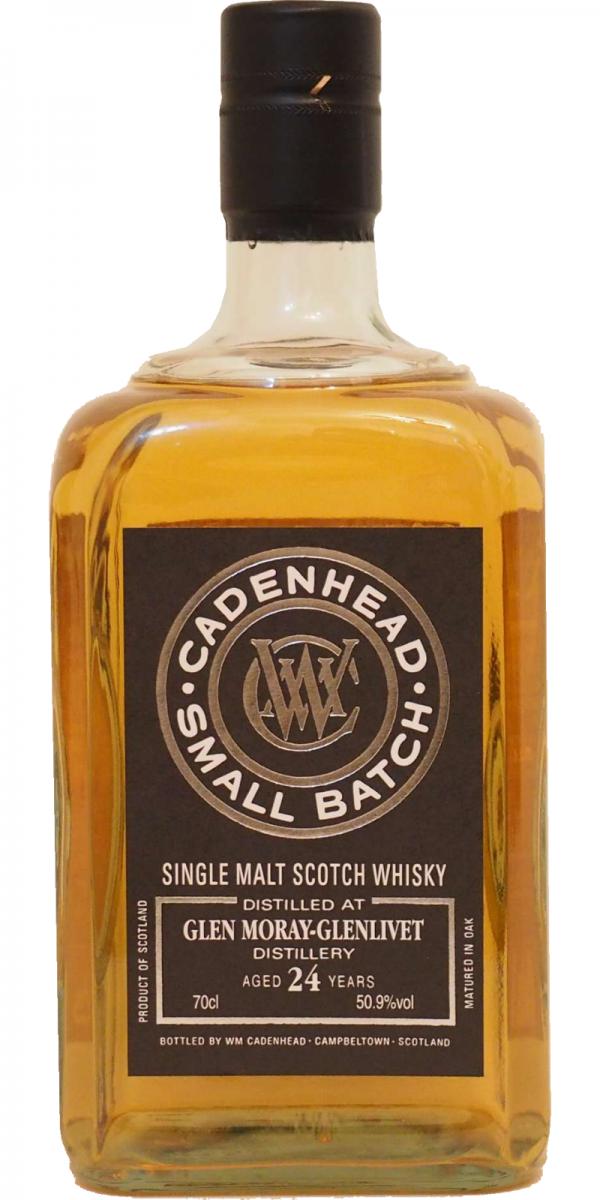
Glen Moray 24, 1992-2017, 50.9% – Cadenhead

Glen Moray is one of those distilleries that make an amazing spirit, but in their own releases there’s often so much done to it, that it loses its greatness. A quick search on the internet reveals there’s a Cabernet, Sherry, Chardonnay and Port finish. There’s a peated one, one from ‘Old Fired Oak’ a ‘classic’ without an age statement, and a 12 year old.

That’s only counting the official releases under € 30…

Unfortunately, all those releases detract from their regular 12 year old (also mentioned above), which is not a bad whisky at all. Of course, some of those finishes are pretty decent, and some are pretty shit. From my perspective a distillery like Glen Moray should play to their strengths and pick a version or two, and stick with those.

(side note: Laphroaig is one of the other ones also victim to this)

Anyway, I only got Glen Moray on my radar properly when becoming a member of the SMWS about a decade ago. They started releasing some amazing 35 year olds which are all gone now, of course. Luckily, there are some independent bottlers that releases proper, honest versions of this rather honest spirit. At decent ages. At decent ABVs because, let’s face it, Glen Moray needs some strength. It’s spirit is so mellow, that anything under 46% is just too thin.

Also: Don’t get me wrong. I really like Glen Moray. I had an amazing tour and tasting there in 2018, and love their matured bourbon casks. The 25 year old port cask isn’t bad either, but in general, indies are better because their keeping it more straight forward.

159880-big

Image from Whiskybase

Sniff:
Very gentle, with light minty notes, barley and white grapes. Fresh cut grass and sand biscuits.

Sip:
Dry and quite intense with a bit of heat from the alcohol. Dry barley, some fresh oak, a hint of vanilla and straw. The biscuits are back and more prominent. This time the grainy wholemeal biscuits that no one actually likes.

Swallow:
A very gentle finish, with barley, bread and straw. Some vanilla again, with grass and biscuits.

Quite gentle, but also quite lovely. It’s biggest benefactor is that Cadenhead kept this in a bourbon cask. This kept Glen Moray playing to its strength, and kept it honest. A proper speysider, with a spirit-forward approach that makes for dangerously easy drinking. It’s just a tad too simple for a higher score though.

86/100

Glen Moray 1992-2017, 24 years old, 3 x Bourbon Hogsheads, 50.9%, Cadenhead’s Small Batch. Available for € 100 in Germany

Posted in - News and Announcements, Glen Moray | Tagged , , , , , , | 1 Comment

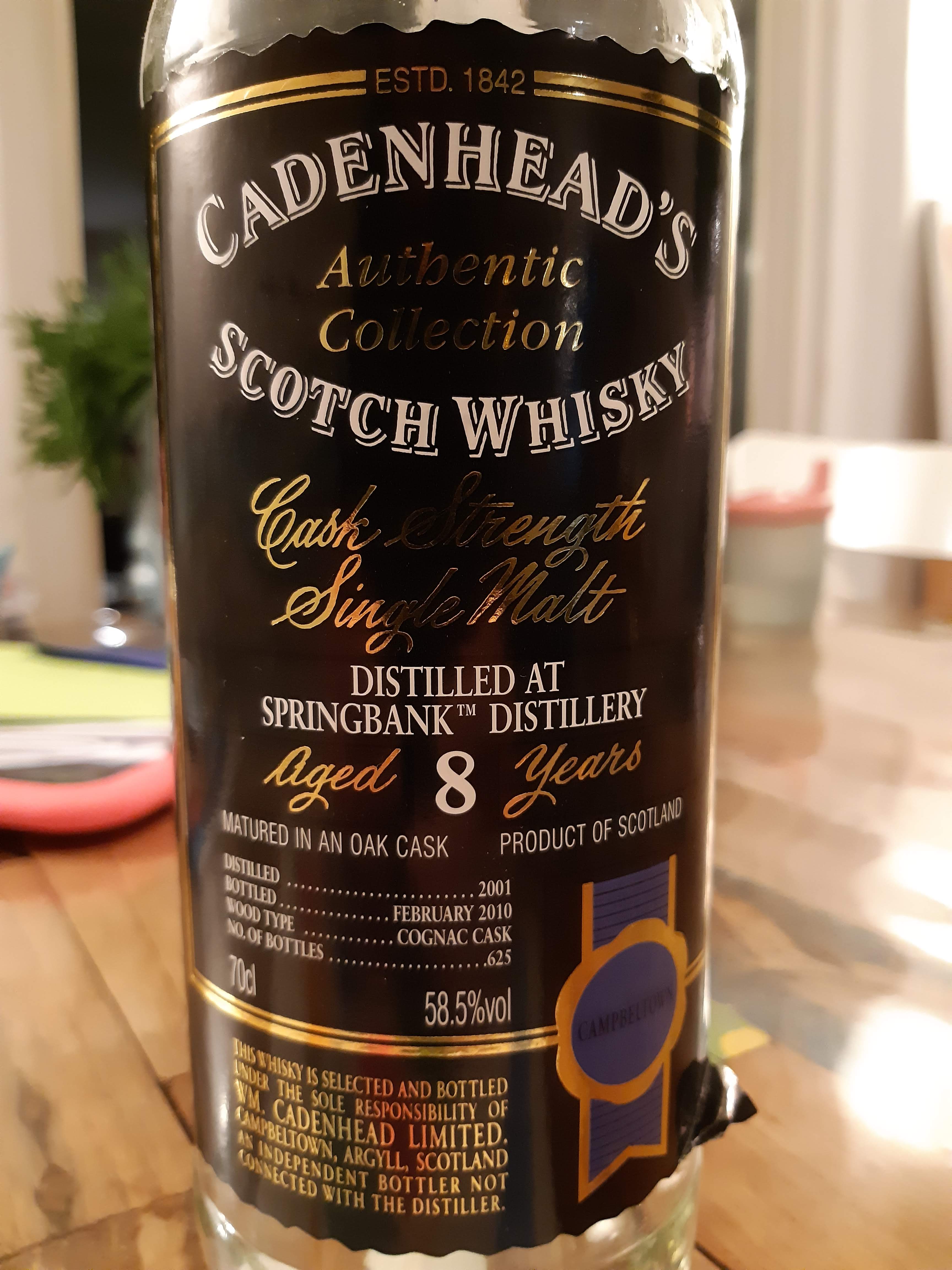
Springbank 2001-2010, 8yo, Cognac Cask, 58.5% – Cadenhead

Back in 2010 I went to Scotland for the first time. My wife and I decided to do things right and we had some money in our pockets. I had just sold my Magic: The Gathering collection, something I now regret.

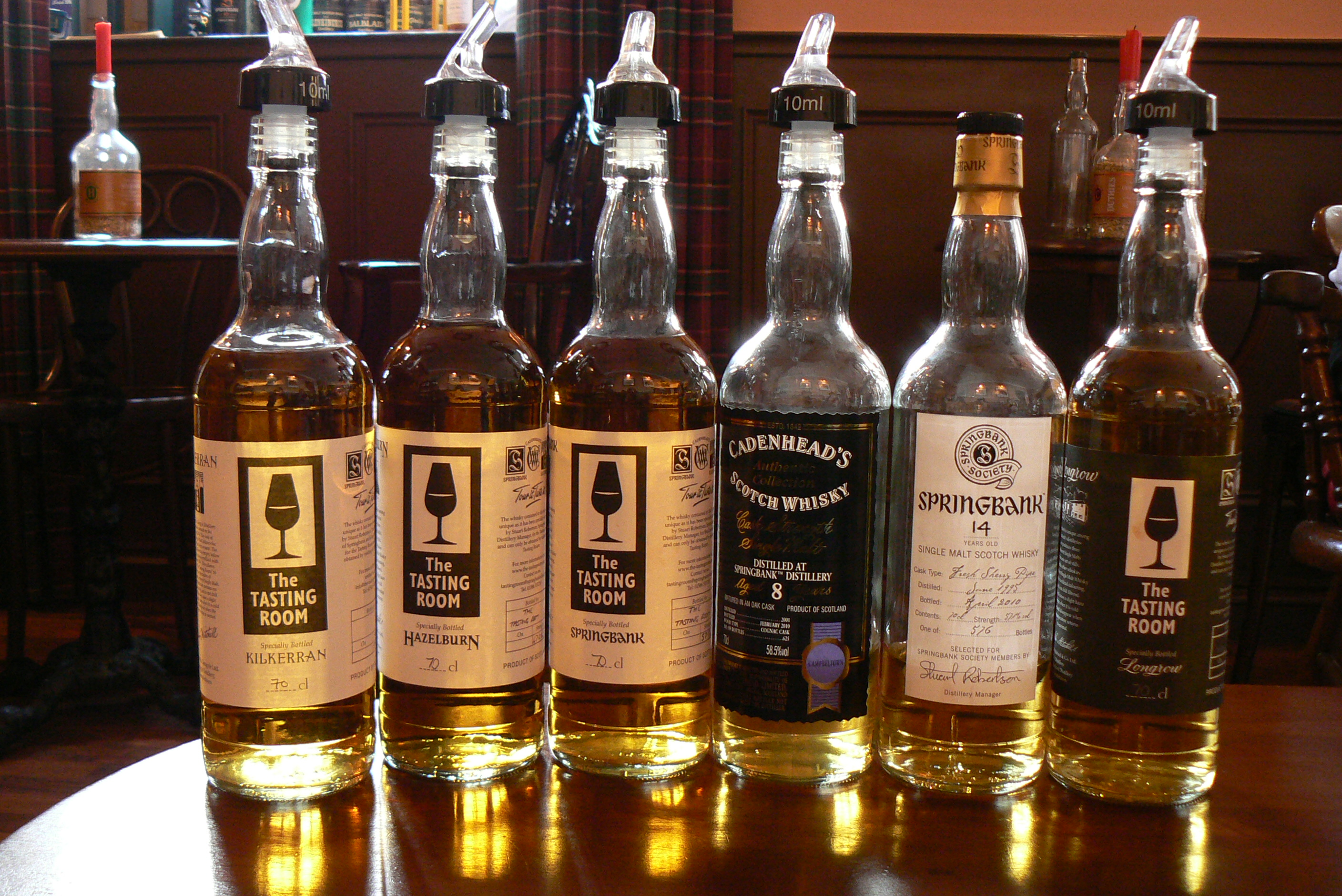
Anyway, we went to Glengoyne, to Arran, to Campbeltown, to Islay. In Campbeltown we had to do the Springbank Gold Tour, as it was called back then, which ended with a tasting in the Cadenhead’s Tastings Room.

The guy who set up the tasting (I forgot his name) asked which bottles from the line-up I already knew, and of the six set out, I already knew five. These were changed into a line-up I only vaguely recall, but this 8 year old Cognac Cask was in it, and we bought it. It was different, not too expensive and rather tasty!

P1050697

Not very helpful, with these labels…

Then it ended up in my cupboard for some eight years until I finally opened it around new years in 2018/2019.

20200318_220030Sniff:
Slightly glue like, but with hints of a fruit distillate. Quite a lot of minerals too, slate, iron, copper. Earthy, with soil and moss, and there’s hints of beef stew too. Strangely, but due to the hints of minerals, it stays rather crisp, for the style.

Sip:
The palate is strong, but not burning your mouth too much. Of course, the ABV is noticed, but there’s quite some oak and richness to combat the heat. It’s rather dry, but still fruity, with hints of apple, pear and grape. After that the hessian and beefy notes start coming through. The hints of iron and copper are still present but pushed back further.

Swallow:
The finish mellows quickly, but there’s still some residual heat, and a lot of dryness remaining. You’ll notice the first swallow afterwards. The flavors mix a bit more and go towards a more median flavor, where you still get the beefy richness, but with a hint of smoke coming through, and the iron is there as well.

Generally, I’m not hugely fond of unusual casks and while Cognac is not that unusual, I do categorize it as such. However, after buying initially, and now going through the entire bottle (minus a sample or two) I understand my initial enthusiasm.

The whisky is very layered and rather complex, with lots of things happening at once. This, surprisingly, doesn’t make it an unbalanced drink, and all the flavors and layers nicely complement each other.

Of course, it’s long sold out and through resellers or the secondary market it’s around € 225, while the initial price was more like € 75. A shame, but understandable.

89/100

Springbank 2001-2010, 8 years old, Cognac Cask, Cadenhead Authentic Collection, 58.5%.

Posted in Springbank | Tagged , , , , , , , , , | 2 Comments