For some distilleries there is a great vintage. For others, there seem to be nothing but great vintages. At least, if you don’t count the entire 1980s decade.
Of course, with a whisky called ‘Kilarrow Parish Church Bowmore’ as a description, there’s quite an indicator to what that distillery is.
When that Bowmore is bottled by Wu-Dram Clan, my ears peak up. As do my eyes and several other body parts. I’m quite hot for Bowmore, so to say. It is one of those distilleries that is either good or very good. Again, except the 1980s.
Unfortunately this one wasn’t available in regular channels, so all I have is a small sample to go by, but it was enough to get me all riled up!
Sniff: Initially, the two most prominent scents are glue and smoke. For a 13 year old Bowmore, the smoke is rather restraint, and a typical note of lemon becomes apparent quickly. Slightly pithy with an acidic edge. Grassy, fresh lemon syrup. It’s good that the glue note dissipates quickly.
Sip: The sweet notes of oak, lemon cake, sweet pastry on one hand, combined with pithy lemon peel and a note of glue work quite well. The smoke is rather timid, but it makes for a lovely extra layer without overpowering anything. A very ‘classical’ Bowmore.
Swallow: The finish is very consistent with the palate, including the timidness. Lemon, sweet pastry, a whiff of smoke. The pithy bitterness has gone, and the glue note is toned down quite a bit.
Timid does not mean weak, it just means it leaves room for nuances. In this case all those nuances are what makes Bowmore a true stand-out distillery. The restrained smoke, the lemon-y notes, even that slight whiff of glue on the nose does nothing but make the whisky more interesting. My lord what a cracker.
An easy 90. Thinking about 91. Yeah, 91.
Of course, since it’s a community bottling, it sold out before I knew it existed.
A while ago I got a bunch of samples as a surprise from LF, at the Dutch Whisky Festival. Already more than three months ago. Today I decided to try one, more or less as a test whether my nose is working again after having quite a cold over the last couple of weeks.
Something about having little children and not having any natural resistance due to 2 years of isolation, I guess.
Image from Whiskybase
Anyway, old Hart Brothers bottlings can be quite interesting. From what I’ve tried from their recent releases that seems to have stopped a few years ago. But, with this being bottled 25 years ago, I guess this does qualify as ‘old’. Let’s dive in!
Sniff: Lots of barley with some vanilla in the background. Sand biscuits and oak, straw and a whiff of glue to make things interesting. The strange, slightly industrial note dissipates quickly, leaving mostly notes of pastry and vanilla.
Sip: The palate is quite sharp with straw and grain being the most forward notes. The vanilla is far less noticeable here, which makes it less sweet and more dry at the same time. The palate stays rather sharp for an older bottling and a 43% ABV one at that.
Swallow: The finish is rather mellow, with dry notes of barley and straw. There’s not a lot of oak to be found, but there are some notes of pastry. It’s not a long finish.
Well, as far as whisky goes, this one is rather generic. It tastes like the ingredients and maturation vessel, but nothing more. So, not very exciting, but not bad either. It doesn’t have any off-notes and that little note of glue I got on the nose makes it slightly more interesting, but otherwise this is very, very middle of the road.
Another very old bottling, with this 5 year old Glenesk. The distillery closed in 1985, so the bottling itself is at least 32 years old by now. My first experience with this distillery was at a festival in Vlissingen, when there were still Rare Malts to be had at the Diageo stand. A 25 year old Hillside (another brand name used by Glenesk Distillery), sitting next to a 30 year old Brora, for about € 5 per tasting glass. How things have changed…
Image from Whiskybase
But, before we get stuck into ranting about whisky prices, let’s just do a whisky review instead. This one, even now, isn’t even that ridiculously expensive, coming in at € 200 for a bottle in the secondary market. Of course, it’s not the greatest of drams to ever come out of the Highlands, but with something this old and this rare, I’m quite surprised.
Sniff: There’s a note of barley and buttery sand biscuit, accompanied by scents of chalk and star fruit. Young, but 1980s style young, so a bit more out of the ordinairy.
Sip: Surprisingly syrupy and surprisingly peppery. White pepper and simple syrup. Almost no oak, but there is a barley note. Less fruity than on the nose, but it retains the chalky touch. An ever so slight metallic note too.
Swallow: The finish is very much the same as the palate, but a bit less sweet and it shows some OBE.
With the light and barley driven character it is very ‘blended whisky’ like, but an older style of blends. A very typical thing of the 1980s, especially at this young age. I’ve had whiskies from several other distilleries from the same time that showcase the same flavor profile. I guess the drive for lighter spirits in the 1970s is really showing up here.
All in all, especially after such a long time with some OBE added to the mix, this is a pretty fine dram. Not spectacular, but really interesting and a window to the past, at least a little bit.
Talking about random samples from the shelf! This one, of an eight year old Millstone had been on my shelf for years, and it was released years before that. On Whiskybase it was added in 2010, but there’s no telling how long it had been out before that.
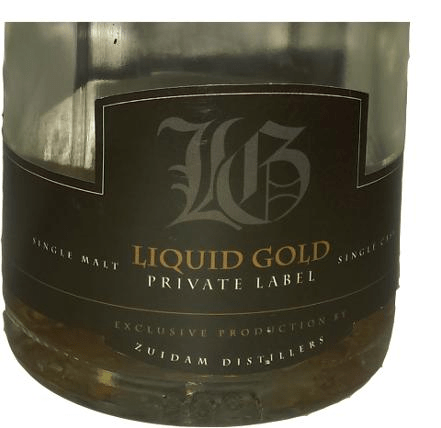
But, the whisky itself! It’s an 8 year old bottling from the Millstone brand, which is the single malt brand of Zuidam Distillery in Baarle-Nassau, in the south of The Netherlands. One of the most ridiculous country border towns to exist on the planet.
The darker grey areas are Belgium. The rest is The Netherlands.
With there being virtually no information on the sample’s label, it took some time to find the correct whisky, and right now I’m not even sure how I matched it to the entry on Whiskybase. However, seeing that two of my friends have reviewed it (out of three reviews) I know it must be the correct one.
Back then, I wasn’t the biggest fan of Millstone whiskies. They were coming around bit by bit, but they used to be a bit more of a curiosity than anything else. How things have changed, since they are a bit of a powerhouse nowadays, with really good stuff being released in a wide variety of casks and ages.
Sniff: A mountain of sherry and dried fruit. Behind that, a lot of barley and rather sweet grain mash. Slightly earthy, with wet leaves and soil. Peaches and apricots. Dark toast too.
Sip: The palate brings a bit of bite, with lots of dried fruits again. Peaches, apricots, some dried strawberries too. Apricot jam too, and sweet pastry notes too.
Swallow: The finish has a bit of bitter almond-like note. Still quite earthy, but a nice combination of sweet notes and a hint of bitterness.
A very interesting whisky that punches quite a bit above its weight. Not a stellar dram of which I now thoroughly regret not buying a bottle, but a very nice whisky. Also, I think it’s quite a diversion from what are their more prominent releases nowadays. There are the regular releases that are more in line with this one, but their ‘specials’ tend to pack a bit more punch. Still, lots of sherry, a bit of their signature character. Lovely stuff!
It’s been a while since I sat down for a rum. I still have some that ‘need’ to be reviewed, but I’m not really in a rush. While I like the stuff, I’ve refocused on whisky since before summer and the shelf of rums has not really changed. No additions, but also no things tasted or finished either. I guess that says enough.
Image from RumTrades
This one then. This came from a sample from RvB, since he was in time to buy it and I was not. It sold out pretty quickly and I was not really paying attention when it was released last year.
The release was done to celebrate the 15th anniversary of the Whisky & Rum aan Zee festival in IJmuiden. It’s been some years since I visited it, but it always was good fun. A nice spread between whisky and rum, but also between brands, importers and collectors.
The rum then!
Sniff: There’s a lot of rum funkiness, a whiff of diesel and yeast and sugarcane. Much more than I expected from a Foursquare. There’s a banana-like sweetness on top of it all.
Sip: The palate is gentle but does bring a bit of heat after a few seconds. Quite some fruity funkiness with fermenting overripe mangos, bananas. There’s golden syrup, and some oak. The slight diesely note is here, but very timid.
Swallow: The finish focuses a bit more on the weird notes. An incredibly layered set of flavors remains with fruit, fermenting fruit, sugarcane, yeast.
Gorgeous, this. I’m surprised by the rating of ‘only’ 85 points on RumX, since I really enjoy this one. It’s got quite some funky notes and I like that it hasn’t matured in a fortified wine cask, which seems to be a thing for Foursquare. It just does what I always hope a Foursquare rum does!
Teaninich is one of the work horse distilleries of Diageo, situated in Alness where I happened to reside for a couple of days at the end of October. Didn’t go to the distillery though, since they don’t receive visitors and the schedule was pretty action-packed without all kind of extra-curricular outings.
I got my hands on a sample of this after trying one of Michiel Wigman’s earlier bottlings from the same bottling-year. That sat at a significantly lower ABV, although all the other specs were pretty much the same.
Image from Whiskybase
I always like to compare things, and even though it doesn’t seem like with a two year gap between reviews, the actual notes were not written that far apart… Something about going through the back-log of tasting notes when you’re trying to get over a massive cold…
Sniff: Vanilla custard and crumbly pastry, thick and creamy. A bit of hay and dry leaves, quite autumnal. Very dry, behind all the richness.
Sip: It’s not too sharp on the arrival, and the richness helps a bit there too. Mostly focused on the vanilla crumble and custard. Baked apples with cinnamon, autumn leaves, some oak and dried coconut flakes too.
Swallow: The finish is a bit sharper than expected, and does focus even more on the vanilla. Lots of custard, crumble pastry, pastry cream, that kind of stuff. The other notes barely show up.
A fairly straight forward bourbon cask matured whisky. Well made and good, but also a little bit generic. The bourbon cask gave the spirit a massive hit of vanilla and while it doesn’t make the whisky bad (at all) it does take away from the distillery character.
So, a good dram, but too much vanilla to really be noteworthy. It could just as well have been Glenmorangie or many of the other Scottish distilleries…
Another one of these random samples from the sample cupboard. I have no idea where it came from, but it’s an interesting one so I’m not going to feel bad about that for too long!
Image from Whiskybase
It’s been a while since I tried any wine cask Springbank-ish whiskies, and even while I generally avoid wine casks, Springbank, and therefore Kilkerran or Glengyle does have some good ones. This one was bottled for The Nectar in Belgium in 2015, so it might be the case that it was sitting on my shelf since forever.
Sniff: There’s a sooty sweetness at first, with ‘Springbank-y’ funkiness. The wine cask is quite restrained, with some dark red fruits being added.
Sip: The palate packs a bit of a punch with the high abv resulting in some chili heat. Other than that there are notes of mole, strawberry vinegar and rancio. On top of the funkiness, that is.
Swallow: The finish is surprisingly sharp and dry, with grist and sawdust coming forward. The slight vinegar and cocoa powder notes remain, as does a confit blackberry note.
I really like that the wine cask was used with some restraint. As in, it isn’t here to overpower what the distillate generally does, but just add a few fruity notes here and there and, in my opinion, that is how these casks should be used. Especially when you have a great spirit like Kilkerran. Good stuff!
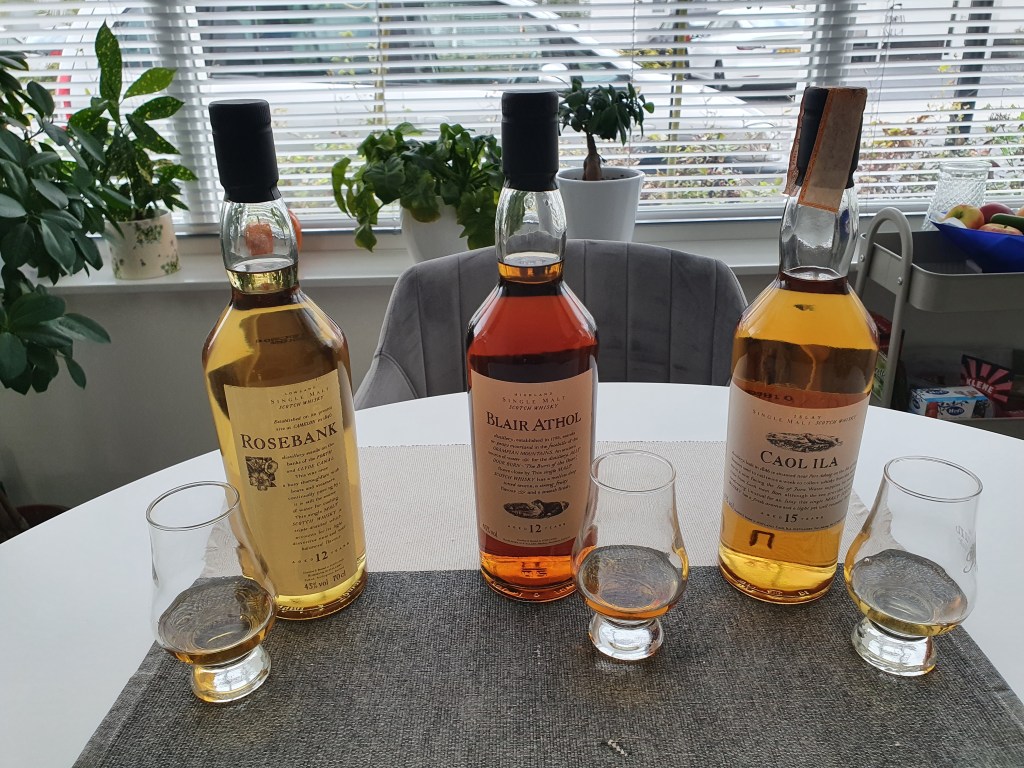
Once more Tom has kindly supplied us with some nice reviews of things I normally don’t have on my radar. In this case, it’s a trio of Flora & Fauna releases by Diageo. With a Blair Athol, still regularly available, to a Caol Ila that is not so common anymore. Of course, the Rosebank 12 is in there too, which is one of my personal favorites in the range. Let’s see what his findings are!
In the early days of whisky passion and discovery, it was sometimes easier to obtain a certain whisky from an independent bottler than from the proprietor itself. Especially when it came to Diageo owned distilleries. My first introductions to malts like Inchgower, Rosebank and Clynelish came through the channels of G&M, Signatory and Cadenhead. But there was this quaint little series with birds, animals and flowers on their label, and therefore nicknamed Flora & Fauna by the late whisky author Michael Jackson. Then and now it proved to be a nice go-to series to get to know Diageo malts. They provide a benchmark for what the owner intended with a particular malt. I managed to acquire a few samples in recent months, so let’s taste them at random.
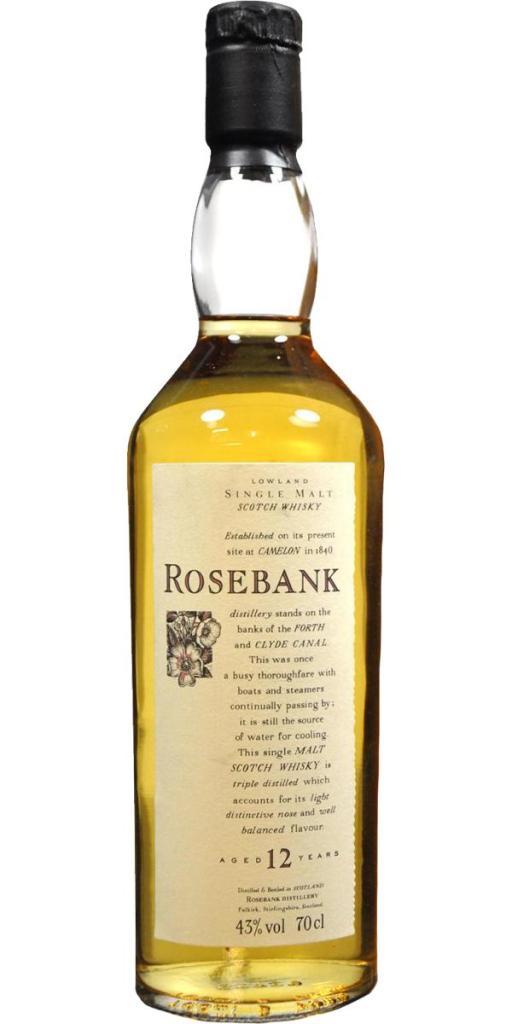
Rosebank 12 Years Old, bottled at 43%
Image from Whiskybase
After the closure of Rosebank in 1993 these bottlings kept appearing for quite some time, so after a while the liquid inside must have been older than stated (unless Diageo kept the whisky in stainless steel tanks, you never know). Over the years, it turned out that there is a lot of batch variation in these expressions. Some tend to be typically grassy and oily; others lean towards a more smoky, almost peaty character. Let’s see what this sample provides:
Sniff: Oh my, this first sniff is like a time machine, and takes me back to the days I didn’t really know how to describe what I smelled, except that it smelled like “whisky”. Nowadays I would say lemon, high grass that desperately needs cutting, hay, a rich flowerbed untouched by humans, grown so impenetrably thick that when it rains the water will bounce of it. I just holds so much promise I am stunned. Certainly not the light character one would expect from a triple distilled malt.
Sip: It is hard to live up to the introduction, and yes, this Rosebank delivers a rather straightforward and dare I say one dimensional character. Wood spices, anise, and a sweetness from white tea.
Swallow: The finish lacks punch, but it is smooth to perfection. I cannot help but wonder if there are not much older casks in this vatting. It has tamed this expression a little and replaced youth for maturity.
Upon returning to the glass the smells keep developing, incredibly versatile.
90/100
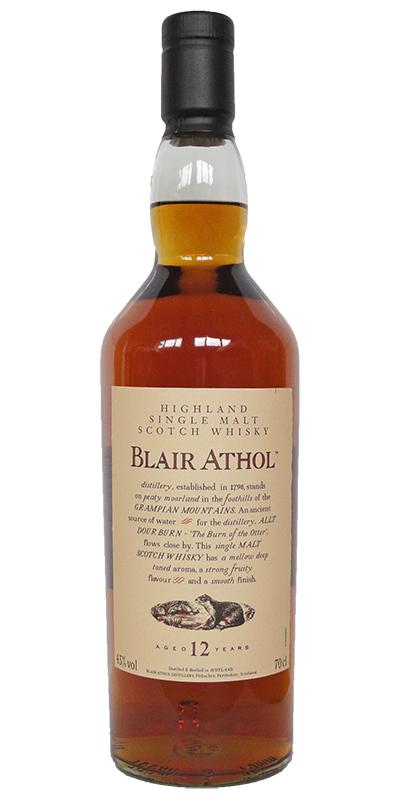
Blair Athol 12 Years Old, bottled at 43%
Image from Whiskybase
A special place in my heart for this one, as Blair Athol was the very first distillery I visited in Scotland, back in 2005. I bought a bottle there, appearing to be filled in the year 2000. The details of the sample I tasted, however, is unknown to me. I expect it to be from a later date, as this bottling is still core range for Blair Athol.
Sniff: Much more subtle compared to the Rosebank, despite it being influenced by some sherry in the mix. All fruits from the red category are there, from cherries to strawberries. Smells like paradise, really.
Sip: The palate can’t live up to the promise. It comes off a bit dusty and there is a hint of cardboard, but not disturbing too much. After the nosing the mouthfeel is really a bit dry and hard (not harsh). The body is strong, and underlines Blair Athol is one of those malts that can withstand sherry maturation very well.
Swallow: Warming, a good example of the Highland-Perthshire style, which to me is “accessible” but not necessarily “easy”. One for connoisseurs, and this expression is the jump off point.
84/100
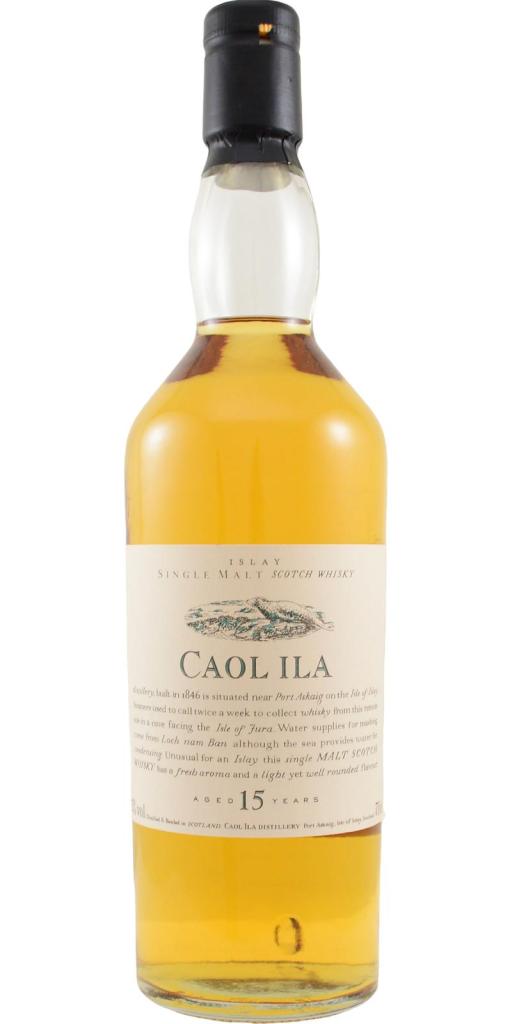
Caol Ila 15 Years old, bottled at 43%
Image from Whiskybase
Well, this one hardly needs an introduction, does it? We all know what happened to Caol Ila, at one time being promoted to having an excellent range of its own. Let’s try this rare official Caol Ila from days past.
Sniff: Immediately medicinal, like band aids, the brown ones. Whiffs of iodine. Such a classic smell. The sample comes from a 1999 bottling, so the stuff inside originates at least from 1984. Would not be farfetched to conclude older casks were used. The mid-80s were crisis years of course. Anyway, you keep on sniffing, the sea character just blowing in your face, like wet spray on the Caol Ila pier on a wild winter day. Under the obvious layers you smell a pine forest. The balance is exquisite.
Sip: Consistent with previous samples, the Caol Ila also fails to deliver on the palate. Still, lots to be experienced here, with a rather different mouthfeel. I am missing the oiliness of the modern day Caol Ila. I think that diluting this whisky to 43 percent abv was a crime, the malt and especially the peat becomes a bit too friendly. Quality remains überclean though, that’s very impressive.
Swallow: Balanced, fresh, and polished to smooth perfection. A gentle giant. Something to ponder over near a crackling fire.
89/100
These randomly chosen malt whiskies from the lowlands, highlands and Islay region underline the fact that the Flora & Fauna series were excellent examples of extremely fragrant whisky. If you would score only the fragrance aspect, you would easily pass the 90-points-mark every time. But of course, keeping up the promise at 43 percent, that is too much to ask. Still, very impressive quality, where I might add the years in the bottle have added an extra vibe to the Rosebank and Caol Ila. Don’t tell this to anyone, but they are worth hunting down on the secondary market.
About Tom van Engelen
I’m a writer in a variety of fields and have a soft spot for whisky, mainly malt, mainly from Scotland. In other times I enjoyed a stint as editor-in-chief of one of the first whisky magazines in the world. When not sipping a good glass I like to write some more, read, watch 007 movies or listen Bowie music. I’m married to Dasha, I have a sweet daughter and I live somewhere between the big rivers in the middle of The Netherlands.
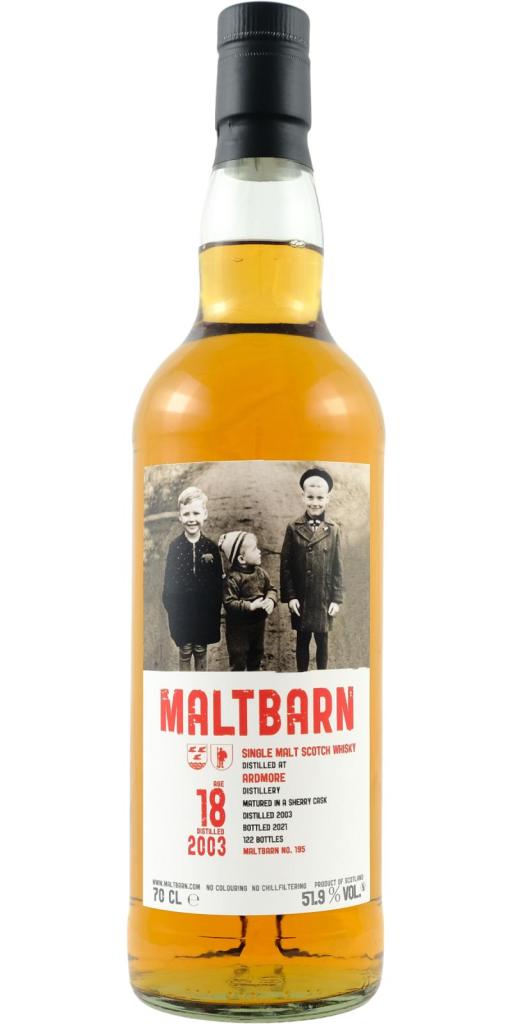
According to some, Maltbarn is one of the best bottlers of the moment. There are others in the higher echelons, of course, but Maltbarn is up there too.
This Ardmore, which I bought when it came out some time ago, was quite expensive, and that caused not too many samples to be sold. The argument ’18 year old Ardmore was half this price just a few years ago’, while true, doesn’t really hold any water. Mostly because all whisky is a lot more expensive nowadays, and to be honest, I gladly pay a little bit more to not buy a deception and just go for quality.
Image from Whiskybase
Let’s just hope statements like that aren’t used to increase the price of a nice bottle even more by some…
Sniff: The sherry is rather timid with quite a bit of dried fruit, with the plum stone and almond bitterness. On top of that there’s a slightly acidic smokiness with hints of wet hay and heather. Some milk chocolate in the background.
Sip: A slight bite with a fruity bitterness. Star fruit, but also date paste. A bit of an acrid smokiness, hay, heather, dry oak and treebark. The dark biscuits of Oreos.
Swallow: The finish has a dry bite, and a gentle fruitiness. Dark, dried fruits, but not overpowering. Very well balanced with oak and spices.
Hugely complex, with lots of flavors waiting to be discovered. None of them are fighting for attention and that makes this a rather old fashioned and mature whisky.
Ardmore has quickly become a favorite distillery over the last couple of years. There have been so many great bottlings over the last few years, most of which I still need to review, but I’m thoroughly loving them. This is one of them, and I’m glad I finally sat down for a proper tasting with this one!
I know where I got a sample of this, but I can’t for the life of me remember why. As in, I like Blair Athol well enough, but why on earth would I spend money (if I did) on a random bottling from wine casks?
The age isn’t so great as to warrant purchase, and the fact that there’s a bunch of wine casks involved makes me rather skeptical instead of enthusiastic. Wine casks are sketchy enough, but when there’s three that causes me to think ‘probably none of them were good enough to be bottled as a single cask’.
Image from Whiskybase
Am I getting too skeptical? Am I getting too jaded for this kind of stuff? Let’s see…
Sniff: Very sharp for a first dram of the day. A sweet fruitiness, quite like boiled candies. Some straw, vanilla, a whiff of oak. Strawberry jam.
Sip: The sweetness is very much present on the palate, and even the dry heat of the alcohol doesn’t really counter it. Lots of candies, peardrops, strawberry jam, some wine gums even. A bit of straw and barley too.
Swallow: The finish has a short burst of heat before it dissipates into mostly candy sweet flavors.
Yeah. Well. Right. I still don’t have a clue. It’s a rather sweet whisky, which isn’t too surprising for Blair Athol, but it’s more sweet than that distillery’s output generally is. It’s also quite sharp for a 50% dram, even though I tried this without warming up first.
So, I don’t really get the why of this whisky. Not just the why of me having it, but the why of this being a thing at all. It feels a bit like one of the many, many whiskies out there that are only available because yet another bottler wants to have some shelf space filled.
It’s not even that it is a bad whisky. It’s just not interesting to me.






 Malt Fascination