I might be a bit of a snob, but when I’m at a whisky festival, I veer towards the exclusive stuff. Random 9 year old whiskies I generally skip. Not just at festival but also in shops.
Why? These can be good, right? Yes. But with whisky’s popularity of whisky, everyone and their brother is releasing single cask whisky and there’s just too much generic-ness going on. Too many things that should have gone into a blend and not have been bottled as a single cask release.
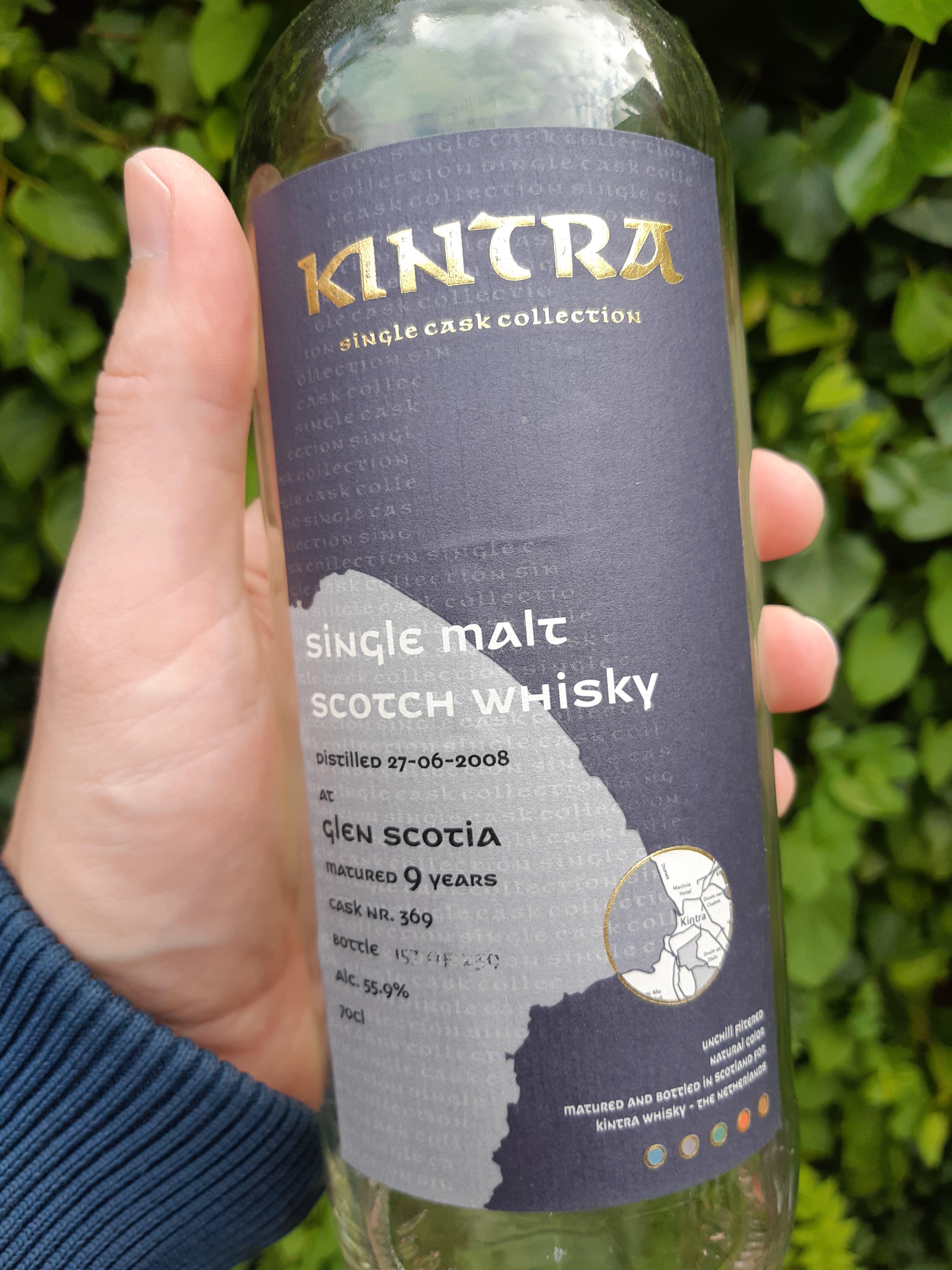
But, in early 2019 I was at the Hielander whisky festival at Kintra’s stand, and I wanted to try some of their recent releases. This one was there. There were more exclusive ones but some were already poured into the glasses of my in-laws. We tend to share.
This one ended up in my glass. It had been less than a year since I was at the distillery, so there was a bit of Glen Scotia fanboy-ism going on too.
As you might have guessed by now, I was very positively surprised by this, and I ended up buying a bottle. I semi-recently emptied it and finally wrote tasting notes.
Sniff: Straw and barley, with yellow fruits. Pineapple, apple, fresh and dried. Some oak and a hint of vanilla too. Slightly coastal.
Sip: Slightly syrupy, fruity and coastal. Pretty fierce, with straw, marram grass and briny sea air. Salty, sweet, and strong.
Swallow: Not overly long but lots of grassy, dry notes. Accompanied by lots of dried pineapple, and fresh apple.
This whisky does everything you expect from a coastal whisky, but adds some more fruit than I expected initially. The pineapple notes are pretty tasty, and it combines rather well with the salinity of the distillate.
It took me a while to go through the bottle, but when I finally got into it, I got through the last half-or-so pretty fast. Also, I took it with me on holiday to Brittany last summer, and it was nice and summery enough to get me through a few evenings!
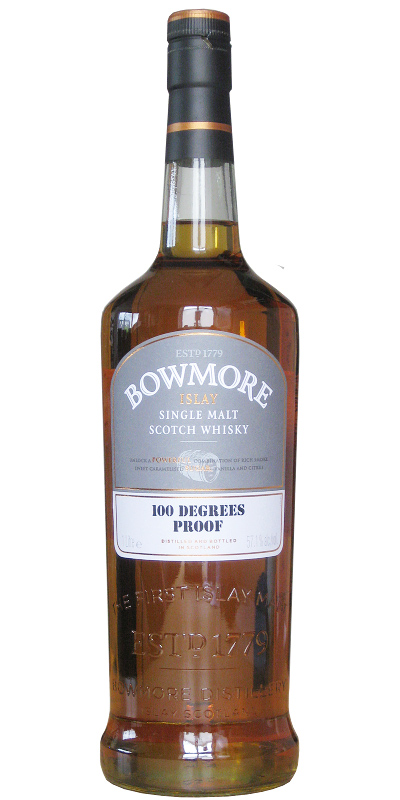
This ‘small batch release’, which isn’t a very small batch at all, was done in 2012 for travel retail. I managed to pick up a bottle at some point, but it’s been so long that I don’t recall where I got it.
Anyway, back then it was a liter of pretty straight forward Bowmore at high strength for about € 60, so there wasn’t much complaining to happen.
By now the bottle is long gone, but the tasting notes haven’t been published yet. At the moment I am having a massive cold, so nothing new is being written. Luckily, there’s about a hundred backed up tasting notes ready to be processed into a proper blog post.
Image by Eugene
Sniff: Dry smoke, salinity, like being in the town of Bowmore when they’re peating their barley. Some fruitiness, with apple, grape, grass, minerals and brine.
Sip: Strong, very strong. Dry and crisp, but with bread, grain and some oak. Dry smoke, salty, briny. Quite some fruitiness, but also the strangely chemical Bowmore-ness. Slight hints of ammonia, in a good way, if that’s a thing.
Swallow: A slightly sharp finish, warming, but crisp. Star fruit, apple, grape, not too long.
The youth of the whisky isn’t being hidden, but it’s not a problem at all. Instead of it tasting overly green, there’s just a lack of mellowness or maturity instead. Pretty straight forward, as expected, but it does exactly what it’s supposed to do.
It gives the typical crisp Bowmore flavors and scents, with quite a bit of smoke to back it up. Due to it not being very old, there’s quite a bit more smoke than I’m used to from Bowmore.
All in all, this is a rather lovely whisky. After opening the bottle it went rather quickly, even though it was a liter. But I really wanted I could get one on the secondary market for around € 100, which I think is a fair price for a bottling from eight years ago.
87/100
Bowmore 100 Degrees Proof, Small Batch Release 2012, 57.1%
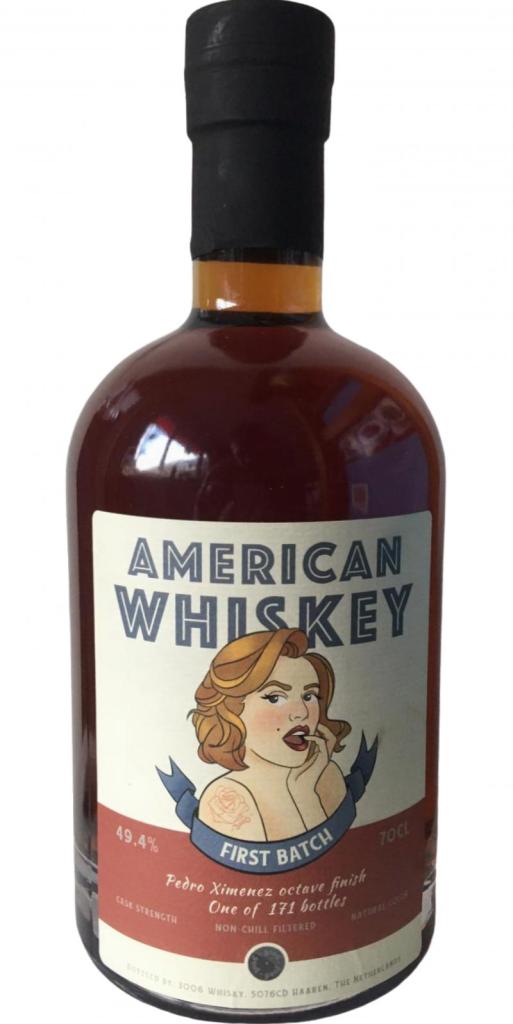
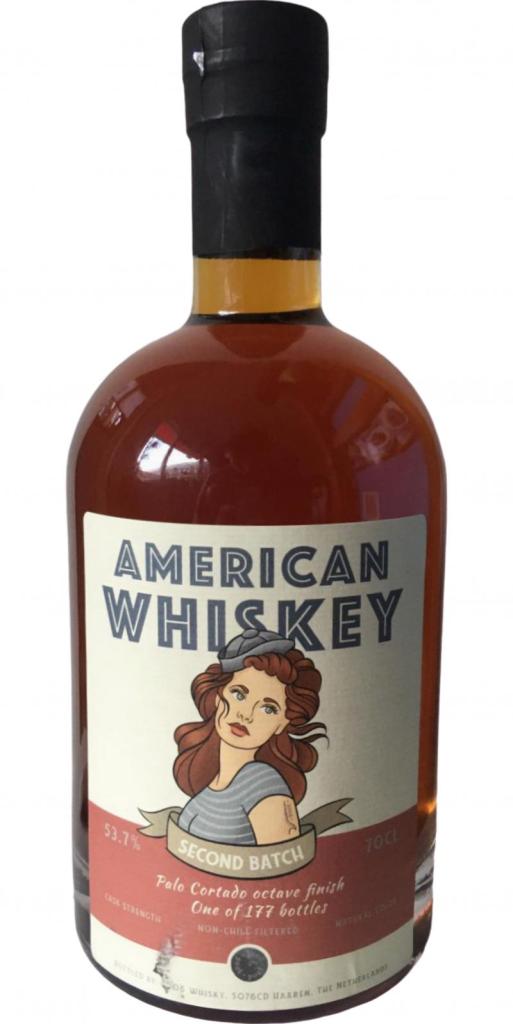
3006 is a newish bottler that showed up some years ago. I read something about then but then forgot about the brand again, until recently. RvB shared these two American Whiskeys, one finished in a PX octave, and another in a Palo Cortado octave.
Finishing American whiskey in sherry casks seems to be quite hip at the moment, but to me it’s a very hit-and-miss thing to do, with it often becomes a too sweet jumble of flavors.
Luckily, these were quite affordable and therefore not too big a drain to try a sample of.
American Whiskey, 1st batch, Pedro Ximenez Octave Finish, 49.4%
Image by Rowald
Sniff: The sherry adds some dry notes to the sweet bourbon. Baking spices and sharp corn aromas. It smells very potent. Some charcoal and lots of new American oak.
Sip: The palate starts strangely farmy, after which a lot of peppercorns come crashing through. Very fiery and hot, with the dryness of the sherry only adding to it. Some syrupy sweetness too, with cherries from a jar, clove.
Swallow: The finish has a bit of an afterburner. Syrupy sweet with some dryness from baking spices.
The thickness is very weird. The flavors don’t really work together either. The nose and the palate don’t line up in any way. I tried the sample again a little while later (I had 10cl after all) and then the sweetness was all encompassing, except on the nose.
I’m not sure what happened here, but it doesn’t make any sense. The flavors don’t work well together at all, and there’s a huge discrepancy between the nose and the palate.
65/100
American Whiskey, 2nd batch, Palo Cortado Octave Finish, 53.7%
Image by Rowald
Sniff: Lots of sherry notes on the nose, with fresh tropical fruit. The sweetness is amped up by the whiskey. Nectarine, tangerine, valencia oranges. Some oak after a few seconds, which keeps increasing. There are some wood spices, with some cherry cola too.
Sip: Quite sharp with more heat than I expected. Not very woody, but quite a lot of chili heat. The fruit is still here, lots of stone fruit, with nectarines, cherries. It’s slightly syrupy, with some sappy oak. The sweet citrus fruit is quite pronounced too.
Swallow: The finish is slightly dry, with lots of fruit again. It’s quite mellow, with some oak, some sap. Not overly long. Some green bananas, all of a sudden.
Contrary to the PX one, this one works very well initially. The sherry doesn’t add too much sweetness, but it does add a lot of fruit. The combination of stone fruit and sweet citrus works, but as I said, initially.
I poured a sizeable glass so it did last me a while. The interesting (read: worrying) part is that while I was initially rather enthusiastic about the fruit flavors the sherry added to the whiskey, it somehow started to completely disintegrate after half an hour or so.
It became overly sweet again, with a building gap between the nose and the palate, much like the PX cask. It’s not as bad as that one, though.
70/100
As you might have guessed, these are not very good whiskeys. And that’s putting it positively. Of course, if you like weird whiskeys and sweetness, this might be for you. The reviews on Whiskybase aren’t too bad, but I’ll be steering clear of the next batches.
When this was released I tried to bottle-share it, but I believe no one was interested. Why care about Glenmorangie, right?
However, the entire concept of this bottling, with the maris-otter barley instead of regular far-more-yielding barley was something that interests me. The fact that it’s floor malted only adds to that, but the barley itself is the main thing.
Maris-otter barley is a variety of barley that was used mainly in the brewing industry during the seventies and into the eighties, if I’m not mistaken. Apart from somewhat lower yields than modern varieties it is said to be a bit more flavorsome, with more malted barley flavors making it into the end product.
Glenmorangie decided to see whether or not this would translate to whisky as well as beer.
In general, these Private Editions from Glenmorangie have been hit and miss for me. Some have been delicious, but not exceptional. Some were pretty shit, if I’m honest. What I like about them is when they’re trying to see what influences flavor in which way, like with this one (and the Allta, for example). What I don’t care about is some random finish in a Portuguese wine cask.
Image by Best of Whiskies
Sniff: Light and crisp, with some mint and lots of barley. Dry dirt, straw, oak. Lots of barley driven scents.
Sip: Quite sharp and dry. Not much maturity, but a nice balance between oak and barley. Dry husks, straw, old bread. Some dried apples, and some hop-like bitterness. A whiff of mint.
Swallow: The finish show more of the mint and barley. Lots of it, with some other barley driven flavors. Straw, apple, some dry oak.
I love how barley forward this is. The regular Glenmorangie 10 has this in some way, but this one pushes it a lot further. And with that, I think there’s something to say for using proper barley varieties instead of going fully for yield.
It is said that 75% to 90% of a whisky’s flavor comes from the cask, but I think that’s mainly true because virtually everyone switched from flavorsome barley and yeast strains to industrial yeast and high-yield barley. Zuidam is also a distillery that proves this, with their distillate being a lot more unique than most.
A shame that so much homogenization is taking place, especially when whiskies like this more or less prove that there’s uniqueness to be gained from taking a step back. Go back to the production leading instead of the accounting department.
Anyway, I really, really like this whisky. Both for its uniqueness, its approach and its flavor.
88/100
Glenmorangie Tùsail, Private Edition 2014, 46% (Maris Otter Barley / Floor-Malted by Hand). Available for about € 115
Four years ago I bought samples of almost all Feis Ile bottlings, along with some samples from the Campbeltown Festival. This is not one of those cases where I completely forgot about the samples and found them again, but mostly when I want to ‘taste’ a whisky instead of just drinking one, I don’t really go for these high strength drams all too quickly.
Therefore I took my sweet time before I got around to it, and of the set there are some others left. Not a clue which ones, but eventually I will go through them.
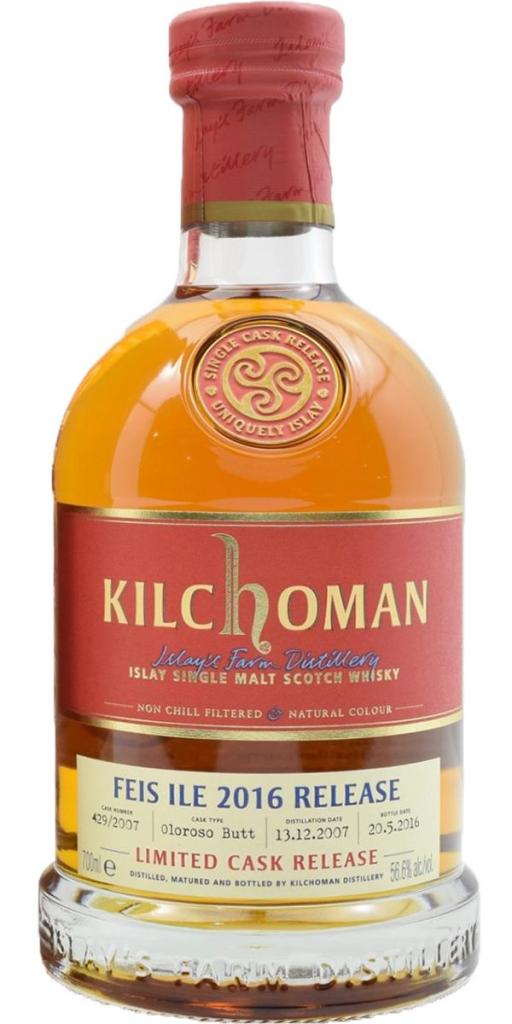
Anyway, this Kilchoman at eight years old was drawn from an Oloroso sherry butt, with 634 bottles coming out of the cask. Not a clue what it cost back then but now it seems to go for at least € 170. Not too surprising for a Feis Ile bottling, and especially not from a sherry cask.
Image from Whiskybase
Sniff: Smoky glue at the first sniff, with oak and steeped barley. It changes quickly to more traditional sherry with some dried fruits, dry spices and a bit of rye bread. The sherry becomes more intense after some more time. A spicy and dry kind, with more feinty notes than fruity ones.
Sip: Not too sharp, but certainly with some bite. The sherry and smoke work really well together here, with the spices and smoke being nicely complemented by the dried fruits. It’s a bit more syrupy than I expected, with hints of orange, plums and peach syrup. Barley, oak and smoke.
Swallow: The finish is more traditional with the sherry taking the back seat and the oak and barley being more prominent. There’s a fierce smokiness without it being all encompassing. Surely there is some fruit left, but not a lot. Some orange, maybe. Hints of Lapsang Souchong, barley, smoke and brine.
Well, this one does everything by the book. The sherry is nicely integrated and adds complexity to an otherwise relatively straight forward dram (mind: this does not mean bad, since Kilchoman spirit is pretty awesome).
I like the tea notes I get towards the end, which is normally something I only find in Lagavulin, so that’s another plus for this dram. I would have preferred it with some more age, or at least, some more time to mellow and get a bit lower in the alcohol department.
While you can’t really see it in the title, this is some old shit. I got this in a recent sample swap and on that label, much like this title, it didn’t really say what it was.
My first thought was “why on earth did I ask for a 15 year old Strathisla at 40%”. And then it turned out to be a bottling from somewhere in the eighties. So at it’s youngest this is distillate from the 1970s, but it could very well be from the late 1960s.
If you’ve never had Strathisla from that era, let me tell you it’s something else. They knew how to pick their sherry casks, and while Strathisla is now a fairly timid, gentle dram, these old ones are sherry beasts. They pack some intensity and complexity.
So, expectations properly adjusted, let’s dive in!
Image from Lion’s Whisky, Venice (IT)
Sniff: There’s a lot of complexity in the sherry on the nose, which is only added to by the whisky that initially stays in the background. It’s quite typical with dried fruits and baking spices, but there’s a heavy whisky background to it. Whisky with shoe polish notes, and leather, and steeped barley.
After about 15 minutes (I got a phone call) there are scents of chocolate covered raisins, some earthy notes in the background, and hay.
Sip: With this only being 40%, it’s very gentle. There is some dryness from the oak, with a slightly coarse texture. Dry sherry notes with fruits and spices. Peaches and plums, with cinnamon and nutmeg. There’s more oak than I’d expect after 15 years, which makes me expect that this is from the more spicy European oak.
A slightly fatty, or maybe syrupy mouthfeel follows, even though the dryness stays too. The leathery notes show as well, with some wax coats.
Swallow: The finish shows more focus on the fruit than on the spices, but keeps being driven by the sherry. It’s not overly long, although the dry sensation stays a while longer than most of the flavors.
This is exactly what old Strathisla does so well. Absolutely glorious. There are older bottlings available that go far more into the domain of the sherry casks used, but this one is very well balanced between the spirit and the cask. I love the complexity with heavy leathery notes, sweet fruity flavors and some spices as well.
A very random bottling for a German whisky museum. Why Kyrburg would have a whisky museum is beyond me, but apparently it’s a thing.
I got a sample from this last week, in a glass, and I had to quickly clean a sample bottle for later drinking. I planned on drinking it then and there, but things were a bit crazy around the house, so that didn’t happen.
Almost a week later and here we go!
Sniff: It has the gentle sweetness of Glen Moray. There’s a heap of vanilla with it’s custard like sweetness. But apart from the vanilla there’s a wine like sweetness on top of it. A bit like stewed fruits with cinnamon and port.
Sip: On the palate the alcohol shows itself, but it doesn’t do much more than add some heat to the stewed pears with port and cinnamon. It’s a style I’m not a fan of. It takes a while of swimming before the spirit comes through. Vanilla, cracked black pepper, some dry oak too.
Swallow: The finish shows a bit more of the oak and some green apples. The cask influence is much less here, although it’s not all gone.
Govert, who gave me a sample of this, asked me whether this was a wine, port of madeira cask. There’s no info on this, but I’d go for Madeira. It’s not as intense as port, and lacks the typical wood and soil notes that I normally get. I think it’s too sweet for a wine cask. But who knows?!
Anyway, I don’t like it. I don’t hate it either, but I’m happy this isn’t my bottle. The stewed pears with cinnamon and port (the Dutch style of stoofperen) is something I really love, but absolutely detest when I find it in whisky. It’s a bit gluhwein like, and I really hate that stuff.
Also, Glen Moray is a bit of a too gentle whisky for an intense cask like this.
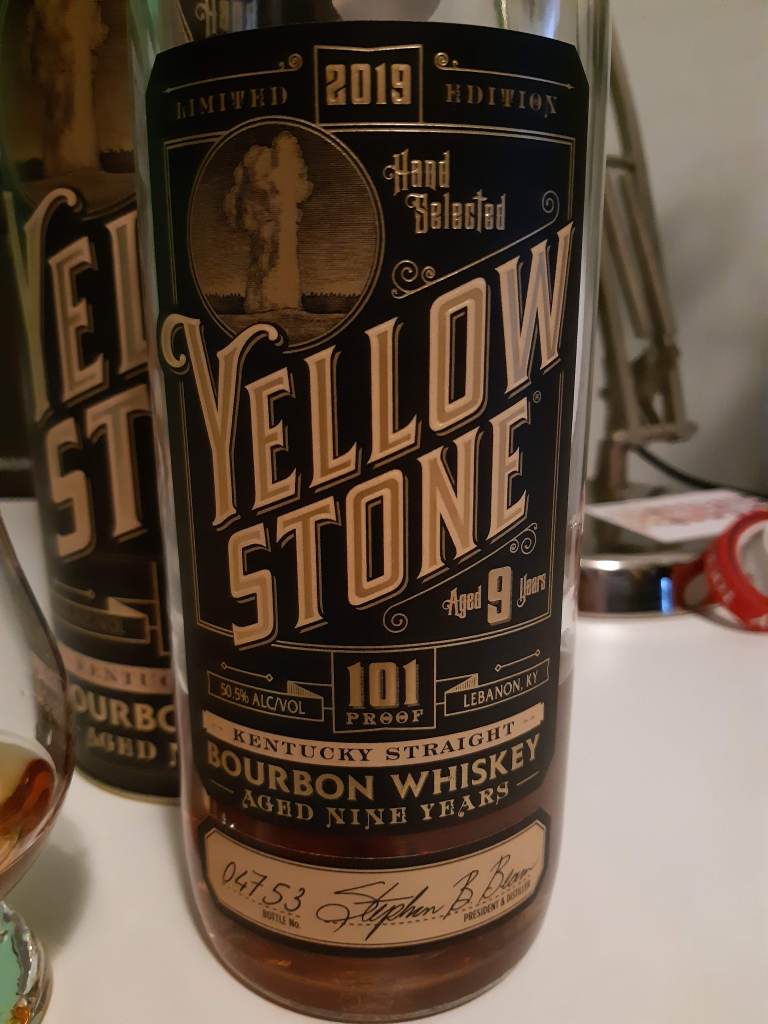
In the first tasting by Whisky4All I participated in we tasted the 2019 bottling of Yellowstone’s Limited Editon. I instantly bought a bottle because of the enormous complexity and goodness it showed. Even before I wrote notes, or told the ‘tasting’ that I loved it.
Of course, we’re in Europe so it’s rather expensive and therefore I didn’t keep it all to myself, and sold some samples. Still, there’s a nice part for me to enjoy.
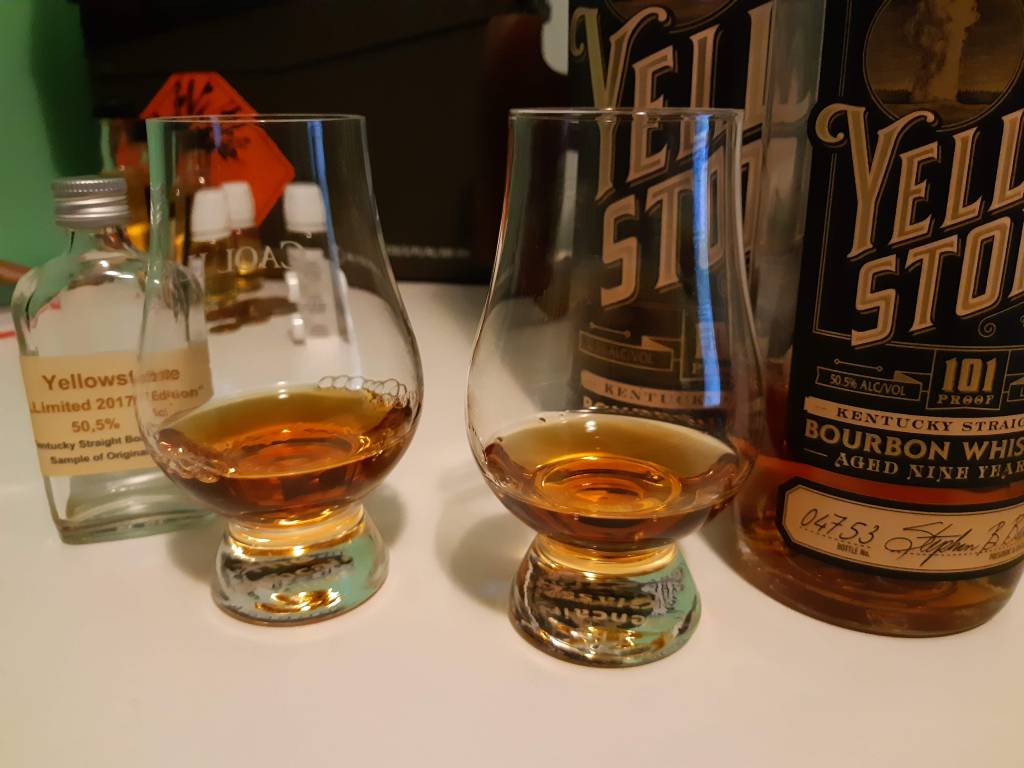
A few days after that tasting I was at De Whiskykoning and I saw that there was a sample of the 2017 limited edition. Of course, a comparison had to be made!
Interestingly enough I never looked twice at ‘Yellowstone bourbon’. Yet another cheaply branded product named after some random landmark in the United States. Can’t be any good, right? Wrong. As it turned out.
Also, it’s not as randomly branded and is a brand with a bit of history behind it and I should have done my homework. But, better late than never! So here we go (in a Mario voice).
As I just found out, there’s a bit of an age difference too, with the 2017 being 7 years old, and the 2019 being 9 years old. Also, the 2017 is finished in wine barrels.
Sniff: Initially I get the typical bourbon like notes with corn and vanilla. It takes a while to open up but the wine starts coming through pretty clearly. However, I am not entirely convinced about the combination of flavors. There’s a bit of rancio, some oak and blue grape juice.
Sip: The palate is very sweet but it goes in two different directions. There’s a wine like, almost port like, sweetness. But also a more pastry like sweetness that I find more typical for bourbon. Some chili heat for a bit of heat.
Swallow: The finish is slightly hot too, surprisingly so for a 50.5% whiskey. It’s also a bit more dry and shows some spiciness that wasn’t there before. The wine stays in another lane again.
Well, this is weird. I expected to really like this whiskey, because it’s in the same product line as the 2019 version. This is a hugely different product though, with a far weirder approach. The wine and bourbon combination is not something I think works. Both the wine and the bourbon itself come with a certain sweetness and it doesn’t really integrate well, apparently.
Sniff: Lots of warmth, maturity and character. ‘Wybertjes’, menthol, thyme, bay leaf. Some sweetness but just as a carrier for the other flavors. Rye bread crust.
Sip: The palate shows a bit more punch, but isn’t overly sharp. Menthol, aniseed, again the Wybertjes (Dutch honey candies). Quite some oak and after a while some more heat, but not a lot.
Swallow: The finish shows some more fruit, with plums and peaches. But also corn syrup, caramel, resin and pine.
The added two years softened this whiskey a lot. The ABV is the same but it drinks a lot more smoothly. The complexity is huge, on par with much older scotch whiskies. Not to say it’s comparable, but it does have as much to offer.
I am absolutely in love with this stuff. Of course, it’s a lot more expensive here than it is stateside, although the difference is less than I expected. Only about 100% more expensive here.
Still, I’m happy with my share and I’ll gladly drink this!
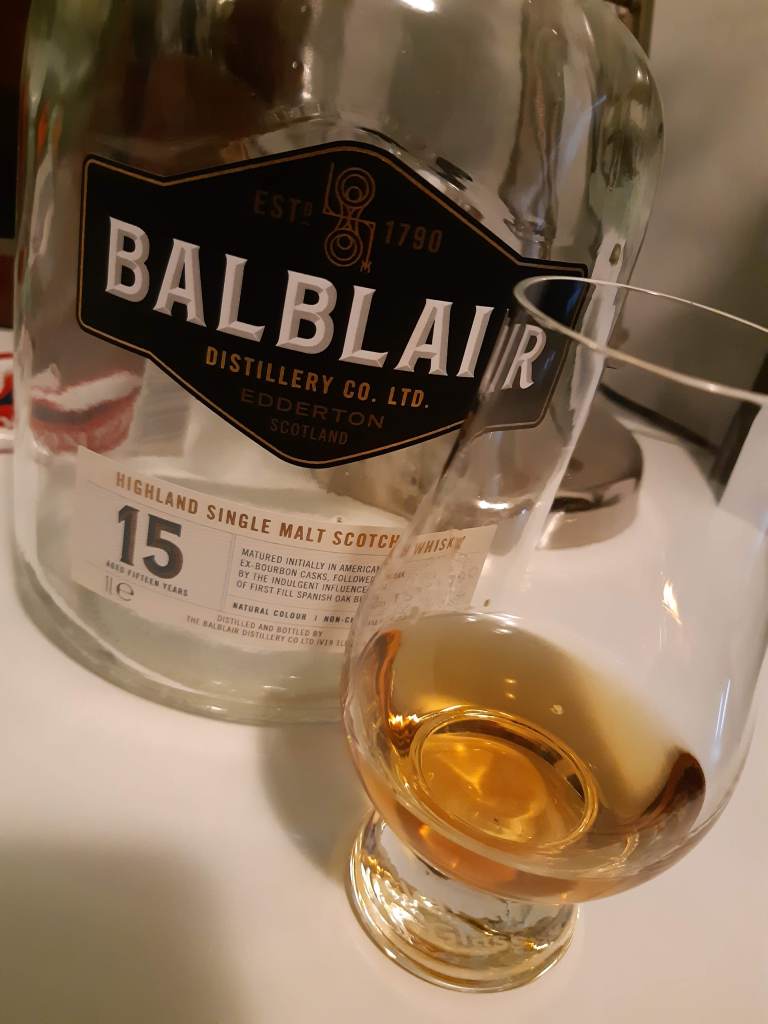
A short title if there ever was one. No weird cask mentions and no bottler. Just, the regular edition. I don’t have too many of these regular ones. Especially not Balblair since that is somehow pretty hard to get in the Netherlands.
Just one is either in or out of the daily drinking category, depending on when and where you buy it. I know the regular 70cl bottle is pretty steep, but this one is a liter. Normally it’s € 90, but it has been discounted to € 65 for ages now. And 65 bucks for a liter of sherry finished Balblair 15 years old is a good deal.
I visited the place in 2013 with Anneke and Ot, who was then only 9 months old. She was allowed in the carrier-back-pack thingy, except in the still room which is too small to properly navigate without a baby strapped to your back, let alone with one.
A good tour, I skipped the tasting because of driving (did take samples though) and since then a lot has changed. Distillery Only bottlings have gotten far more expensive, and they suddenly started using age statements. Easier to understand but I kind of liked the vintages. It was something rather unique about them.
So, the whisky then.
Sniff: Sweet with lots of fruit, some barley and some oak. The fact that it’s 15 years old is noticeable, with a nice balance between the wood and the spirit. The barley gets more prominent after a few seconds, but the fruit stays there. Plums, figs, mango. Pretty tropical. It also has that crisp coastal scent, with just a tinge of salinity on the nose.
Sip: The palate is pretty sweet, with some black pepper for some heat. Minor dryness from the oak, with a bit of wood spice. Nutmeg and clove, mostly. The fruit is a little bit lighter than on the palate. More towards fresh tropical fruits instead of dried. Some sweet orange, some tangerine, some mango.
Swallow: The finish has quite a big flavor. It’s a bit of a mash between the palate and the nose. Lots of fruit, with both the cask and the sherry having their impact. Surprisingly long for what I was expecting.
This is actually quite a nice whisky. It’s not life changing but I never expected that. Apart from this having been used in two different tastings (so that was about 25 to 30 cl gone), I went through this bottle quite quickly.
As said above, this is at the level of a daily drinker, but quite a luxurious one. The price, especially since the discounted price seems to be the new normal for this one, is really good.
If you like fruity sherry, a bit of oak and something not ridiculously complex, but just quite comfortable, this is a good pick.
85/100
Balblair 15, 46%, bottled in 2019, available for € 65 (for a liter!) in Leiden
Ok, so I lied. I am doing more reviews of American whiskey after all. Mostly because when I wrote the previous post, I didn’t know I could join this tasting. I wanted to get in when it was sold out, but with delivery services doing their job carefully, I could get my hands on the back-up parcel.
Anyway, the theme of this tasting was to drink seven whiskeys that are available through Dutch importers, don’t cost more than € 50, and delivery well above that value. According to Norbert, of course. We would be the judge only after the selection had been made.
Sniff: Young with quite some notes of new oak and alcohol. Pretty raw, while not harsh. After a few seconds there’s more vanilla and stewed strawberries. There’s some minty spiciness, but not too much. Orange and some baking spices.
Sip: The spices are dry, with some alcohol heat. Dry spices, with some chili pepper, oak bark, and hints of vanilla and dried mint and thyme.
Swallow: Again, very dry and with quite a lot of spicy heat. Rather short.
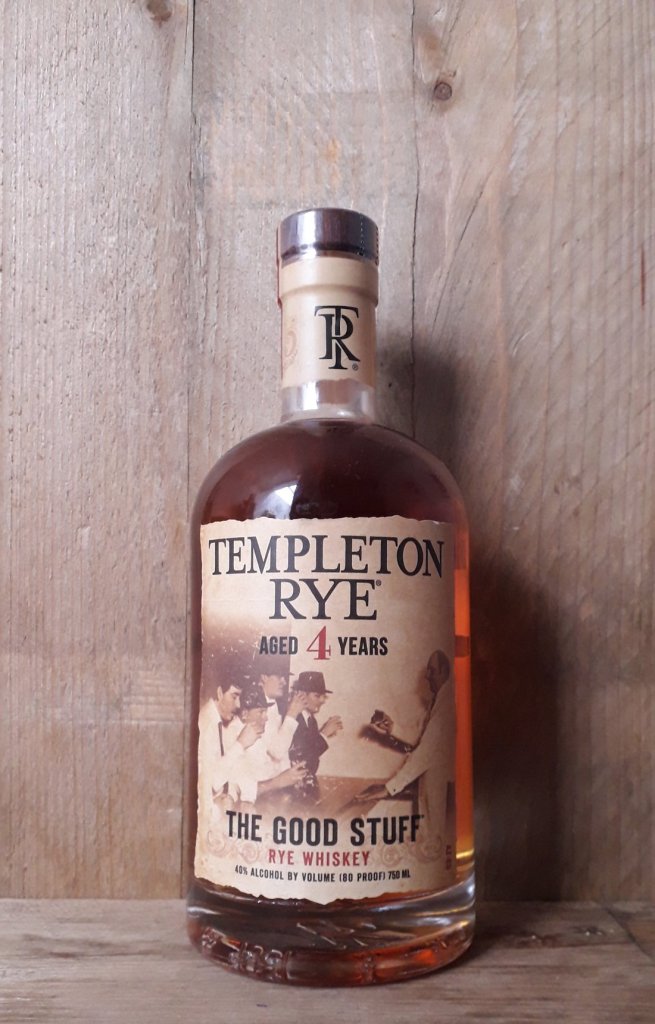
Of course, this is that brand that put so much bullshit on their label that they had to change it, and pay everyone who could show a receipt $6 as recompense, about five years ago.
It’s a sourced rye, with additions (therefore not a straight rye). These additions don’t make it any less ‘tasty’, but they do make comparing this with something else difficult. You’re having apples and oranges, instead of two different kinds of apples.
This ‘whiskey’ is not necessarily bad, but the simple fact that there are additions in it rubs me the wrong way.
75/100
Minor Case Straight Rye, 45%
Image from Whisky4All
Sniff: I have to pull the aroma out. Even with 15 minutes in the glass, it’s rather closed. Some dryness and sweetness after a few seconds. Slightly more sweet than regular ryes, because of the sherry casks. A very slight minty note, rye bread, the crust of French bread.
Sip: Dry notes with corky oak. Some chili pepper, with nutty sherry notes. Almond bitterness, cherry stones, oak. A bit of a dustiness with a whiff of glue.
Swallow: A true rye finish with a spicy heat, which is lovely in combination with the sherry notes.
The flavors are rather nice, and it’s a pretty complex whiskey. A shame it’s so closed, even with time to open up in the glass.
The addition of a sherry cask finish works rather well, and for a two year old whiskey this punches well above its weight.
85/100
High West, American Prairie Bourbon, 46%
Image from Whisky4All
Sniff: Far less spicy than the ryes, but still quite a bit more dry than I expected. Not overly sweet at all! Some banana, overripe pear. Yeasty fruit. Scottish tablet.
Sip: Dry again, with pear peels, pear. Overripe pear and banana, scottish tablet. Caramel with sweetness, but again, not overly so.
Swallow: The finish is also dry, but with some fruitiness. Lots of pear, a background of banana. Brown sugar, fudge.
I really like the fact that this is not overly sweet. I was afraid the switch to bourbon after the ryes would give me huge notes of corn syrup and brown sugar, but a fairly constrained dram like this works fine.
Also, I really like High West in general, so that’s a boon. This doesn’t change the rating though.
85/100
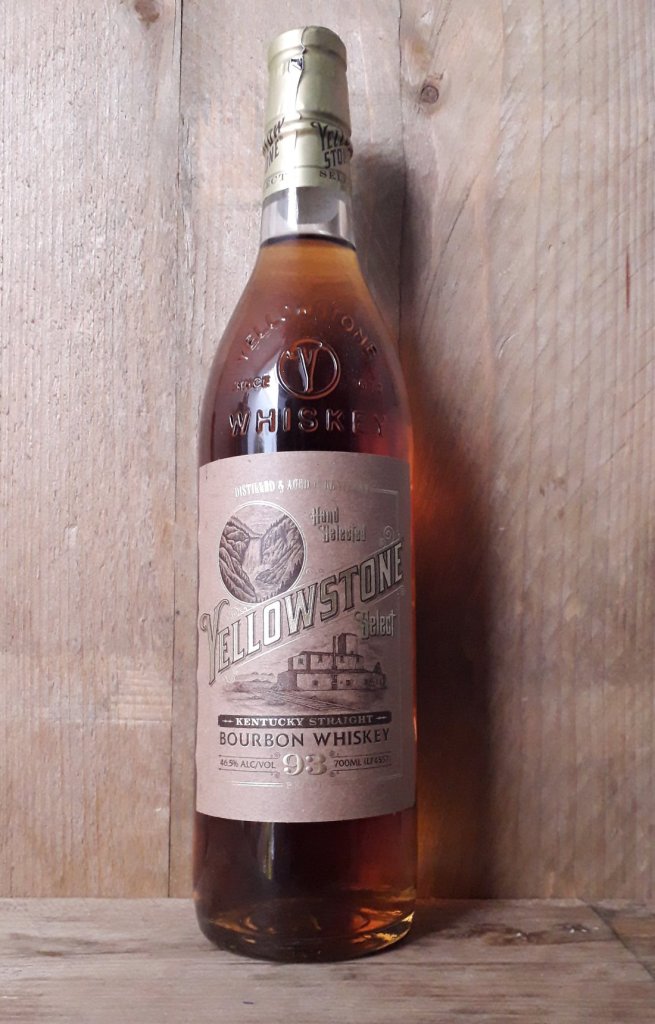
Yellowstone Select, 46.5%
Image from Whisky4All
Sniff: A lot heavier than the previous one. More heavy sweetness, more corn, caramel, browned butter. Stewed apple (the apple pie kind) with cinnamon and raisins. More oak with some rye spices.
Sip: The sweetness makes it very gentle, and quite sweet. The heaviness is still present. Caramel, sugary popcorn, butter. Cinnamon, raisins.
Swallow: The finish is a very typical bourbon finish, with dry oak, sugary caramel, fudge, some baking spices. It also shows some orange pith.
With this being a pretty high rye bourbon, there’s a bit more oomph to this one. More spiciness, more notes of leather as well. In the previous tasting I absolutely loved the Yellowstone, and this one is no different. It shows quite some depth for an affordable bottle, especially with the fruity notes on top of the other flavors.
87/100
Wathen’s Single Barrel, 47%
Image from Whisky4All
Sniff: Barrel spice, some caramelized oak, very gentle, with some corn like sweetness. barbecue marinade, dried apple.
Sip: The palate is a lot sweeter than I expected. Some chili heat, oak, caramel popcorn. A touch of leather, jawbreakers, cinnamon.
Swallow: More heat here, with quite some sweetness. Again the hot cinnamon notes of jawbreakers.
An affordable single barrel is not something you see often, except for Evan Williams. While I generally find those a bit bland, this one shows a bit more depth with the heat it brings. A bit more depth, not a lot. In the end there was a bit too much sweetness happening for me, especially after the last two whiskeys.
84/100
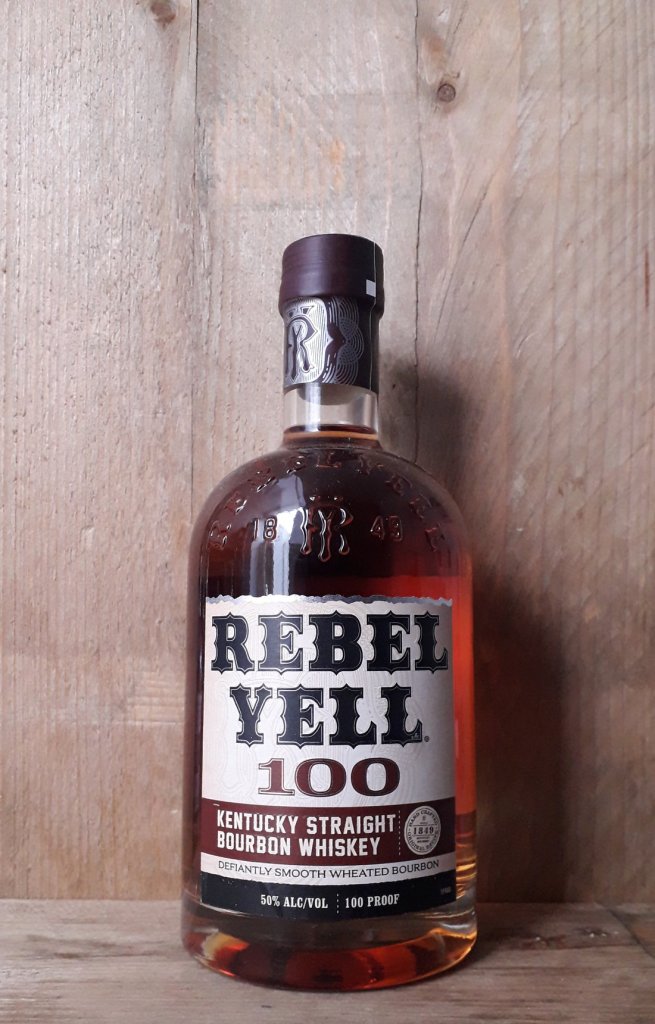
Rebel Yell 100 proof, 5yo, 50%
Image from Whisky4All
Sniff: Charcoal and bacon, baked apple, fried apple peels. Some vanilla, browned butter, a hint of coffee. Dry without much spiciness.
Sip: Again, dry, with some heat but not very spicy. Fried apple peels,
Swallow: A long finish in which the dryness is a bit lower than on the palate, but still with a bit of bite. There’s a fruitiness that I cannot pinpoint. There’s that bacon from the again though.
What surprised me most is that there are affordable wheated bourbons out there. Especially in The Netherlands, with its limited market and high prices.
The wheated bit shows most in the fact that it does have the dryness but not the spiciness of rye whiskey. Very interesting, and some really lovely flavors of browned butter, apples and a whiff of coffee!
This one is now on the wish list.
87/100
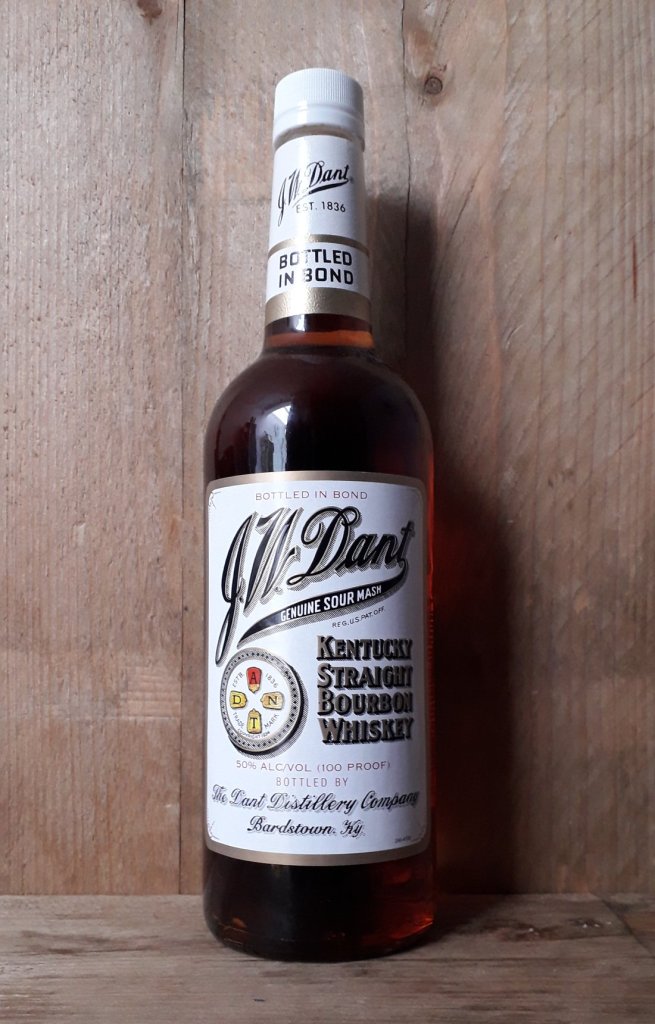
J.W. Dant, Bottled in Bond, 50%
Sniff: Lots of oak, with quite some alcohol. Popcorn, some dry grains, peanuts. Black pepper.
Sip: A bit more hot than I expected. Lots of oak, lots of pepper on the palate, dry grains.
Swallow: It brings some new heat, but gets more mellow quickly. There’s some tropical fruit, with mango, somehow.
At this point my tasting skills already went to sleep. With all construction works going on at the house, a lot of moving around and a ridiculous schedule, I was amazingly tired, and might not have given this whiskey the attention it deserves.
However, I did find that this one is a bit too strong for the flavor it packs. The alcohol and the accompanying heat ruled supreme. The hint of peanuts was interesting, but that was as far as I got.
84/100
As promised, all these whiskeys punch well above their price tag. There’s no shortage of affordable bourbon that is very drinkable, but hidden gems like these keep you interested and keep variety available without you having to dig deep into your wallet.
My personal favorites were the Yellowstone and the Rebel Yell, and it would surprise me if these didn’t end up on my shelf as high quality daily drinkers!
Another good school night, if I may say so! Thanks Norbert!







 Malt Fascination