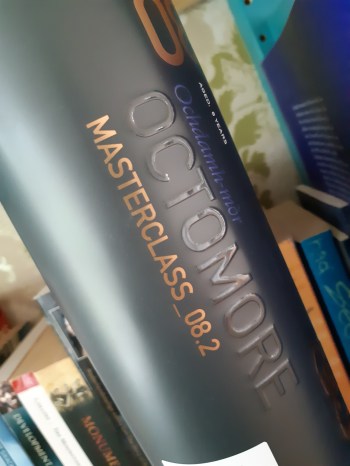
Octomore 08.2/167ppm, 2008-2017, 8yo, 58.4%

20180627_091836.jpgSlowly but surely slightly older Octomore are being released. In the case of Octomore it’s a bit weird since the age on the label will not entirely reflect a decent price point. Mostly because producing the whisky is ridiculously expensive. Peating barley to this level is painstakingly slow and costs significantly more than a regular peating level like it’s sister Port Charlotte has. Therefore, there never has been an official Octomore under 100 euros, and they are sometimes way more than that.

This is peated to a level of 167 parts per million of phenols in the barley. This means the level of peat smoke in the whisky is lower than that, but the exact level is unknown (this is also why a 15ppm An’Cnoc tastes really peaty, since that’s measured in the spirit.

This batch is an 08.2 batch, and so far all the x.2 batches have been matured in wine casks. This one is no exception with a mix of “Mourvedre, Sauternes, Sweet Wine, Amarone” has been used. I’m not sure what ‘Sweet Wine’ means in this case.

20180627_091822.jpg

Sniff:
On the nose there’s a lot of dry peat with sweet red fruits. Typical scents for a wine cask matured whisky, with old wood and wet dirt. It’s very strong, but also quite predictable if you’ve had x.2’s before.

Sip:
Even though the ABV is high but not *that* high, it tastes a lot stronger on arrival. Razor sharp at first and it takes a while to mellow. Earthy with peat smoke and peat. Lots of oak and red fruits. Grapes, cherries. And very dry.

Swallow:
The finish isn’t much different than the palate. Of course it mellows a bit, but the flavors fade rather swiftly.

Well, Octomore is getting better with the years. It improves with a little bit more age to it. However, that also means that the peat in the spirit mellows, and it makes me wonder if this wouldn’t have been better as a ‘Port Charlotte’. It feels a bit strange to pay extra for the insane level of peat, and then again for prolongued aging.

Anyway, a rather good whisky, but not one that will change my opinion on Octomore (which is: too strong, too peaty). Having said that, the wine casks do add a nice layer of flavors to the whisky, and so far these wine casks have been my favorite Octomores.

86/100

Octomore 08.2/167ppm, 2008-2017, 8yo, Mourvedre, Sauternes, Sweet Wine, Amarone casks, 58.4%. Available from 110 euros and up

Posted in Bruichladdich, Octomore | Tagged , , , , , | 2 Comments

My accidental blend…

Last week I blogged about Ardbeg and spontaneously comparing it to my ‘accidental blend’. This blending happening deserves a post of its own, which also is a bit of a ‘look at me fucking up’ post… I’ve embarrassed myself in a new way, so to say.

In the run up to our recent Scotland trip I got a lot of requests from people asking me to bring them bottles. For a lot of them I said no, since I was planning on doing some buying myself. Also, my friends wanted stuff for their collections and I had some requests from family members already.

Also, I’m not overly comfortable bringing bottles for random people that I don’t know very well, or in which case I’ve not covered the risks properly (breakage, customs, you know). Lastly “bring me a bottle of something good from Bowmore” is a bit too arbitrary an order for my liking.

However, after all was said and done, I brought bottles for some people, and quite some bottles for bottle sharing. There was overlap in this, and that’s where things went wrong.

One specific case with bottles from Cadenhead’s AND a loose order resulted in:

  • Half a bottle of 1993 Glenlossie for FV, who I was at Cadenhead’s with
  • Half a bottle of 1993 Glenlossie for my father in law
  • 20cl for myself
  • 50cl of this for bottle sharing

In that bottle share was a bottle of 2001 Glen Scotia from a rather ‘dirty’ sherry cask, but with the exact same colour as the 1994 Glenlossie.

After splitting the bottle and doing the share everything was actually fine. Everything was divided, everything was poured. I could sit back and relax. However, my sense of warped customer service kicked in, because the half bottle I had taken out of the original bottle was sitting in a random empty bottle of something I had emptied the week before (and cleaned, obviously).


I thought it would be nice for my father in law to have the original bottle, which I had sitting with 20cl in it.

What happened next was that I grabbed what *I thought* was the 20cl of Glenlossie, but turned out to be the 20cl of Glen Scotia. I poured 30cl of the Glenlossie into the Glen Scotia.

I then continued to start drinking the remaining 20cl of Glenlossie, because that was my share.

It wasn’t until a week later, with the bottles still sitting ready for dispatch, I suddenly glimpsed the label saying ‘Glen Scotia’. I did a double take, and panicked a bit, because it hit me right away what I had done. By this time, the remaining 20cl of Glenlossie had almost gone, and I had only some random blend left.
A blend of 20cl of Glen Scotia and 30cl of Glenlossie. My evil side popped up with thoughts like “since nobody tasted it before, I could get away with it”, which I probably could, but I didn’t want to be such a dick.

The drawback was, obviously, that this blended variant of what I actually purchased was less good than both the original parts. The fun fact was that it still was quite a ways better than the Ardbeg Grooves Committee Release.

It is actually quite interesting to taste something like this, because it turned out okay-ish. Neither of the whiskies really overpowered the other, although the dirtiness of the Glen Scotia (which I really liked) was toned down a bit. Maybe that was a good thing?

Edit: As it turns out, I’m still confused since I got Glenlossie/Glen Scotia wrong. That’s fixed now.

Posted in - News and Announcements, Glen Scotia, Glenlossie | Tagged , , , , , , , , , , | 1 Comment

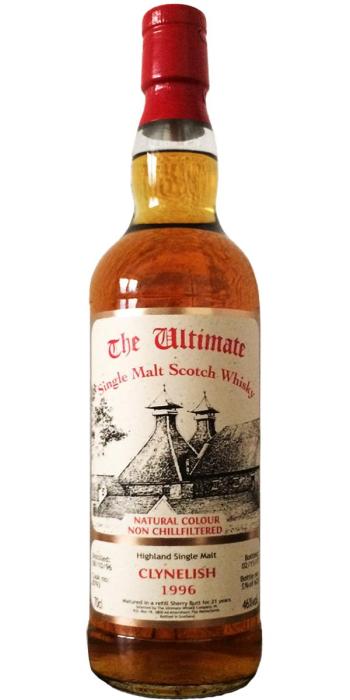
Two Clynelishes from the mid-nineties

Ah, Clynelish. Another one of these Diageo distilleries that doesn’t release a lot under their own name (except for the great 14 year old and Distiller’s Edition). Of course, there is the occasional Select Reserve from 2014 and 2015, but those… well… those were received well on flavor, but less good on price.

Then there is the nigh infinite supply of independent Clynelish releases. Almost every bottler seems able to get their hands on some casks. Most of these are bourbon casks, but sometimes there’s a sherry one too. Today, both are from a sherry cask.

147322-big

Image from Whiskybase

The first is a 1996, 20 year old Clynelish from Signatory. A 46% bottling drawn from Sherry Butt 11376.

It starts with the thick, syrupy scent of raisins. Rather sweet with almost PX like sherry. Plums too, but also something savory, in an aged balsamic vinegar style. Some honey and candle wax.

The palate is smooth, rich and rounded. Creamy with some raisins and a slightly bitter twist. There’s a thick fruity sweetness with oak and honey.

On the finish it gets a bit lighter, maybe even a little bit thin. It’s not very long but has a nice balance between sweet and bitter, fruit and oak. And then it goes back to the honey and candle wax.

So, a rather traditional Clynelish with lots of familiar notes. The finish wasn’t bad, but not something to write home about either, and that more or less goes for the entire whisky. Keep in mind that this bottle only cost 60 euros when it came out, so it is still tremendous value for money!

86/100

169116-big

Image from Whiskybase

The second Clynelish is a 21 year old, also from 1996 and bottled at 46% from Sherry Butt 8793.

On the nose it starts with raisins and dates, even rum like with a lot of sweetness. Slightly spicy with almonds and slightly bitter cherry stones. A gentle whiff of oak and waxiness. The waxiness is more like the waxy scent of dates and raisins.

The palate continues down the smooth and rich track. It’s not as rich as the nose but the raisins and dates are back for sweetness, as are the cherry stones and almonds for a bitter note. It’s oaky and sweet and ever so slightly waxy. There’s a hint of barley every now and then.

The finish has a surprisingly sharp note, and the almond, cherry stone and oaky bitterness is more pronounced than it was before.

Even though this second Clynelish was a bit less typically waxy, it does have a bit more complexity and is, maybe, a bit less overpowered by the cask. It feels like there’s more to discover and the increased notes of oak and almonds, together with the speck of barley on the palate make this one a bit more likeable for me.

89/100

Posted in Clynelish | Tagged , , , , , , , , | Leave a comment

Some Ardbeg and some realizations

The best way to describe this here blog is ‘whisky ramblings’. I don’t consider myself to be a very capable whisky taster, with inconsistencies over the years at best. Every now and then my preferences change and with it, my scores. Not in the least, I prove this annually in the Blind Tasting Competition

Also, sometimes I get the feeling I only taste varieties of malty/bready notes, sometimes it’s all about fruit and there are other options too. Whether this is due to the simple fact that my palate changes, I have different preferences or I happen to randomly taste a lot of similar whiskies in a row, I don’t know.

More professional tasters have a benchmark whisky they use to clean and set their palate so they always have the same vantage point for each dram they try. I never do that, because

  • I don’t like to spend money on a benchmark whisky
  • I try to not drink too much
  • I think, with my changing palate, it doesn’t matter anyway.
  • This only compares the whisky you’re tasting to the benchmark, and not necessarily its peers.

Recently, however, I found out there might something to say for a different approach to tasting my whiskies after all. This is not about tasting them in the morning, because that’s simply not going to happen unless you’re tasting professionaly.

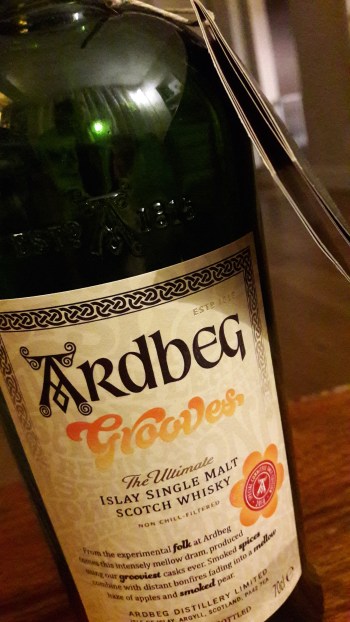
20180602_232231This was when I was tasting the recently purchased Ardbeg Grooves Committee Release, which I bought at the distillery in April. When trying this I thought they had finally bottled a good ‘Distillery Only’ whisky again.

On the nose I got leather and fruit with a hint of Allstar-rubber (the shoes, that is). Some winegums and a lot of soft oakiness. Old barley with overripe tropical fruits like mango and papaya. Then the palate continued down the same route but was a bit more sharp than I expected for a 51.6% whisky. The finish was rather long with ‘old spirit’, and old barley.

There was a certain heavy smokiness to the dram, but it was more gentle than I am used to from Ardbeg.

Also, I’m not going into the marketing nonsense around it being called Grooves, it being a mellow dram, and all the jibber-jabber about Ardbeg in the 1960s. It’s all just too ridiculous.

I was positively surprised by the whisky, and I finished my 10cl (it was a bottle share) right then and there. After that, I picked up something else from my shelf (an accidental blend of 1994 Glenlossie and 2001 Glen Scotia, both Cadenhead’s. More about that in another post) and poured myself a glass of that.

Suddenly, the Ardbeg was shit, compared to this whisky. Well, maybe not shit, but far, far less impressive. The whiskies in that home-blend cost less or the exact same as the Ardbeg, and the blend was worse than both the individual parts. And yet, this was a far more impressive dram than the Ardbeg.

What I’m trying to say is that when comparing a whisky to another, you get far different results than when you taste something individually. Whether that is a good thing depends on what you’re looking for.

Mostly, because I was rather chuffed with that Ardbeg being a lot better than I expected, until I tried the other dram. Then I didn’t really care about the Ardbeg anymore and didn’t really now how to score it, or where to put it in the picking order.

It does remind me of the Islay tastings I go to each November. Somehow, we often start with that year’s Ardbeg Day release, and always we’re positively surprised. However, after the tasting, no one talks about the Ardbeg anymore. I guess, apart from the very old ones and some rare exceptions, it’s just not a very impressive distillery anymore…

87/100 (scored before comparing…)

Ardbeg Grooves, Committee Release, 51.6%


Posted in - Opinion, Ardbeg, Glen Scotia, Glenlossie | Tagged , , , , , | 2 Comments

A dram in the morning

Over the last decade I have read a lot about whisky. About the production process, the background and history of distilleries and (semi)scientific writings about which molecules have which influence during fermentation and maturation. In many whisky books and magazines you can read interviews with distillery managers and blenders and such. Always someone with a good nose and palate who can wax lyrically about their whisky. What they always say is that your palate is best at the end of the morning, right before lunch.

highland-park-valkyrie-whiskyI always taken for granted that this is true, because their experience vastly trumps mine, and because it makes sense. Generally, apart from a cup of coffee, it’s been hours since you ate something, and you’re not too tired from the day’s doings. Good arguments, but (apart from at Maltstock) who drinks whisky in the morning?

Last summer I visited De Whiskykoning in Den Bosch during a morning I spent on my former home turf. I walked in right after he opened the front door. It was about a quarter past eleven when the owner of the shop, Rob Stevens, offered me a dram of something new that he really liked. The Highland Park Valkyrie, in this case.

I was a bit skeptical because it was rather early still, with a full day ahaed of me. Also, official and affordable Highland Parks haven’t been something to write home about over the last couple of years. Worse, even the quite a bit more expensive ones aren’t that good either (cough, enter random nordic sounding thing here). It felt a bit weird to have a whisky before lunch. On the other hand, I’m Dutch, so I am not wont to decline a free drink like that.

It turned out to be a rather light whisky, but with quite some scents and flavors to be discovered. I realized that a whisky like this would not work as a digestive or later at night, it’s a bit too light for that. This whisky will not be strong enough to overcome the barrage of flavors that linger after dinner. Also, during a tasting or something like that, it should be the start of the line up.

20170914_152721After coming to grips with enjoying a whisky on a ‘work day’ like that, I started to understand why, right before lunch like that, is a great moment for tasting certain whiskies. The arguments from blenders and distillers are correct. Not that I doubted them, but I prefer to get empyrical proof of these things myself.
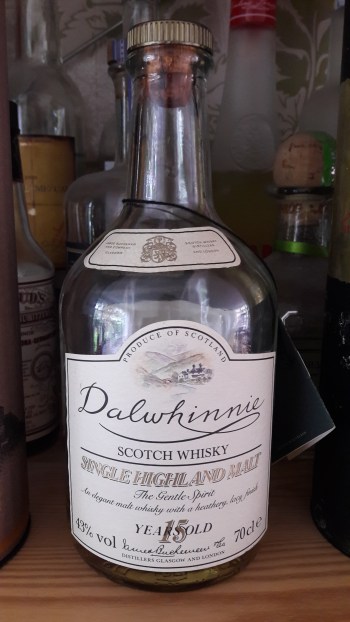
A few days later, I had an old Dalwhinnie in the AM. Old as in, it was the regular 15 year old but a bottling from the early nineties. I experienced the same thing again. A very light dram that is a lot better without any ‘palate pollution’.

Obviously I’m not trying to tell you to change your routine by swapping coffee for hard liquor, but I did think this was a very interesting experience. It’s a very different approach of drinking a whisky, which a very different result of doing it ‘normally’.

A counter argument for this is, obviously, that a whisky that won’t stand up to an influenced palate at the end of the day is not a whisky that you should buy to drink in the evening. However, that Highland Park was flavorful enough to be enjoyed at the campfire during a recent camping trip. Not a whisky that demands attention, but one that’s just ‘quite good’ and very tasty.

At some 70 euros, it is a bit expensive for ‘quite good’, but I bought it anyway, after trying it before lunch. The bottle design helps. I didn’t read the nonsensical backstory that has nothing to do with the whisky, but first impressions count, and it looks gorgeous.

Posted in Dalwhinnie, Highland Park | Tagged , , , | 1 Comment

Strathisla 25, 1989, 56.1% – SMWS (58.15 – Gravitas in a Glass)

I think that virtually all whisky lovers I’ve ever met agree on the fact that old Strathisla is a great thing. Those sherry casks that were mainly bottled by Gordon & MacPhail with their retro labels are stunning drinks, with a lot of weight and depth, and sometimes funky flavors.

See how I wove weight and depth into that opening? You know, ‘gravitas’?

Aaaaanyway… A 25 year old popped up several years ago in a bottle share group I’m in and at a decent price I thought to pick it up. I don’t remember whether I knew it was a bourbon cask instead of the somehow more expected sherry version, but what the heck.

Of course, this being an SMWS bottling, the name makes little to no sense, but with a name like this, it does presume something good.

Sniff:
There’s quite some oak on the nose, but the mountain of vanilla and custard trumps it. Apart from the white oak that’s rather clear on the nose, there’s also pancakes with golden syrup. It’s not very complex at all.

Sip:
The palate isn’t overly sharp, with some alcohol bite but the quarter century in wood mellowed it. Again, lots of vanilla and custard, with a reasonably heavy profile. Oak, a bit of an oily texture, and those pancakes with syrup again.

Swallow:
The finish is a bit more dry than the palate was, but there’s nothing else that’s surprising. Lots of wood, even more vanilla custard. Pancakes and syrup. Maybe some apple crumble?

Well, if the gravitas refers to the heavy and thick custardy profile of the whisky, it’s spot on. Apart from that, this must be one of the more boring whiskies I’ve had this year. There’s nothing exciting about this oak juice. There’s no spirit influence left, I think, and that makes this a prelude of what’s to come if homogenization keeps ramping up like it does.

Having said that, and I know this is going to sound weird, this is not necessarily bad whisky. It’s just insanely boring and predictable. It’s not disgusting, it’s not off. It’s just that there’s nothing to discover apart from heaps and heaps of vanilla (and custard).

It’s almost like the folks who reviewed it on Whiskybase had a completely different dram than I did…

79/100

Strathisla 25, 1989, 56.1%, SMWS, 58.15 – Gravitas in a Glass

Posted in Strathisla | Tagged , , , , , | Leave a comment

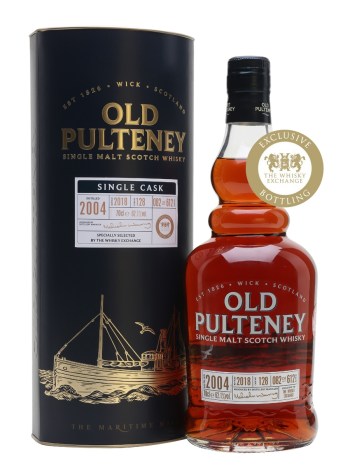
Old Pulteney 2004-2018, Cask 128, 62.1% – OB for The Whisky Exchange

Old Pulteney is an underrated distillery, in most cases. People now know that older versions, like the 1990 or 1989 that won Jim Murray’s Best Whisky thingy, are good, but there’s a lot more that’s good from the Wick distillery.

I dare say that even the regular 12 year old is a rather cracking dram. Especially since you can sometimes get it at a discount for about 25 to 30 euros. That’s awesome value for money right there.

A little while ago The Whisky Exchange released this 2004 one. Obviously matured in a sherry cask, a butt most likeley since there are over 600 bottles drawn from the cask. When I got an email announcing the imminent delivery of a sample of it, the bottle had already sold out.

You know, a good distillery, plus cask strength, plus single cask, plus sherry means quick sales, generally. This was no exception, and after tasting it, I understand why.

opnob-2004Sniff:
There’s sherry on all fronts. Fruit, dry and old oak, and spices. It’s a dry whisky, rather coastal on the nose. Hints of salt water, flint and slate. Lots of peaches and plums, apricot jam and even cigars and tobacco leaves.

Sip:
The palate is unsurprisingly sharp, but tastes more like a high fifties ABV than over 60 percent on arrival. It does start biting slowly and lightly smashes your palate. Lots of sherry, some oak, lots of fruit. Apricot jam, plum jam, slightly bitter and salty. Rather sweet, as indicated by the jams.

Swallow:
Generally, whiskies like this mellow quickly on the finish, but not this one. This one keeps biting and kicking for a while. It’s long with lots of fruit and sherry. The coastal notes stay present with salt and slate. Rather heavy with cigars and leather. Lots of deep and big flavors.

Summarizing, this is a biter. It’s very strong, but not nonsensically strong. The fruit and dryness of the sherry shine through throughout tasting the whisky and that’s really gorgeous on top of Old Pulteney’s coastal spirit. There’s a lot going on, and even at full strength you get a lot of different flavors. I expect this one can handle a drop of water, though.

In short, it’s right up my alley, and I should pay more attention to the distillery in general.

90/100

Old Pulteney 2004-2018, Cask 128, 62.1%, OB for The Whisky Exchange. I believe it used to be available at The Whisky Exchange for around 100 pounds.

Posted in Old Pulteney | Tagged , , , , , , | Leave a comment

Croftengea (Loch Lomond) 2008-2018, 9yo, 54.8% – OB for The Whisky Exchange

The Whisky Exchange have been bottling some nice stuff over the last couple of months. The most recent one, apart from this Croftengea, is an Old Pulteney from 2004, which I *just* realized I haven’t reviewed yet. Shame on me. Luckily they don’t need my post for selling it since it was sold out before I even got the sample. (I’ll review it soon, I promise)

Now, they’ve gone and bottled a Croftengea. Where is that, you ask? It’s one of the brands from Loch Lomond Distillery in Alexandria, just above Glasgow. This brand is their heavily peated one, where Inchmurrin and Loch Lomond are unpeated, and Inchmoan is lightly peated. If I am not mistaken, this is made the same way as Inchmurrin in regards to distillation process, but I’ll not bore you with that here.

So, a heavily peated single malt from a distillery that’s making waves by suddenly releasing a lot of much better whisky than they used to. Rather interesting, if you ask me. Just a shame the price of their bottles has caught up with the market too. Can’t blame them, but I prefer things cheaper, if possible…

section-bg-1

Sniff:
The ‘heavily peatedness’ of this whisky isn’t as heavy as I expected. There’s definitely some smoke there, but it’s not a punch to the jaw like some Ardbegs have. The peat is more of a highland style than it’s like Islay whiskies. There is a hint of salt, but apart from that it’s more a woody, plant like smoke instead of seaweed and moss. I get some thick and heavy pastry cream and milk. A tiny hint of some lemon zest too, with quite some oak.

Sip:
The palate is tingling with some chili pepper heat. Quite some oak again, with some wood smoke and charcoal. I get some malted barley and light citrus, some smoke and burned wood. Grass and straw, milk and vanilla. Slightly salty again. Maybe some cured ham too?

Swallow:
The finish is a bit warmer than the palate was, and a bit dryer too. The smoke is a bit more gentle, with less vanilla than before. There’s still oak, some lemon and milk.

It’s always interesting to see what a distillery claims to be heavily peated. In some cases it’s insanely peated (Bruichladdich), in other cases it’s slightly more peated than they normally do, and in others there’s a whiff of peat which is only heavily peated because all their other stuff is completely unpeated. In this case, I think it’s more or less in the middle. It’s not as heavy as some Islay whiskies, but it’s definitely more peated than the majority of the mainland whiskies, and Loch Lomond’s other products.

Anyway, the whisky itself is rather tasty. There’s quite some different flavors going on and even though I think it’s a rather light whisky, it does have that charcoal, thick peat smoke and cured meat thing going on.

I rather like it, especially for a whisky that’s only nine years old. I had expected there to be less wood influence and more spirit, but the balance between those two is rather well done. A good whisky, for a good price!

87/100

Croftengea (Loch Lomond) 2008-2018, 9yo, 54.8%, OB for The Whisky Exchange. Available from The Whisky Exchange for 80 euros/70 pounds.

Thanks to The Whisky Exchange for the sample!

Posted in Croftengea, Loch Lomond | Tagged , , , , , , , | Leave a comment

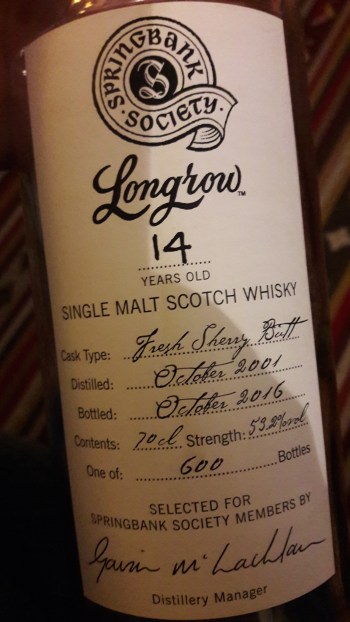
Longrow 2001-2016, 14yo, Fresh Sherry Butt, 53.2% – Springbank Society

It’s not very often that I go through my own bottles at a rapid pace. But somehow, with sherry casks from the Springbank Society that never seems to be a huge problem. In this case it only took a while because I had quite some bottles at a lower fill level sitting in front of it, both physically and in the drinking-queue.

I’ve been a member of the Springbank Society for, I think, about ten years now and almost all the bottles I’ve bought and tasted have been great. There is the odd one out, every now and then (cough – Longrow Chardonnay Cask – cough) that is just too weird and doesn’t work, but most of the time, it’s a blind buy and a happy one.

Also, Longrow and sherry casks. Can’t go wrong there, can we?

20180419_211753.jpgSniff:
Lots of oak on the nose, and lots of sherry too. Not timid at all! Quite some fruit with plums and dates leading the way. Some smoke, but less than expected. Ashy with a tiny hint of rubber and leather. Not unlike Allstars sneakers, somehow.

Sip:
The palate starts of a bit sharper than I would have thought at 53.2%. There’s wood and ash and charcoal at first, but soon the sherry comes shining through. Dry and fruity, with the brand’s typical salty basalt and grassiness.

Swallow:
The finish is dry and sweet, with plums and dates. Salty smoke with that hint of rubber and leather again. Sherry and oak too.

Honestly, if you’re looking for sherry and peat there are a few brands that spring to mind immediately. Port Charlotte and Bowmore are two of them. The third is Longrow. This one fits the bill perfectly and it’s a slightly dirty sherry and peat showcase. Everything I love about Longrow, in short.

Especially the varieties of oak, with the wood, the ash, smoke and charcoal coming through works very well with the dryness and fruit of the sherry. A great combination.

It might not be as complex as some others, but I can’t give it anything else than

90/100

Longrow 2001-2016, 14yo, Fresh Sherry Butt, 53.2%, Springbank Society. Currently available in Germany for 279 euros

Posted in Longrow, Springbank | Tagged , , , , , | Leave a comment

Glen Scotia, 2018

Around September last year I posted on Facebook, asking for tips for me and my friend FV to spend an afternoon and evening in Campbeltown. While I did get some way-too-obvious things, like Springbank and Cadenhead’s, I also got the tip to visit Glen Scotia.

Even better, Donald MacLellan, an International Sales Manager for the Loch Lomond Group of which Glen Scotia is a part, said we couldn’t not visit Glen Scotia. The ‘we don’t have time to do everything’ excuse didn’t fly. “You drive 500 miles to visit Campbeltown, you’re not telling me you don’t have time for the last 200 meters”.

Even better yet, he told me we could also visit outside of regular visiting hours, going as far as shouting 24/7 at some point. Easy for him to say, he wasn’t the guy welcoming us in his spare time!

After a while we had set up a date with Callum Fraser to visit the distillery at 8pm, so we could have dinner first and cool down a bit after the Cadenhead’s Warehouse tasting.

When I visited Campbeltown in 2010 Glen Scotia wasn’t a pretty sight. Walls and fences made sure you didn’t feel too welcome, and it also didn’t look like there was any love lost in keeping the place neat and tidy. A lot has changed since then.

20180412_193539

20180412_200117.jpg

Now you see a mid-town distillery that’s nicely painted, on a tidy plot that’s nicely kept. Also, there’s a visitor center now at which Callum was waiting for us just when the sun was setting over Campbeltown.

We started with a tour, which skipped most of the regular numerical information and official script. We just walked around and Callum pointed out some things that were irregular or different from most distilleries. We had a nice chat with David, the mashman, about some distillery quirks, and we got to see all the technology for the grain stores. All the technology in this case is a binder with some scribbles in there to see which silo contains what, and which washback was filled when.

David turns out to a guy with a can-do-attitude, based on Callum’s stories. Apart from finding it rather ridiculous that there’s a bottling in his honor, he mashes, but also knows how to run the stills and do maintenance on most of the equipment in the distillery.

20180412_201237

20180412_201618In the stillroom we had the chance to talk to Sean, the stillman, for half an hour or so. The stills were coming on steam while we were there so there was a bit of a gap in his schedule to talk to us. It’s great to see a real craftsman at work with manual controls over the stills and someone who is so familiar with the equipment that most of what needs doing is triggered by sound and sight instead of all kinds of analog and digital equipment.

We unfortunately couldn’t do the warehouse tasting since the warehouse manager had already gone home and locked up after himself, as he should. Callum made up for this by pouring quite a few amazing drams in the tasting room, though.

We tried the Glen Scotia 18, the Mashman’s Reserve (2001), I believe there was a 16 year old bourbon cask there too. After the other 11 year old Single Cask (2005) we made a small sidestep to the official 27yo Littlemill. I didn’t see that one coming, but damn that’s good!

20180412_203637By this time it was already around 9.30pm and with a full day of driving from Campbeltown to Newcastle for the ferry, we decided to call it a day and do some last minute shopping for back home (Irn Bru, Gingernuts, a cake for the kids).

This tour, which was 100% off the beaten path for tours as I know them, was an absolute stunner. Talking to the people who make the stuff you like to drink, and getting to know some of the quirks of their craft and their distillery, with a host as awesome as Callum, this was an epic end to our Scotland trip!

Thanks a million to Donald, Callum, David and Sean for being great guys! Glen Scotia went up many notches in my book…

Of course, being the enthusiastic geek that I am, I forgot to take proper pictures, of the people and such. So just a few random shots of the distillery are all I have…

Posted in - Distillery, Glen Scotia | Tagged , , , , , , , , | 1 Comment