Normally I would start a post like this with something like “I quite like Balblair”, but I’m not sure if that is a relevant statement anymore.
I visited the distillery in 2013, and loved it. I also really like their output, but there’s not much available in The Netherlands. As in, official bottlings are few and far between, and it’s also not a very popular distillery with independent bottlers. Of course, before you start, it’s not UNavailable either, but it’s not something that just happens to catch your eye.
Anyway, I do generally like Balblair, although their special releases are quite expensive, and indies are more rare than I’d like them to be.
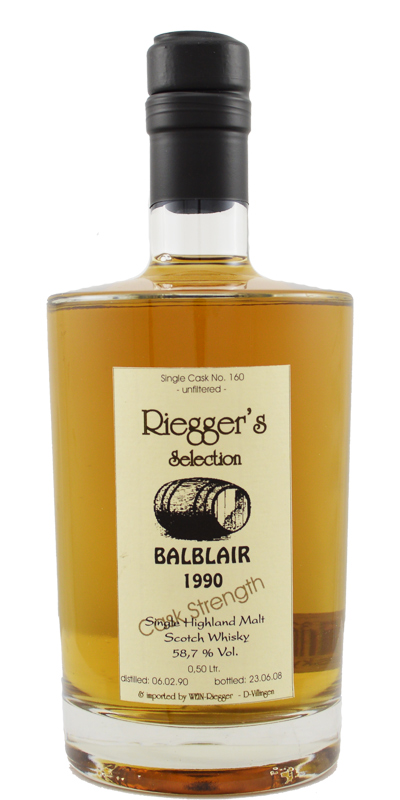
So, when this bottling popped up on my radar I did pay attention. I also did a bit of research and found that the few reviews it had (on Whiskybase) were really bad.
I decided to buy the bottling for two reasons. One was a slightly naive “it can’t be that bad, can it?” and the other was “I’m doing a tasting with all kinds of weird stuff, so this fits right in”.
Image from Whiskybase
Sniff: Rather bland and slightly spirity. Very sharp, with hints of acetone. Time doesn’t seem to help to coax more out of it. There’s a hint of straw, maybe.
Sip: The palate is dry and sharp. Some straw again, and now there is some vanilla before the heat starts scorching your tongue. Slightly chalky.
Swallow: The finish continues down the same road, with straw and vanilla. Maybe a touch of oak and a whiff of something wine gum like.
It’s hot, slightly sweet and doesn’t offer much, if anything. I can’t imagine picking a cask like this for a private bottling. There’s just nothing happening, and whereas that’s bad enough, in this case it burns your tongue while doing so.
So yes, it actually can be “that bad”. I’m not sure how to rate this, because giving it about 78 points, which I initially wrote down, puts in on par with the Old No. 7 by Jack Daniel’s, and I like that one better. 75 maybe? Or since it’s shit, maybe just a 60? Fuck it, let’s do that!
This must have been some faulty cask because, even if you don’t like Balblair, this just doesn’t fit anything the distillery normally does.
Avoid like the plague. Also: I have some left in my bottle. If you want it, let me know…
Since you’re reading this blog, you probably have a passing interest in whisky. If you have, you probably know that Ardbeg releases an annual special edition.
In yonder year, one could order the bottles straight from the distillery and you’d get the ‘real’ special edition called ‘The Committee Release’. When the EU, with all their open borders, decided that excise goods would no longer be available across borders if you’re a drinks producer, this stopped.
The solution was to found several Ardbeg Embassies throughout (at least) Europe. You could get your committee bottlings there. And to make it slightly less unbalanced to other shops, there was a more regular special edition for them.
Since I don’t live near an Ardbeg Embassy, and I don’t even know if the Embasssy release is available outside of the UK anymore, I just got the regular version of Ardbeg Scorch. It’s at 46% instead of the 51.7% ABV of the true special release, but shouldn’t hamper the fun too much!
Generally, these Ardbeg special editions are okay. They tend not to be great, unless the somehow release a sherry cask edition with an age statement. Or something like the Corryvreckan. Ardbog, Alligator and Rollercoaster were fine. Dark Cove, Perpetuum Auriverdes and Grooves were not very interesting.
This year’s edition doens’t have too much of an outlandish story. No ‘the whisky went to space’ nonsense, no far fetches story about pirates, or the Football World Championship in Brazil.
This year’s edition was ‘simply’ matured in ex-bourbon casks that underwent ‘dragon charring’. Charring happens all the time, when they char the inside of the cask to coax out more flavors. There’s generally four levels of charring, with one being the lightest, and four being ‘Alligator’ char. A reference to alligator skin (hence the Ardbeg Alligator of 2011). With dragon charring they ramped up the charring even further and that’s quite unusual. Let’s see what that tastes like!
Sniff: Quite sharp, with lots of charcoal and oak. A sweet smoke with a hint of barbecue. White pepper and the woodiness is rather sharp.
Sip: The palate is razor sharp too, lots of oak, sawdust, white pepper, chili pepper, charcoal. Some sweet custard notes too, and a grassy, seaweedy smoke. It gets more mellow with a bit more vanilla and dried apple with some time.
Swallow: The finish quite nice, with dry osk and pepper, but without some of the sharpness. Still a bit charcosl like, with old wood, dandylion leaves and a whiff of vanilla.
While there is definitely more oak influence on the whisky, it’s also quite different than, say, Laphroaig 10 vs Laphroaig Quarter Cask. It’s not like it matured in a smaller cask, it definitely has a sharper, more intense oakiness.
Having said that, it might be a bit too harsh for me. It ends up as one of those whiskies that Clint Eastwood drinks in one of his westerns. He winces after taking a shot. Of course, a second sip is a bit easier because of the warming up, but it stays a sharp whisky.
An interesting experiment, but not really revelatory. With prices having gone up by 50% already, I’d skip this. Luckily, I did a bottle-share with it, and going through a sample is enough.
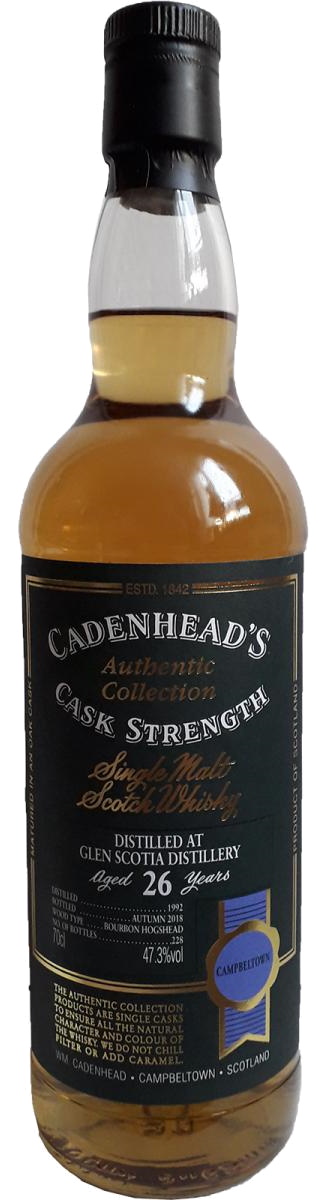
I went into this dram with great expectations. It’s Glen Scotia, which I love. It’s also Cadenhead, which I also love. Of course, both have their ups and downs.
Since it’s been quite a while since I got this sample, I don’t really remember where I got it from. But it’s the sort of whisky that make me enthusiastic about getting a sample, and sometimes a bottle.
Although, that last part has crawled to a stand-still with being a Cadenhead club member and not being able to get the bottle properly shipped and handled. Something, something, Brexit, something.
Sniff: Funky from the start. Soil and mushrooms, moldy, wet. Some banana peels, some winegums, and mossy wood.
Sip: Slightly sharper than expected. Dry with old oak and old barley. Dirty and funky, some vanilla, banana, winegums.
Swallow: Dry, slightly bitter. Lots of oak, far more than before.
It’s a bit weird. It does have Glen Scotia funkiness, but there’s barely more than that. The combination with the high sweetness of overripe fruit and wine gums makes it a bit too much like the garden-waste bin.
I’m not entirely sure what happened here, but it’s a too much of a good thing. Generally, the bourbon profile works well with Glen Scotia, but in this case it only took the lesser parts of bourbon cask maturation and skipped the good bits. Or so it seems.
Unfortunately, this wasn’t hand-filled by me, but by whisky buddy SJ. He opened a bottle recently and was kind enough to give me a sample of it. I didn’t wait too long before tasting it, because it looked so gorgeous.
What also helps is that it’s a proper sherry cask, at cask strength, from arguably the distillery’s greatest vintage. I’ve had some great ones over the years, but it’s been quite a while. Not that they’re not available anymore, it’s just that they’re quite prohibitively priced, nowadays.
Image from Whiskybase
Interestingly the label doesn’t state what kind of sherry cask this was. Knowing GlenDronach it’s either Oloroso or PX, but I know I’m not great at deducting this from the flavors and aromas.
Sniff: The incredibly rich sherried notes that are so typical for these kind of GlenDronach bottlings is present from the get-go. I had almost forgotten how glorious ‘Dronach from 1993 can be (almost).
Mountains of fruit, with cherries and blackberries leading the way. Tropical with mango, too. There are some hints of leather and baking spices, with cinnamon and clove. Rich oak, some earthiness, figs, dates, apricots.
Sip: It takes a few seconds before the almost 60% ABV kicks in, but even then it’s dry and hot, but not harsh. Dried fruits, oak, earth, baking spices. Cinnamon, clove, figs, dates. Also fresh fruit with cherries and blackberries. Leather, hessian. Some roasted notes, with dark barley and burnt oak.
Swallow: The finish continues much down the same line, but quickly alleviates the heat so the sweet flavors of the palate get more room. Lots of fruit, lots of dark notes with leather and roasted barley.
Absolutely gorgeous stuff! Even though it’s so incredibly sherried, it’s incredibly how much depth and complexity this shows. Based on complexity and a slightly higher level of spiciness I would guess this to be an Oloroso cask, although being wrong wouldn’t be too surprising.
The layers of fruit leading the way, but being backed up by oak, barley and spices makes for a great dram, with lots to be discovered. Stunning!
It’s one of these moments on which I regret not stocking up on bottlings like this, but I don’t roll that way anyway.
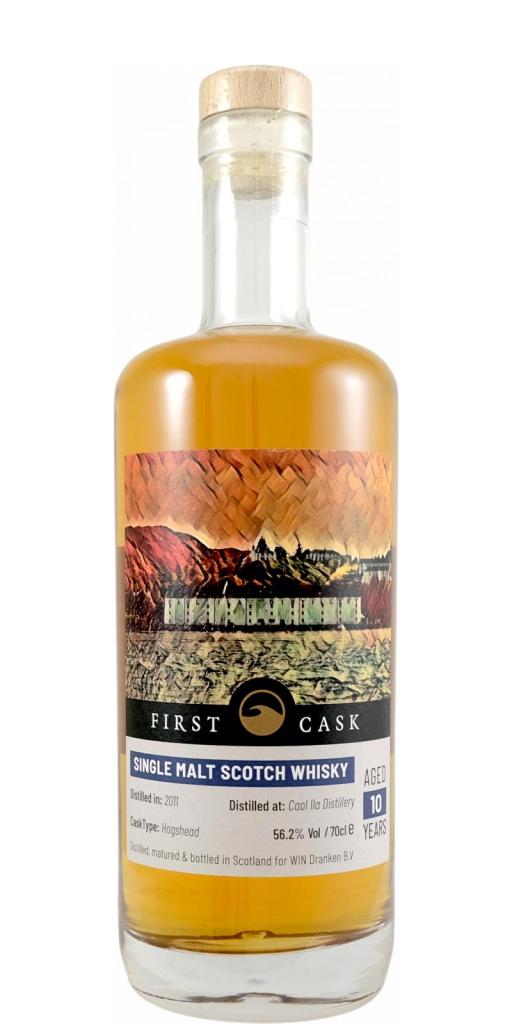
To my surprise Ralfy reviewed this Caol Ila recently, and gave it a raving review. The surprise wasn’t in the raving review, but in the fact that he managed to get hold of a bottle of whisky that has been released only in The Netherlands.
Of course, there’s Brexit, which is the biggest problem for any booze to cross the North Sea straight to consumers, but also there’s the fact that an importer like WIN is not a regular on anyone’s radar except when you’re in The Netherlands to begin with.
Anyway, he was thrilled about this, in part because the whisky, and its label, is very honest. It mentions that there’s no chill filtration, no colouring and no watering down. This is as it came from the cask. While that’s all very good, that doesn’t make for a great whisky yet.
Let’s dive in!
Image from Whiskybase
Sniff: Some earthy peat, with bonfire smoke. Woody charcoal, a whiff of heather. A minor wine like note, somehow, with fruity sweetness. Tangerine, a bit of vanilla, coconut husk, hessian.
Sip: Even though it’s a cask strength whisky, the arrival takes a bit of time to build up. It has some heat like white pepper has, with dry oak and sweet pastry notes. Herbs and spices, hessian, and a bit of sweet citrus like tangerine here too.
Swallow: The finish shows more phenolic notes. More smoke and bonfire notes. Not overly coastal, with some heather and oak. A warming and rather long finish.
This is a very solid young Islay whisky, but it somehow takes me back to the first Caol Ila I ever bought, the 18 year old, with a similar sweet and earthy note. I genuinly like this, and it makes for a bit more sentiment than normal in my ratings.
When I remove this sudden wave of nostalgia, what’s left is a very decent Caol Ila, not too predictable while also not defying its provenance. It’s very much an Islay whisky, but it’s not all salt and brine and smoke. I’m positively surprised!
This year, Glenfarclas distillery celebrates their 185th anniversary. Of course, that had to be combined with a special celebratory release. And also of course, I got a bottle for bottle-sharing!
This one filled up surprisingly quickly, so all I had to myself is the targeted 10cl, and over the last weekend I decided to drink it. And ‘taste’ it, which is the same as drinking, but accompanied by writing tasting notes.
The description states that it was drawn from ‘sherry and other casks’, so my guess is that there’s at least some bourbon casks involved too. Maybe some other styles as well, but these are a minority, if they’re at all present.
Image from Whiskybase
What’s also interesting is that they used casks from the last six decades to blend this dram together. So there is some 50-odd year old whisky in the mix.
Sniff: For a NAS bottling, 46% and Glenfarclas in general, it’s pretty fierce on the nose. Dry spices with almond flour and sawdust. A hint of orange pith, leather and blackberries. A whiff of vanilla crumble too.
Sip: The dryness continues with lots of oaky notes, almond flour, lots of dryness. A slightly bitter note with a grainy texture. Quite fruity, vanilla custard with blackberries, sweet cherry and some apricot jam.
Swallow: The finish is a bit more generic of a dry, sherry cask, Glenfarclas. Quite long with lots of wood, leather and baking spices.
The reviews on Whiskybase keep this at around a 90 point average and I think that’s a bit too much. The dryness combined with the fruits make for a very tasty and quite complex dram, but to get to a true 90, the dryness is a bit too prominent.
Still, with these clocking in at € 115 (MSRP) it’s very well worth the money. Especially since the youngest whisky in it isn’t leading the experience too much!
I don’t think I’ve ever had a shorter title to a post!
Anyway, Ben Nevis is one of those distilleries that was considered pretty shit for a long time. Except, a couple of years ago, say five, they revamped themselves and have been cranking out epic whisky ever since.
Image from Whiskybase
Every independent bottling sells out more or less immediately. Every official bottling does too, even their regular 10 years old. I managed to snag one a few years ago and only now post my tasting notes. It’s been a while since I wrote these, but I wanted to publish them even though it’s been a few years…
It also counts as a note-to-self to get another bottle when they’re available again…
Sniff: Funky and sweet, with hints of beef stock. Quite some wood influence, but my money is on a mix of casks. Slightly leathery and a whiff of ripening beef.
Sip: Not too strong, but still quite intense. Wood, leather, barley, some beefy flavors, charcoal. Also some grilled fruits and vegetables.
Swallow: The finish is very similar, but is a bit more gentle.
Of course, since it’s been a while this specific release is not over € 120 and that’s too much, but the MSRP of the Ben Nevis 10 is about € 50 and I don’t think you can do much better at that price point. It’s in league with the other fantastic official bottlings that are available, like Lagavulin 16, Clynelish 14, Talisker 10, Springbank 10 and Benromach 10.
When I rate a whisky price is always a minor factor, and while you can’t exactly ‘taste’ a bottle’s price, it sure is part of the experience. And, at € 50, this is stellar stuff.
As every spring, Rob Stevens / De Whiskykoning hosts a seasonal tasting. Even though tastings couldn’t happen in person, there have been these sets of samples available for us to enjoy at home.
Winter Whisky is peated, Summer is Speyside, Autumn are Highlands and Campbeltown whiskies, and Spring used to be Lowlands whiskies. I say ‘used to be’ since there’s not much coming from that region anymore, and grain whiskies had to be added to make this tasting a possibility.
Of course, one could go to auctions and pick-up rare bottles of Inverleven, Rosebank and St. Magdalene, but that would push the price quite a ways beyond the € 25 for six drams… Luckily, some new distilleries have started production in the last couple of years in the region, so things are looking up!
Let’s dive in with these six Lowlands and Grain whiskies!
1770 Glasgow, Virgin Oak, Triple Distilled, 46%
Image from Whiskybase
Sniff: Very clean with some barley sugar. A bit more vanilla than I expected of such a young whisky. Some white pepper to brings a bit of bite and dryness.
Sip: Quite sharp with lots of white pepper. A whiff of oak, some sawdust, icing sugar. A rather powdery texture, somehow. Very clean, which is not surprising for a triple distilled whisky. Some straw too. It becomes lighter and therefore a bit more hot after a while.
Swallow: The finish is drier, more peppery with less oak and more grist. Barley, icing sugar. Not too much vanilla here, luckily.
Nicely on it’s way, but it’s not there yet. It needs more time to mature. Now it’s a bit too harsh, and because of the triple distillation, it’s very clean, and therefore it lacks a bit of character.
Sniff: The first thing that comes to mind is that is smells a bit eggy? Meringue, with a bit of a whipped cream note. A slight burnt toast edge, with banana. Banoffee pie?
Sip: Again, creamy, with pastry cream, meringue, but also some sawdust and chili pepper. A whiff of vanilla, some straw, grass. Quite some dry heat.
Swallow: The finish shows cassis notes, blue berries, black berries. Semolina pudding.
Ridiculously inconsistent, but oh so typical Bladnoch. It makes for interesting drinking, but as always, you never know what you’re going to get!
Kingsbarns Family Reserve, Bourbon and STR Wine Casks, 59.2%
Image from Whiskybase
Sniff: You notice there’s a lot of alcohol, but it’s slightly concealed, in a way. You get the sweetness that comes with it. Also, there’s pineapple and straw. Slightly yogurt-like. Lots of yellow fruit. Unripe pear, pineapple, lemon and orange.
Sip: The alcohol manifests itself as a lot of dryness with a rapidly building heat. And by heat I mean tongue-searing chili heat. Virtually no oak, but heaps of yellow fruit. Pears, apples, pineapples, oranges. Some vanilla, but not a lot.
Swallow: The finish is a bit short, but again with lots of fruit. Even a tad minty. Banana, vanilla, pear and apple.
I didn’t really notice the STR (Shaved, Toasted, Recharred) casks, so the shaving of the insides must have happened thoroughly. What I did notice was the massively fruity whisky. I really like what they’re doing here and I can only dream (for now) of what this will be like at 12 years old or older!
Sniff: Lots of fruit, thick and heavy. Mashed berries and banana, pulpy fruit cocktail. Glue sticks, some oak, thick vanilla custard.
Sip: More oak than on the nose, but still with the thick vanilla custard notes. Some black pepper comes through after a few seconds. Pureed fruit on top of the custard. Banana, blackberries, cherries even. It gets drier with some glue-y notes after a few seconds. A second sip brings some nuttiness, peanuts, Brazil nuts.
Swallow: The finish shows more of the wine casks tannins, with some charcoal. The fruitiness is slightly less and there’s coldbrew coffee. Brazil nuts, peanuts, oily and dry.
This is actually quite nice, a lot more complex than I expected, surprisingly. I was a bit worried about the amarone finish, especially with a light grain whisky. But, not to worry, the booze stands up to the cask nicely!
North British 28, 1991-2020, Refill Sherry Butt 262075, 46.2% – Signatory Vintage
Image from Whiskybase
Sniff: Nutty with a hint of turpentine. Some baking spices, grain and oak. Wax coats, some dried plums. Slightly perfumy, in a way.
Sip: The palate is a bit thin, compared to the previous grain whisky. There’s still some banana, but more chocolate covered cherry. Cheap milk chocolate, some popcorn.
Swallow: The finish brings back the hint of turpentine and feinty wax coats and some leather. Dry, and warming. Popcorn, a bitter hint of cherry stones too.
Weird, but absolutely not bad. The thinness is mostly surprising and, strangely, not a drawback at all. A few years ago I would have worried about a sherry cask with a grain whisky, as I did with the Amarone cask, but I’ve been proven unnecessarily concearned about that a few times now.
Sniff: This one is very light, very ethereal. There’s some floral notes and a hint of straw. Dried flowers, some hay, grass. Cinnamon, after a while.
Sip: The palate is dry and brings hints of white pepper. Some straw dryness with hints of dried wild flowers. After a few seconds the alcohol starts pounding through with a lot of chili heat and a whiff of oak. A minuscule note of lemon juice.
Swallow: The finish is a bit more mature and slightly less aggressive. Some oak and heavier, older notes of wood and old fruit. Still some peppery heat, and straw.
In a way this is very much a Lowlands style dram, but while it theoretically ticks all the boxes, it just doesn’t do it for me. It simply doesn’t work. It’s too hot, too ethereal, to bland.
Well, that was fun! After the tasting I immediately ordered a bottle of the Kingsbarns for a tasting of my own. People in that tasting didn’t like it as much as I did, but it was still rather well received.
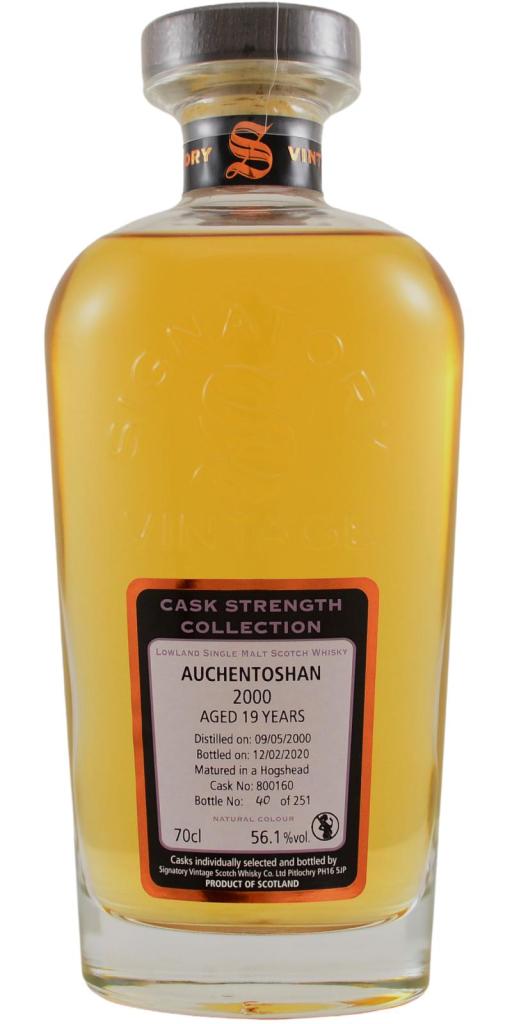
The Auchentoshan obviously was a bit of a let-down, although I don’t really have high expectations for that distillery anyway (sorry Mark…)
JPH and I did have a fun evening of nerd-talk and tasting notes with this set, though!
The tasting set is still available here, for € 30. And you get an introduction on Youtube with every dram (in Dutch)
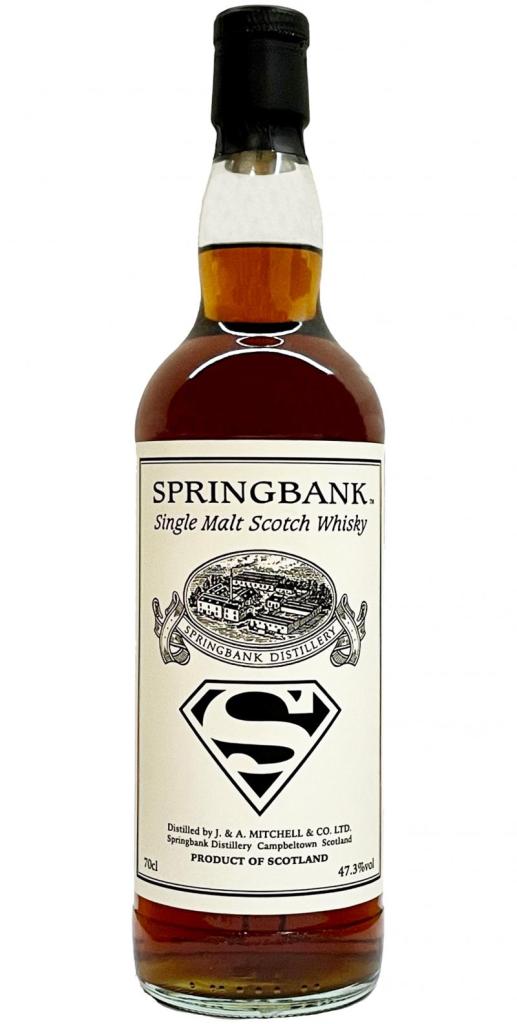
Springbank of this age is getting expensive. While that is a well known fact nowadays, it seems that getting stuff like this for around € 400 is the best you can do, and there are quite some expressions (and therefore bottlers) that exceed that mark by quite the margin.
Add that we are talking about a dark and sherried Springbank, at a rather low cask strength, and we should be good, right? By its looks it reminds me of the great Springbank bottled by WhiskyNerds some years ago.
I rated that one at 94 points. And thinking about rating stuff that high, it does get as arbitrary as very low ratings. With me that is. I can’t tell you the difference between 93 and 95, for example. It’s a bit of a gut feeling.
Anyway, let’s do tasting notes!
Image from Whiskybase
Sniff: For a Springbank of this age, it’s surprisingly malt forward. Gently fruity with lots of tropical stuff. Mango, plums. Some browned butter and hessian for the required Springbank-funk notes. Brioche, apricot jam, some wood spices.
Sip: The palate starts off with some sweetness and a little dry touch. The fruit and oak come through right after. The sherry brings apricots, plums, mango. Lots of syrupy sweetness. After a while it becomes more dry and oak forward. Wood spices, dry sherry notes and a bit of bread like flavors.
A second sip is more dry, with a slight bitter note from the fruit.
Swallow: The finish is a bit more dry, with the spices being more prominent than on the palate.
With this being bottled at ‘only’ 47.3%, it’s a very smooth and beautifully aged whisky. The sherry is quite prominent, but it’s unmistakably Springbank with the slight funky notes. Fruit, dryness, funk, oak, it has it all.
In that way, this bottling does everything right and I wrote down 93 points. However, as said above, I can’t really tell if this is better than the WhiskyNerds one or not. Let’s keep it at this being an amazing whisky. Amazing as in, I’m hard pressed to find a new release that’s better, this year.
93/100
Of course, this sold out instantly at € 425 per bottle.
I am such an idiot. While this is not news to me, this one here is undeniable proof.
A little while ago, RvB shared this bottle in my little bottle-share group, and thoroughly liking Blair Athol, I jumped on it. A 10cl sample for me!
So I got the sample a few days later. I tried it a couple of weeks after that, and I even looked it up on Whiskybase. And only then did I find out I also have a bottle of this.
Even worse! I don’t only have a bottle of it. I have already tried the whisky a few times and I’ve used it in a tasting. And still, no idea that I just bought a sample of something I could just have a glass of without even leaving my chair.
As said, I’m an idiot…
Anyway, sherried Blair Athol is generally pretty decent at the least. When selected by a good bottler, and at cask strength, it should be very good indeed!
Sniff: Very modern sherry on the nose, as in, modern sherried whisky. Lots of gentle baking spices and some dried fruit. Banana crisps, cinnamon, even some Nutella. I get some orange and date, wet oak.
Sip: The palate is a bit sharper than I expected, and therefore feels a bit more thin than the nose promised. There’s chili heat, oak shavings. Banana crisps and cinnamon are present too, hazelnuts with a whiff of dark chocolate.
Swallow: The finish brings a bit more sweetness than I expected, or prefer. A bit more like supermarket pastry, instead of ‘bakery level’. Cinnamon and raisins, sugared puff pastry, orange, mango.
It is a bit on the sweet side, but there’s lots of things happening here. The combination of baked goods and dried fruits, even hints of chocolate and nuts make for a rather complex whisky that is really, really good!
In the end, having a bit extra of this is no punishment at all, but it is a bit of a waste of money…






 Malt Fascination