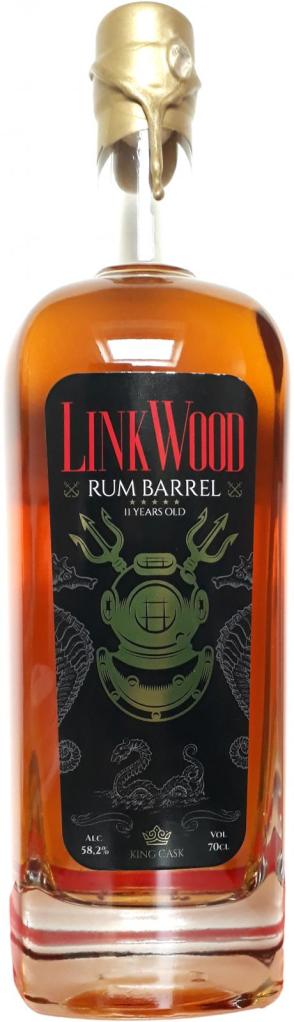
I know that the cask was transported out of Scotland and into/onto Terschelling, one of the Dutch islands in the north of the country. It was recasked there in a rum barrel for another 10 months before being bottled.
This should raise all kinds of alarms, since it’s no longer a Scotch Whisky. Then again, apart from mentioning the distillery, King Cask never says it’s a scotch whisky. I don’t even think they mention it being whisky or single malt at all. Clever.
King Cask is a Dutch bottler that is quickly gaining momentum. So far, I’ve tried two of their whiskies and a bottle of rum should be on its way. The whiskies are very good (yes, including this one), but not 90+ points stuff. However, where they gain a lot of fans is that their prices are rather acceptable.
This bottle sold/sells for around € 65 if you can still find it, which is rather cheap for an 11 year old Linkwood.
Sniff: There’s a sweet edge to the normally quite ‘beery’ Linkwood. It’s quite dry and malty with lots of barley driven scents, and a whiff of green herbaceousness. Hints of brown sugar after a minute of air.
Sip: The palate is consistent with the nose. Lots of barley, a whiff of oak, and quite a sweet edge to it. The brown sugar sweetness doesn’t overpower the whisky, luckily. Some molasses, green herbs, old hops, sugarcane, grass.
Swallow: The finish brings some more attention to the rum with more molasses, some cola and a dryness that’s quite sugarcane-like. Also the old hops and barley driven beer flavor lingers.
This is a very Linkwood-y Linkwood. A lot of recognizable flavors, with a rum edge to it. I think the combination of the distillery profile with a not too powerful finish works really well for this whisky.
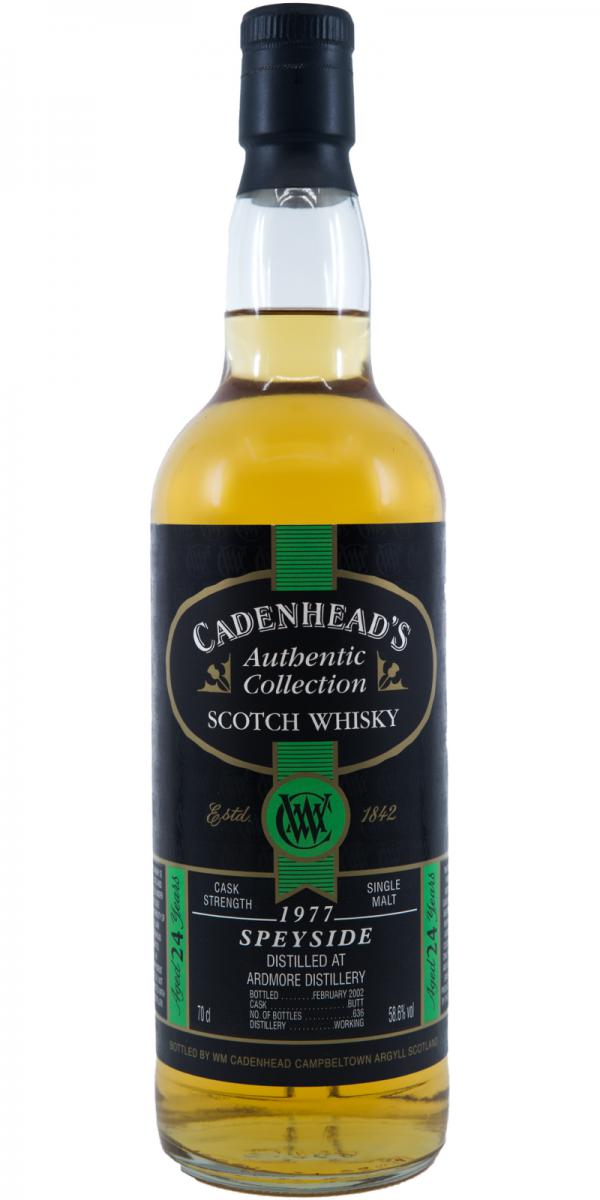
Generally I love Cadenhead. And also, I tend to love Ardmore. So when MvZ was pruning his collection and I could buy this bottle from him, quite a bit below current retail value, I jumped on it.
Image from Whiskybase
Of course, it wasn’t the only bottle and the lump sum only increased with every bottle bought, I did a bottle-share and used it in a little tasting with friends a while ago. Still, there’s a bit left for myself, which I’ll leisurely enjoy over the coming months.
After all, you don’t get to try 1977 Ardmore all that often, right?
Sniff: Warming with hints of honey and licorice, a gentle whiff of smoke behind it. Bayleaf, oak, some salinity. Some mint powder, sweet orange grapefruit. Some ash too.
Sip: The palate is quite sharp, but continues with the sweet grapefruit, mintiness and ash notes. Quite a lot of heat, and therefore dryness.
Swallow: Sweet citrus, ash, lemon balm. Grassy, some honey. A long and drying finish with a bit of an afterburner.
It’s not the most complex of old whiskies. Also, I don’t think the strength of near 60% ABV helps it a lot. However, it does what it does very well. There’s some personal preference here, but I like the smoke and citrus flavors this one brings. Of course, a dry whisky helps anyway, but I love it in it’s simplicity.
Getting to try Caroni is, by now, the rum equivalent of getting to try a new Port Ellen or Brora, except for the fact that it’s about 10% of the price.
So, when Wu Dram Clan offered to send me a sample of these two new bottlings that (should?) have released this week, I was barely able to contain my giddiness!
Two single casks, one from 1997 and one from 1998. Both at whopping strengths of above 60% ABV, I didn’t wait long to try them.
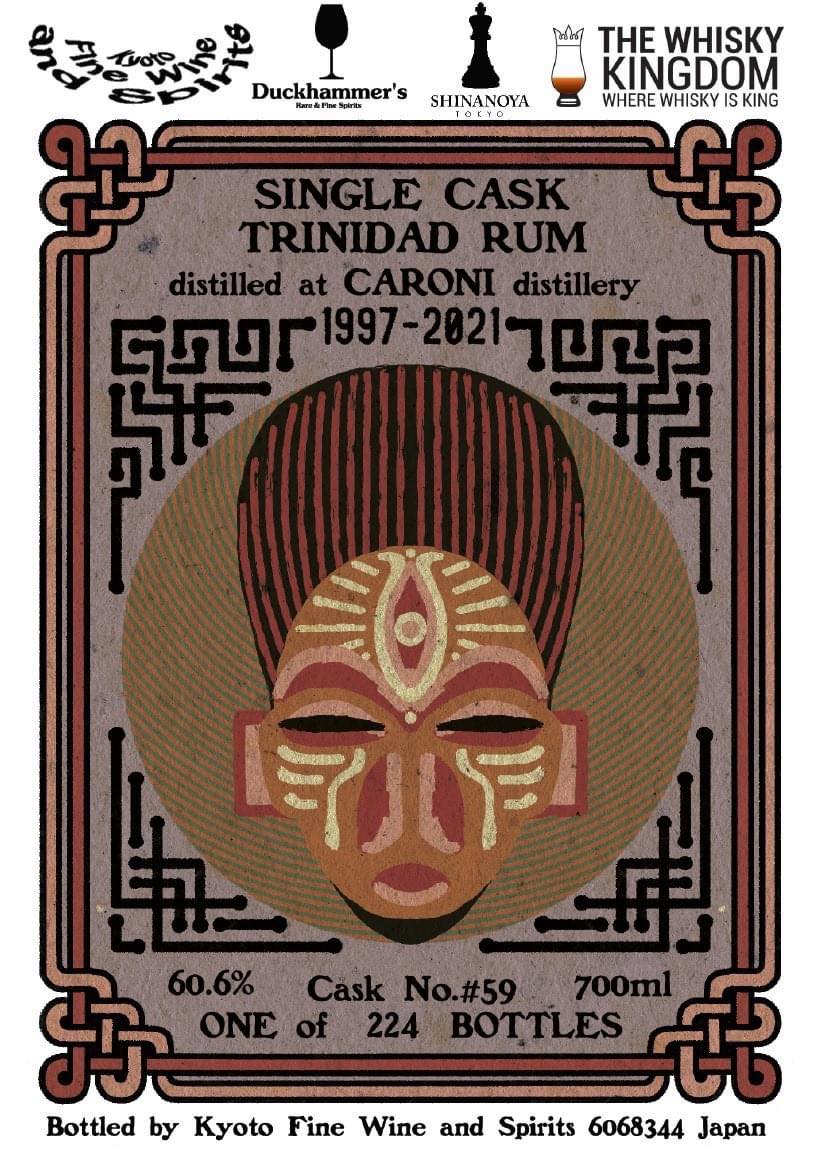
Pretty!
Caroni, Trinidad, 1997-2021, Cask #59, 60.6%
Sniff: Quite a lot of molasses and brown sugar, before oak and spice kick in. Cracked leather and fresh red peppers. It’s quite fiery when you stick your nose in, which isn’t that surprising of course. Grilled banana with some dark chocolate.
Sip: Quite hot,but not without flavor! Dry molasses and burnt sugar. It gets more sweet with some swimming. Grilled fruits, mango, banana. Caramelized fruit sugar. Some baking spices, cinnamon and clove.
Swallow: The finish is surprisingly gentle, long and sweet. Dried fruits, molasses, caramel, oak. A bit of black pepper.
Interestingly, this rum is a little bit predictable. It does what you would expect a Caroni to do, but it does it exceptionally well.
This is a gorgeous rum, and more or less a quintessential one.
89/100
Caroni, Trinidad, 1998-2021, Cask #2109, 62.2%
Sniff: Lots of dry sawdust and peppery heat. White pepper and chilis. After a while I start getting stewed red fruits with red cinnamon. Stewed mixed berries. Brittle caramel, and a bit of treacle.
Sip: The palate is not very sweet. A whiff of bitter caramel. Quite some oak and the brittle caramel again. ‘Grey’ pepper. More fruity after a while, blackberries, strawberries. A bit of treebark.
Swallow: The finish veers more towards the caramel, with some cocoa powder and a bit of irony minerals. It’s strange that it’s so different from the palate, but doesn’t contrast.
This one then. Holy crap this is good. The combination of that ‘classic rum’ backbone, with the spices, cocoa and fruits on top of it. This might just be the best rum I’ve had to date.
Strangely, the nose, palate and finish differ quite a bit, but it’s more like a journey than a contrast, and that makes for some awesome drinking!
92/100
My expectation is that these have sold out by the time they’re officially released. I don’t think they’ll hit the shelf in any shop.
Images supplied by Wu Dram Clan, as are the samples. Much, much obliged!
Wu Dram is forever! Caroni Rules Everything Around Me
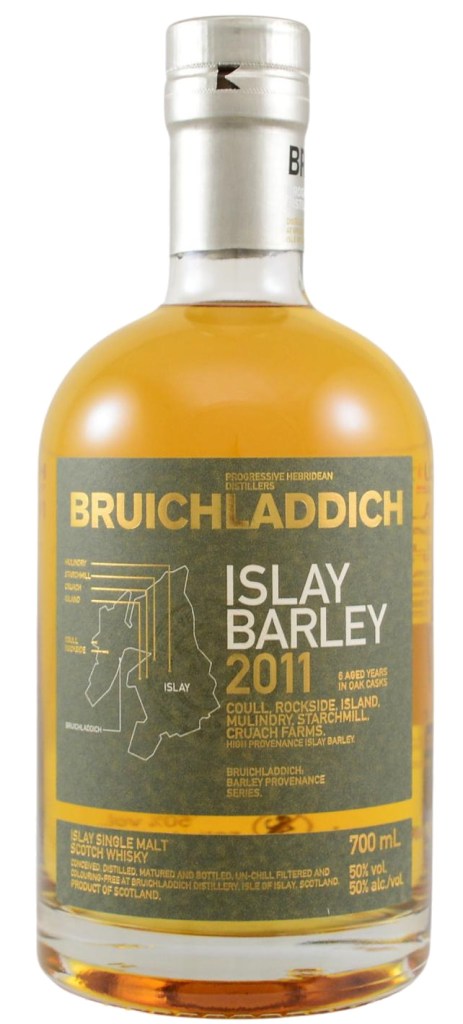
Before you start nagging, this whisky indeed states that it’s six years old. But, being distilled in 2011 and bottled in 2019, it can only be 6 years old if they kept it in plastic, steel or glass for a year. I strongly doubt they did that, much more so than making a typo from another copy-pasted label.
Apart from that, it’s one of these Islay Barley releases, where they started exploring whisky’s terroir. Of course, Mark Reynier pushed that to another limit with Waterford, but Bruichladdich is where it started.
They approached 18 farms on Islay to produce barley for their single malts, so each should differ in their details. Of course, Islay is already a rather limited terroir, so most differences probably come from the species of barley used and not one peaty bog to another.
Anyway, generally I know I like these. Apparently not a lot of people do, since the price still around the original € 60 (in The Netherlands).
Image from Whiskybase
Sniff: It’s quite contrary since normally when whiskies are this briny, they’re also peated. In this case the whisky is rather tight and gives a lot of room to the brine. So, surf and sand, sea weed, and a light barley. Not a little barley, but a light one. It has a bit of the Bowmore lemony ammonium scent, which is not common at all.
Sip: The palate is light, but rather sharp. It’s young which comes with a bit of austerity. Slate, lichen, some seaweed and a bit of grass. Quite coastal with a hint of brine and sand. Not a lot of oak, but later on there’s a whiff of vanilla.
Swallow: The finish has a bit more warmth, but dials up the ‘local’ flavors from the palate. Rocks, lichen, moss, barley. Maybe a bit less coastal, but rather more based on the creeks running to the sea on Islay.
What I love about this whisky, but that goes for a lot of Islay drams, is that they make such a local dram. It shows its provenance, it shows the location of the distillery and the farms. Of course, on Islay everything is rather close to the sea and they’re not afraid of showing that off.
The briny scents on the nose, with the palate and finish going more inland step by step is quite nice. Good stuff, especially at the price!
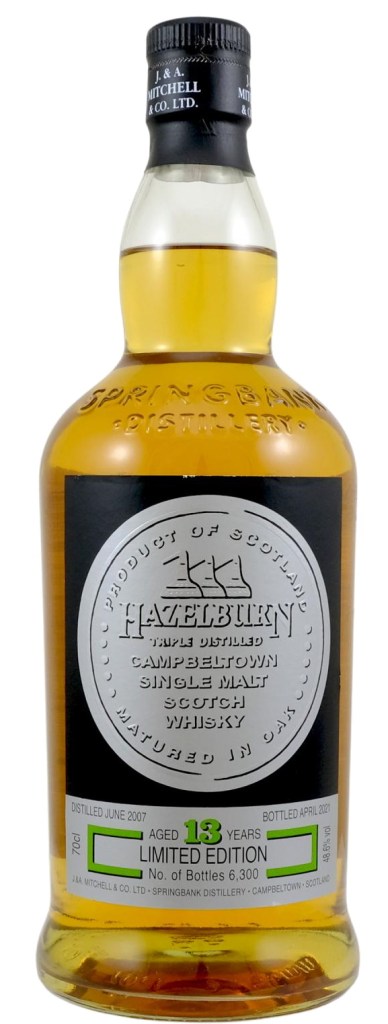
Honestly, I don’t even know if this is an annual release, or this just pops up with regular Springbank batches. I’ve not kept track.
What Whiskybase can tell me, though, is that this is comprised of bourbon casks (75%) and sherry casks (25%). I remember there being editions before that were just sherry casks.
I had one a couple of years ago, and because I’m a professional and wanted to put a link here, I decided to look it up. Only to find out I never published my notes and they either are lost to the void of digital storage, or the neverending maze of analog storage (read: scraps, notes, notebooks, etc). So much for being a professional.
Image from Whiskybase
Anyway, I do remember that one being a little bit too sweet for me. Too much like cinnamon stewed pears, and while I like those, I don’t like that flavor in my hooch.
Hazelburn then. The triple distilled version of Springbank. From the same stills, with generally less smoke too. Let’s see what it’s about!
Sniff: Rather malty, lots porridge and grains. Some oak too, and a whiff of clay. Some sweet peaches come through after that, with a whiff of dried apple too. Slate, basalt and some sand. Rather coastal.
Sip: The palate is surprisingly intense for a below 50% ABV. Quite some peppery heat, with a rather viscous mouthfeel. Olive oil, linseed oil, with oak shavings. Quite dry because of the intensity. It does get a bit sweeter, and more mellow when you give it some time. Then it starts to showing what is there. Peaches, apples, pears, some cloudy apple juice too.
Swallow: The finish has a little bit of the Springbank funk, so straw, hessian, some old carpets. Mostly it’s barley and bread, some fruit and some oak.
This one has it’s ups and downs, in regards to flavors. There’s specific things that come to the front on the nose, the palate and the finish. It’s rarely the same things though. It feels a bit inconsistent.
What it does have going for it, is that all aspects of the whisky are rather tasty (or they smell good in case of the nose).
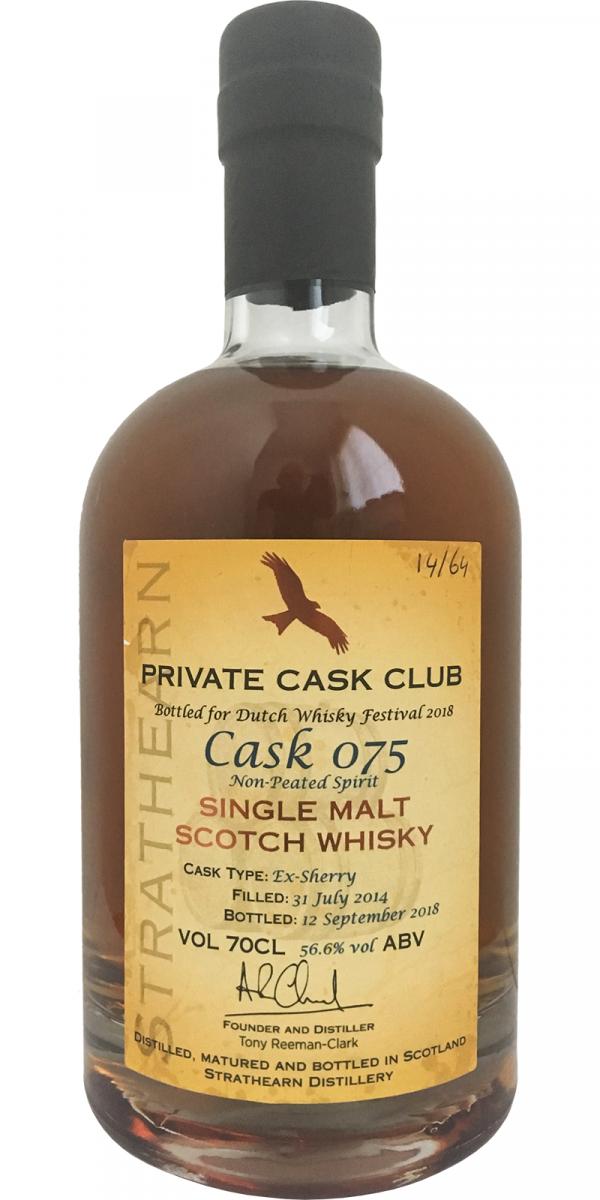
The first edition of Dutch Whisky Festival came with a bottling of their own. In the end I didn’t end up going to the festival, although I don’t exactly remember why. Probably because of me or my wife being ill or something.
I did get a bottle as a thank you for building their website, so thanks to the organization for this! Of course, I opened it, spread some of the love around in a tasting and finished it quite recently. Bottles generally last a while…
I don’t know much about Strathearn, except that they seem to take a rather artisinal approach with all kinds of experiments that don’t get the ‘single malt’ label in the end. Things about apple wood maturation and such. I quite like these things, even though they don’t always end up tasting great. I like the experimentation that doesn’t stray too far from what whisky is supposed to be.
Image from Whiskybase
Let’s see what a four year old whisky from a new distillery is about!
Sniff: A strong spirit from quite an active sherry cask. The wood brings dried fruit and some dry spices. Cinnamon sticks, clove and a touch of powdered ginger. A bit of mossy green from the spirit.
Sip: The spirit is dry and sharp with some chili heat. Sawdust, powdered spices and some almond bitterness. Some walnuts, apricot and leather.
Swallow: The finish is more gentle and shows a bit more spirity fruit. More peach and mango, with warm oaky notes.
What is interesting is that even though it’s a rather active cask that was used, the mossy and green spirit still comes through. The combination of a young spirit and the dried fruits works well in this case, so a good pick by Dutch Whisky Festival!
On a side note, this year I’m going! It’s about time!
Back in the day, before Bourbon became as massively booming as it is today, you could pick up bottles on the cheap from auction. I once had a bottle of Old Crow, bottled in 1970, for which I paid about € 30. This one was a little bit more recent, but I didn’t pay more than € 45 either.
It must have been around 2014 or so, so we’re talking about an almost 40 year old bottle, for the price of a daily drinker. Can’t say I feel robbed…
Some Googling tells me I.W. Harper is a Diageo owned brand with whisky that comes from Bernheim distillery in Kentucky. Interestingly, it seems to not have been available between the mid-nineties and 2015.
Currently there’s a NAS version, and a 15 year old which I tried last year. This one I’m tasting here is four years old, so somewhere in the last 45-odd years they did change that.
Sniff: It’s definitely sweet and spicy, with a lot of dry black pepper notes at first. Some sawdust and a slightly chemical sweetness. There’s clove, cinnamon and orange rind. Quite crisp.
Sip: The palate continues with the dryness. It’s actually quite intense for a 40% whisky. There’s definitely some oak here, but it’s not overpowering. Black pepper, orange, ground clove. Some dark caramel, or burnt sugar.
Swallow: The finish brings the oak and the slightly bitter orange to the front, but only to quickly be replaced by some vanilla and pepper.
It’s a bit of a two faced bourbon, because I tried it a little while ago and thought the bottle had gone bad, but now it’s actually quite fine. The cloudiness that I saw then seems to have gone away, which I think is a good thing.
Because of this, it is quite a bit better than I remembered it. The hints of orange are nice, as is the dry oakiness. And luckily, it’s not too sweet at all!
GlenAllachie has been making name for themselves since Billie Walker took over a couple of years ago. While it was a bit of a generic distillery beforehand, focused on producing whisky for blenders, they now are releasing lots (and I mean lots) of single casks to virtually everyone who’s interested.
In this post I’ll review three of them. A bottling for Archives, an official single cask for The Netherlands and one for France. Two sherry casks and a weird one from a special kind of oak.
Let’s just get to it.
GlenAllachie 11, 2009-2020, Oloroso Hogshead 7700, 55% – OB for France
Image from Les Grands Alambics
Sniff: A big ABV, as per usual for these GlenAllachies. Lots of spicy sherry, woody with clove and cinnamon. Dates, plums, almonds.
Sip: Sharp, peppery heat. Lots of chili, lots of oak, some bitter hints of cherry stones. Sour cherries, dates, plums. Typical.
Swallow: Cola, cinnamon, clove. A dark sweetness of caramel. Cherry cola, oak, some bitterness.
Quite a good whisky, and for a random GlenAllachie the 55% is on the low side, strangely. It does give a bit more room to the wood flavors to be noticed. It adds some interesting notes of cola with baking spices and some dried fruits. Good stuff!
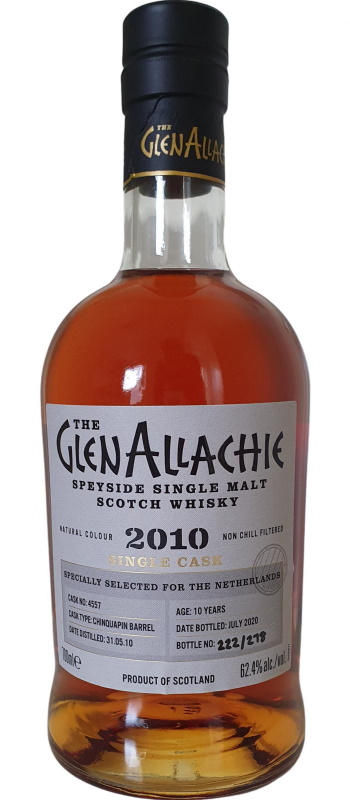
GlenAllachie 10, 2010-2020, Chinquapin Barrel 4557, 62.4% – OB for The Netherlands
Image from Whiskybase
Sniff: The typical fierce dryness that is cask strength GlenAllachie. Lots of dry osk, sawdust and a woody bitterness. The almonds and cherry stones without the fruitiness.
Sip: Fierce and bone dry. Lots of oak, sawdust, some sweetness too. Egg washed puff pastry, some other wood spices that I cannot pin down. Black tea.
Swallow: Dry with lots, and I mean lots, of oak. Not necessarily cask driven, but pure and dry sawdust and shavings.
Chinquapin is two different things. It’s a dwarf chestnut tree, which I find strange since that’s not allowed for whisky making. However, it’s also a name for a smaller species of oak, named after the dwarf chestnut tree. That explains some things.
The virgin oak is quite noticeable, since it is a very wood forward whisky. I love that it becomes massively dry because of it, especially on the finish. It might be a bit too much for some, but it’s right up my alley, even though it’s more ‘alcohol oak juice’ than a soothing single malt whisky.
GlenAllachie 11, 2008-2020, Sherry Butt 80901088, 62.5% – Archives ‘Birds of the Orient’
Image from Whiskybase
Sniff: Dry, spicy sherry, with baking spices. Slightly wine-like. Dried apricots, peaches and cream. It somehow reminds me of the mango yoghurt my son eats.
Sip: This burns like hell, at 62.5%. Slightly leathery, but that might be the inside of my mouth. Harsh, with some dried fruits and grains. A bit of oak, but not much.
Swallow: The finish is quite gentle compared to the palate, with peaches, cream, a bit scone with double cream like. Oak, honey and oatmeal, barley.
Well, even though it’s almost on par with the ABV of the previous one, this one hits a lot harder. A bit too hard, if you ask me. The focus is very much on the high strength and the alcohol dominates the ‘drinking experience’. The whisky does bring a bit more fruit than the Chinquapin one, with peaches and cream leading the way. However, with how sharp it is, I didn’t enjoy drinking it all that much.
85/100
With this batch I think it’s proven again that they’re on quite a rol at GlenAllachie, although not everything is as enjoyable as some others. Much like every other distillery. However, I do like to keep trying these, I can tell you that!
A little while I wanted a rather specific whisky that wasn’t available in ‘regular’ shops anymore. But, according to Whiskybase there was this shop in The Netherlands that still had it. It was called ‘Whisky Exclusive‘.
In a way, that is exactly what they do. The deal in exclusive whiskies and often they are the only point where a certain bottle is available. A bit like MustHaveMalts works.
Of course, with things that are technically sold out except at those shops, you pay a little extra and then it’s up to you whether you want to do that or not.
In this case (I think I bought a high-scoring Balblair which I still have to try) I wanted to do that, and a few days later a parcel arrived at my doorstep. Carefully wrapped with lots of bubble-wrap and those foam flakes.
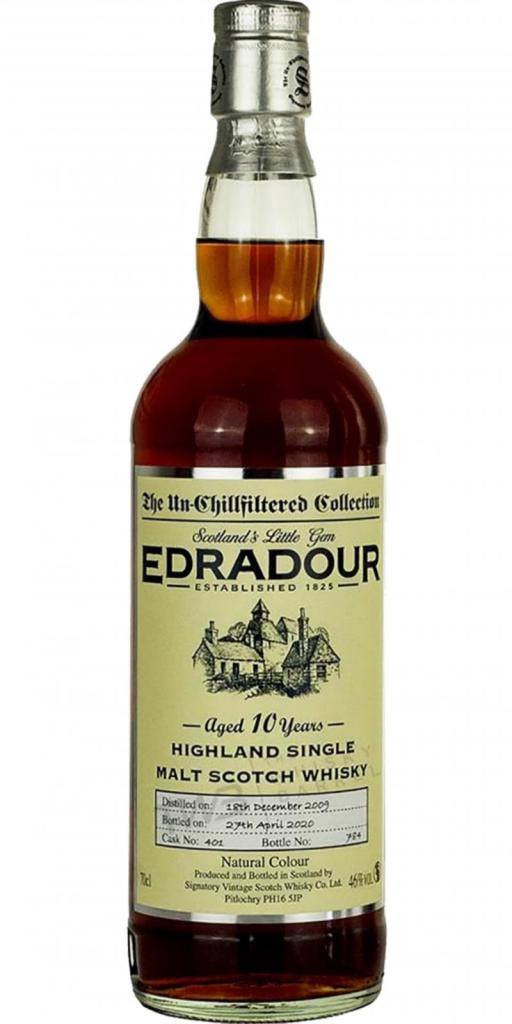
Interestingly when I went to chuck out the box and the wrappings, something heavy clunked into the bin. It was a, luckily carefully packed, sample of this Edradour and I managed to dig it out again…
Normally I avoid Edradour based on results from the past, although it seems they’re getting their distilling act together and the quality of both Edradour and Ballechin (peated Edradour) is improving over the last couple of years. Let’s see where this one sits.
Image from Whiskybase
Sniff: A strange combination of sherry fruits and vanilla to begin with. It’s a sherry trifle like thing that’s going on. The fruits are a bit like tinned fruit cocktail. Minor notes of oak and something creamy. In combination with the vanilla that only enforces the sherry trifle notes.
Sip: A bit more dry than expected, with more fruit and a bit better balance. As in, the fruit is a bit more like dried fruit instead of fruit cocktail. Still pretty sweet with some custard-like hints. Oak, some matches, an almond note too.
Swallow: The finish brings a bit more matches / sulphur, but continues with the fruit and custard. It’s quite long and also brings that almond note towards the end.
I’m not sure what it is with Edradour. I wouldn’t have guessed the distillery blind, since things have gotten better over the years, but it still is not a very good distillery in my book (it’ll be some time before that reputation will improve). There’s always this off-note that I find difficult to handle.
In this case there’s some sulphur and while I can handle a bit of sulphur, the rest is a bit too generic to offset it.
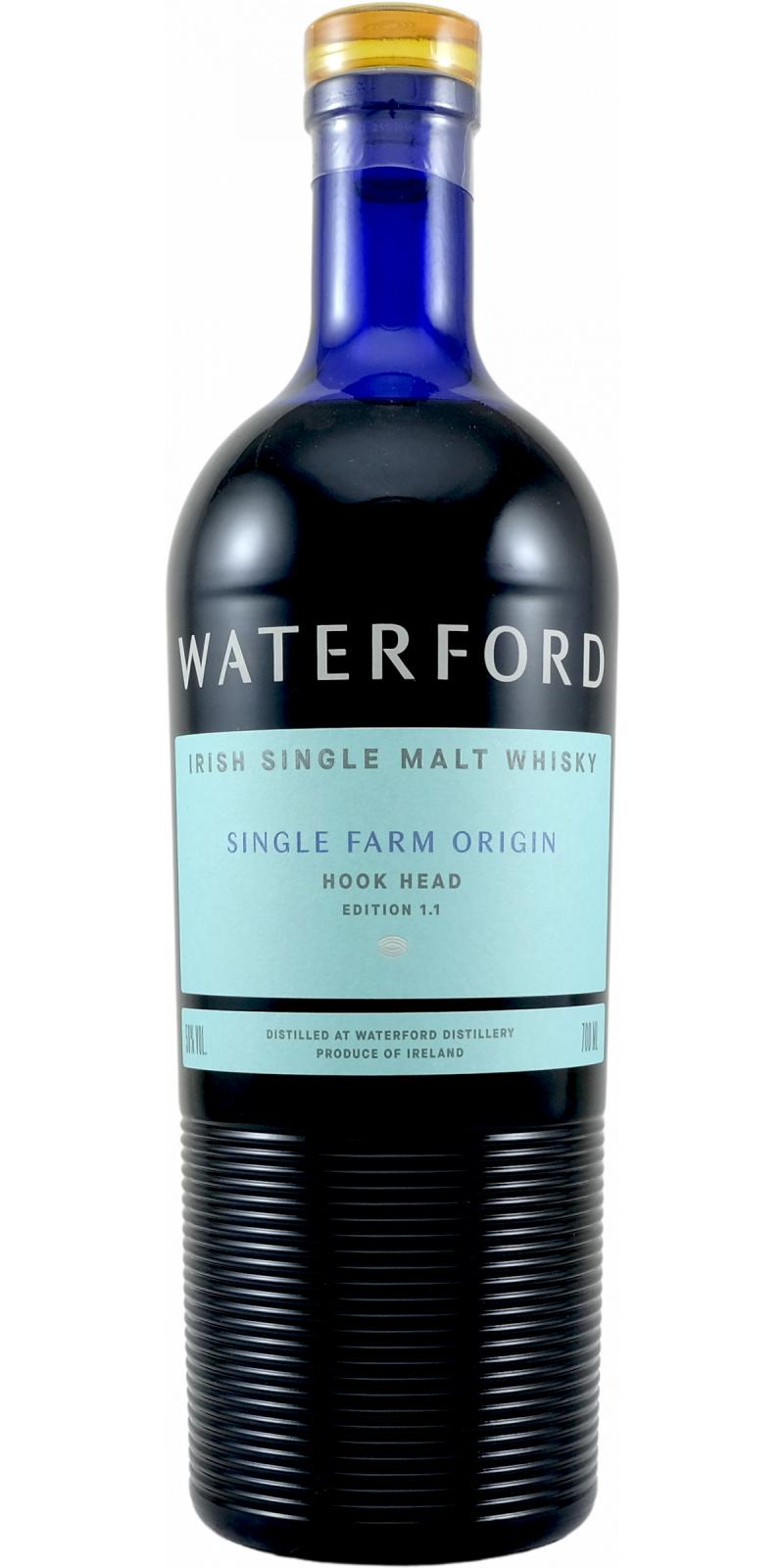
I’ve not done the tally, but it feels like Waterford has released whisky from about 300 different farms in Ireland in the last year or so. I understand they’re going for terroir, and you need to be able to compare one to the other, but it seems that under Reynier’s guidance, the distillery is doing the same as Bruichladdich did in the early years after reopening:
Release all the whisky. Not some. All.
Of course, they use a similar set of casks for all of them, in this case First Fill Bourbon, Virgin Oak, Vin Doux Naturel and Frech Oak, if I understand the abbreviations on Whiskybase correctly.
You can check a lot of things on the Waterford website, from harvesting dates to the name of the farmer to a soundscape of the surroundings of the field where the barley was grown. Quite nicely done for the geeks out there!
While I don’t care for the velocity of the releases, as in “I cannot keep up”, I do love that they are so open about everything that’s happening. A lot of brands could learn a thing or two here.
Of course, the main question is whether or not it tastes good.
Image from Whiskybase
Sniff: Sweet and malty on the nose. Intense with quite some green, grainy and foresty notes. It becomes slightly bread like after a while.
Sip: Dry and malty sweet on the pslate, with a white peppery heat. Bread crust, moss, oak, tree bark, barley and straw. A slightly fruity sweet note behind it.
Swallow: The finish shows some more typical wine cask notes. Like it’s compensating for the lack before it. Maltose and boiled candy.
I don’t think I’m a huge fan of the casks used for Waterford’s whiskies. If it were up to me, I’d go for more timid casks so the spirit gets to shine all the brighter. In this case I feel the wine casks add too much sweetness and just push everything else down a notch or two.
So, while I did enjoy the first few Waterfords, and still have to taste the entirety of batch two (even though I have the bottles and did a bottle-share with them), I don’t really like this one.






 Malt Fascination