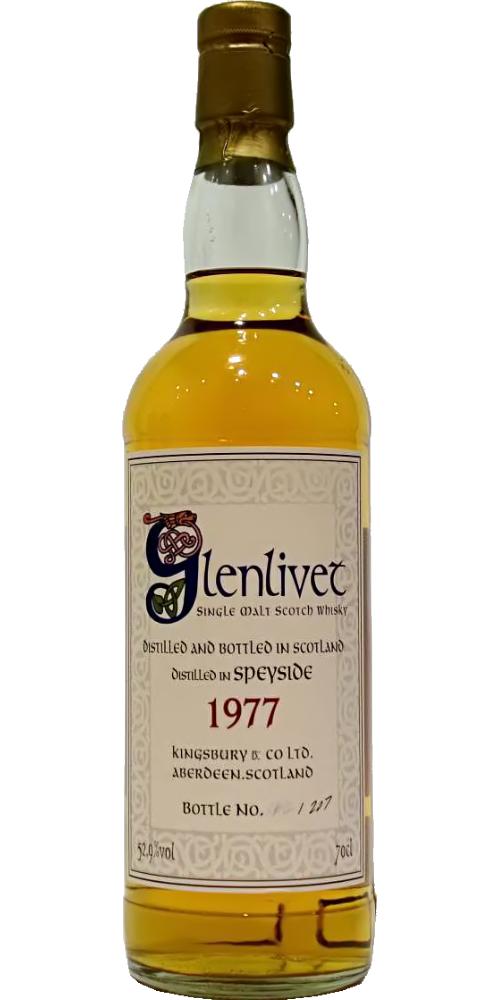
It’s not often you come across a bottle of anything from Kingsbury. It being a bottler from Japan, and such. And it becomes even more rare when it’s such an old Glenlivet. This 26 year old whisky must, logically, have been bottled in 2003 or 2004, which makes it even more rare.
Image from Whiskybase
I got a sample from FB (Yes, sometimes I do remember where I get a sample from!) and tasted it a little while ago.
With this being a Glenlivet and an older bottling, I expect a lot of maturity, and a rather gentle profile. Slightly barley driven, with quite a lot of oak influence, resulting in some nice and fruity flavors. Let’s see if my expectations make any sense.
Sniff: The nose starts with a focus on hay, barley and honey. Some chalky notes too. Dry oak with a tiny hint of glue, pine cones and resin.
Sip: The palate is very dry with oak shavings, black pepper and pine cones. Some heather honey, heather and apple cores.
Swallow: The finish shows more apple, honey and beeswax. Rather dry with quite some oak.
Well, I dare say this is a more Highlands-whisky-like Glenlivet than I expected. Some notes of barley and quite some oak, but otherwise it is far more waxy than I figured.
But, to be fair, it makes for a more interesting drink too. I love these resin and wax notes, and although it’s not an overly complex whisky, it is a very good one!
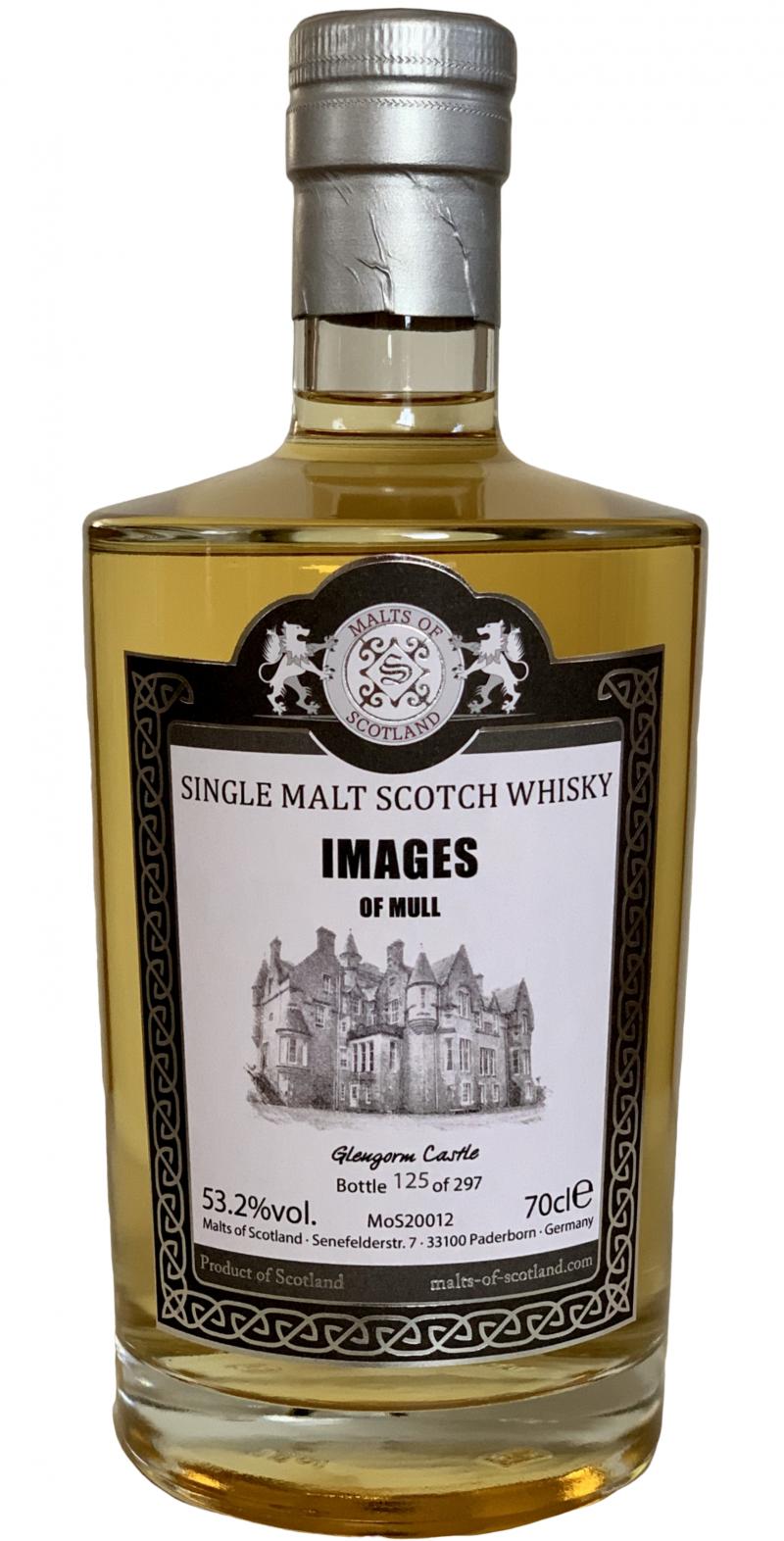
Generally, the ‘Images of …’ series leaves something to be guessed. Mostly whisky distillery it is, but also, sometimes which typo they’re going to make this time.
In the case of ‘Images of Mull’, the guessing is down to whether or not the whisky is going to be peated. There’s just one distillery with two different brands, after all.
The distillery is, of course, Tobermory, with it also being one of the brands. The other brand is the peated version of the whisky from Tobermory called Ledaig.
Image from Whiskybase
Ledaig has become an interesting brand over the last years. About a decade ago there were some old, good ones, and a lot of very young, but pretty bad ones. Let’s just keep it at ‘I wasn’t a fan of the brand’.
Let’s see what this one is about then, and whether or not that peaty tang is present here!
Sniff: It starts with some grassy notes, and briny smoke too. Quite some salinity. Soot, hay and marram grass. Very coastal indeed. After a few minutes there are some scents of sandy beaches and white grapes too.
Sip: The palate is pretty intense. Lots of coastal notes with briny, salt and marram grass. The peat is rather campfire-y with hints of oak, coconut husks. Red chilis and white pepper for a bit of heat. White grapes again, too.
Swallow: The finish is very long, which is a very nice thing with these hints of peat and brine. Very coastal again, and the clean notes of grass are there too. Hay, grass, beaches.
It’s very typical dram of Ledaig. I always find it interesting how it’s such a lowlands style whisky, with a massive dollop of peat on top of it. In that way, it’s reminiscent of Ardbeg.
What is also good is that there are this kind of whiskies available at very reasonable prices. In this case, a bottle will set you back some € 60, or less if you’re in Belgium or Germany.
I should post this tomorrow, since it would be ten years to the day since I got myself these three little gins. But I won’t.
So, ALMOST a decade ago I was vacationing in the USA and we decided to visit St. George Spirits in Alameda. Across from San Francisco with a rather kick-ass view of that. It was a bit of a surprise to find myself steering the car into a navy base, and it got me to double-check, and triple-check the address before continuing on.
We did the tour there and I blogged about that a little less than a decade ago, here.
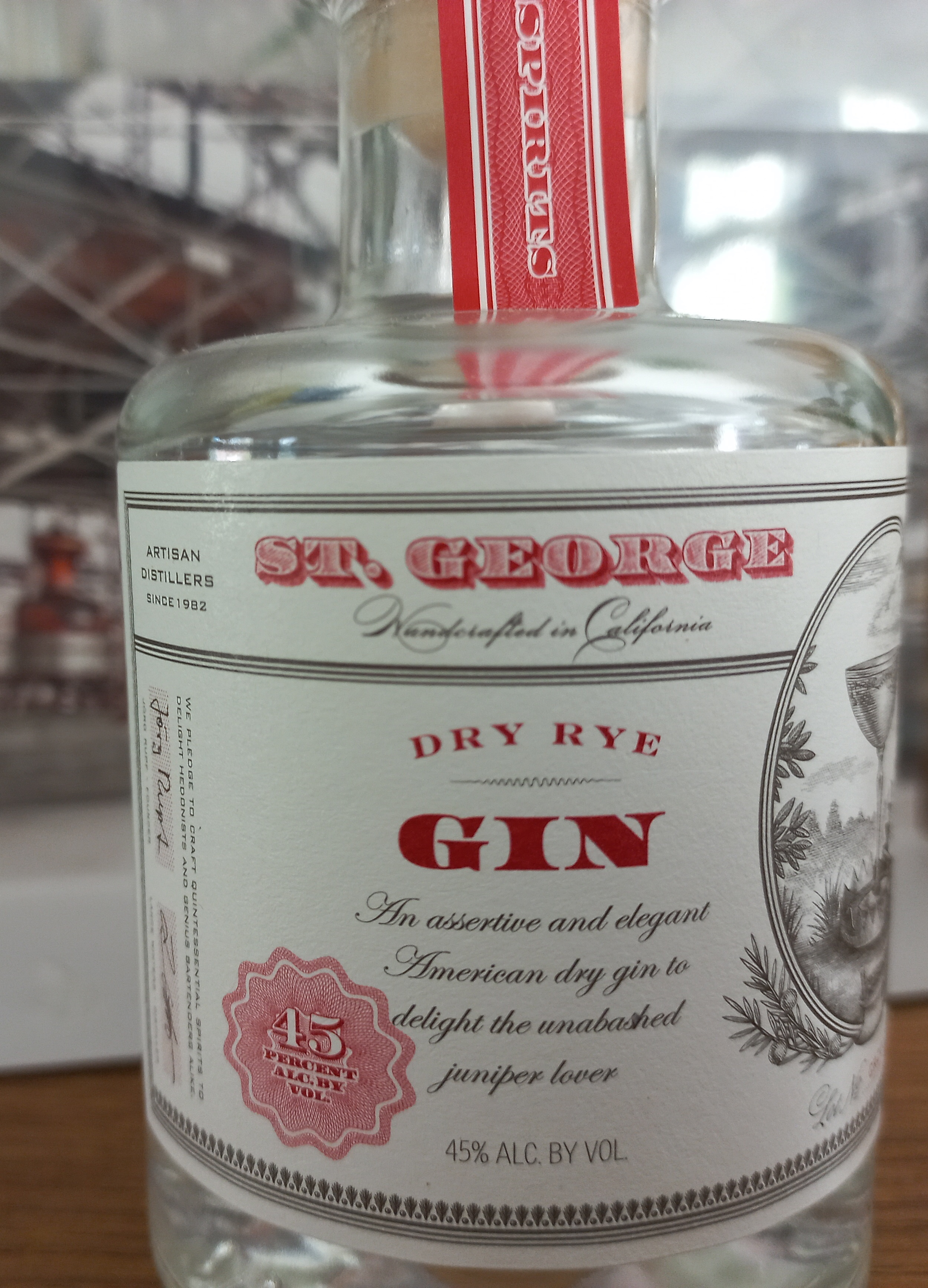
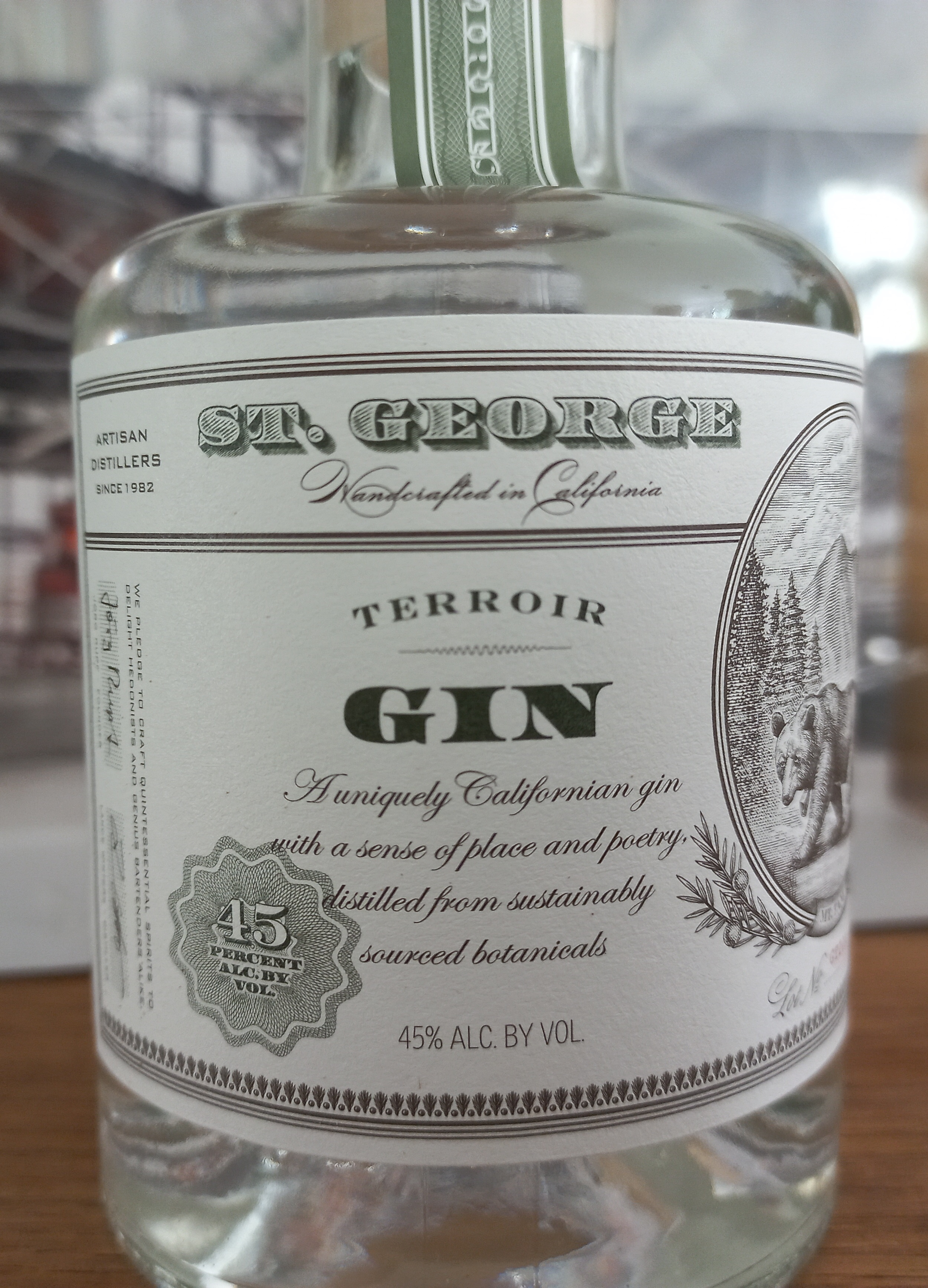
But, after all was said and done I did buy the three-pack of gins containing the Botanivore, Terroir and Dry Rye gins. 20cl each. For no real reason I just put that in one of the booze cupboards in my wee home office.
But, again without any proper reason, I decided it was time to start drinking them. I got myself some nice tonic (Fentiman’s) and dove in a little while ago. And yesterday, I did a second round without tonic to taste and assess the gins themselves.
Botanivore Gin
With tonic: I did add a slice of lemon, and strangely, that’s what I got mostly. Lime and the tonic. There’s a lot of citrus scents from the gin, and a minor note of juniper.
The palate is quite dry with the botanicals sort-of cancelling each other out. It’s fairly generic, all in all.
Without tonic: Much as expected (and apparently I thought similar thoughts ten years ago) it focuses on rather generic gin notes. Some citrus, juniper, lime and lemon.
The palate is surprisingly dry, which I didn’t get before, but there’s also a sharpness and a strange creaminess. Quite some pepper and a bitter lemon note.
Dry Rye Gin
With tonic: This is bone dry with heaps of rye grain. Almost like a whisky spirit. Some mint like spiciness, orange and juniper. Very spirity.
The whisky spirit continues on the palate, bone dry with lots of rye spices like orange, mint and a pithy bitterness too.
Without tonic: Lots of rye spices in orange, mint and nutmeg. Orange seeds and some ginger.
Slightly fatty, which isn’t too uncommon for a rye spirit. So, once more, it’s very much like a rye whisky spirit. Orange, grain, citrus pith and bitterness.
Terroir Gin
With tonic: The focus on the botanicals is very strong. Pine and spices, leafy herbs. Rather foresty, and it leaves no room for the slice of lime.
The palate continues with the forest notes. Almost like the air in a redwood forest after some rain.
Without tonic: The pine notes are incredible, and incredibly gorgeous. There’s lime and juniper too, with bay leaf and other herbs.
Like the Dry Rye gin, there’s a fattiness to it. More peppery than on the nose, black and white pepper, bay leaf and lots of pine.
Strangely, on the finish the lime note turns a little bit to the ‘detergent’ side, which takes it down a notch. A shame.
If I had to rank them, and I do because that’s what I do here, I’d put the Botanivore last. It’s a solid gin, with quite a high level of quality, but it just doesn’t stand out as much as the others. It’s a bit too generic.
The Terroir and Dry Rye are both stunning gins, with a very different audience, I think.
My sister mentioned that the Dry Rye one smelled of manure, and even though it surprised me, I think she’s right. That is NOT a bad thing if you’re into whisky. In a weird way, it even reminds me of Brora, with it’s massive notes of sheep farm.
I think I put both of these on the same level of quality, although the Terroir Gin is more typical of a gin, and I guess that makes it more accessible by people who like gin, instead of folks who prefer whisky.
Gorgeous stuff, these last two. A shame all bottles are empty now.
It’s literally been years since I tried any Canadian whisky.
Image from Whiskybase
It’s been since early spring this year since I had any Canadian whisky. Part of the ‘weird whisky tasting’ I hosted about half a year ago, there was an older bottling of Crown Royal that was supposed to be from the seventies, but wasn’t. It was from the previous distillery, called Waterloo Distillery, so it was quite old.
This one came by in a bottle-share and I found it interesting enough to buy a sample, even though the reviews aren’t very good. Generally, with Whiskybase being really big in Europe, but not so much in America and Asia (yet). This results in American whisky scoring rather low on average. It is getting more accurate with the slowly accumulating votes and ratings, but non-Scottish, non-Indian and non-Japanese whisky has some catching up to do.
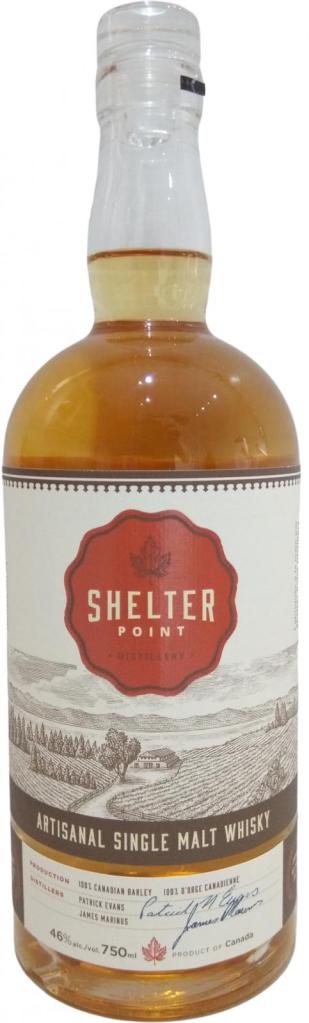
Shelter Point distillery is rather young with it only having been established in 2011. They state on their website that they’re using similar methods of crafting their whisky as they do in Scotland. A lot of other information on the website is about the surrounding area of the distillery, and the way they farm the land. There’s not a lot to go by in regards to distillation process.
I guess we have to let the whisky do the talking then!
Sniff: Bread-like and rather sweet. Brioche, I guess that is. There’s a little bit of funk, like hessian and leather, old bread. A gin-like vegetal note as well. A hint of banana and dried apple in the background.
Sip: The palate is quite sharp, in a young-ish way. A lot sharper than you would expect from a 46% whisky. It’s very typical of a Scottish style whisky, with hints of oak, barley in a bready way. There’s some fruitiness in the way of dried apples and the sweetness of a ripe banana. This style of sweetness gives away some youth, or at least a young quality.
Swallow: The finish brings that sweetness again, but it is more like a wine cask now. Still apples and banana. The finish is rather short, with a note of iron remaining.
Very Scottish in style, but its youth is quite different than a ‘normal’ single malt. So there is some difference in style to Scottish single malt, but there are a lot of similarities too.
With me being not the biggest fan of Canadian whisky (understatement), I guess it’s good, in a way, that they don’t go the typical route. On the other hand, this might make them fall between the cracks. It’s not overly interesting for a drinker of Scottish whisky, nor for fans of Canadian whisky.
Mannochmore is, to me at least, one of those distilleries that pops up with something really good every decade or so, and then is quickly forgotten about.
Just before deleting the second paragraph I decided to look down the annals of the Usquebaugh Society’s Blind Tasting Competition because I was writing about being blown away by a Mannochmore bottled by the SMWS, which was part of that competition. Luckily, I did, because it turned out to be a Balmenach. An equally overlooked distillery, but still not quite the same…
Image from Whiskybase
Anyway, recently Mannochmore popped up in ‘The Ghost Piper of Clanyard Bay‘, by Fable. And now I found a sample of this one near the front of my sample shelf. Being near the front means it’s been a recent addition, but I scarcely remember from whom I got the sample. As I never do.
Sniff: Very malt driven, with lots of barley and porridge. Some orchard fruits like apples and white grapes. Baked apples too, but apart from that it’s a bit flat.
Sip: A veritable mountain of barley must have gone into this whisky, since there’s almost nothing else to be discovered. Grain, grain, grain. It’d be an interesting style for the Terroir things that Waterford, and to a lesser extent Springbank, Kilchoman and Bruichladdich are doing. Some apples, white grapes, oatmeal cakes and a slightly creamy note.
Swallow: The finish is a little bit more rich than the palate was. It’s more a pastry note, than a raw grain note here. Barley and oatmeal still.
Well, I’m not entirely sure what to say about it apart from the fact that there’s actually just one note to be found, with some things that are found by association. It’s a malt whisky, that’s for sure, but other than that I find this one very, very boring. Not bad, just very boring.
I always thing it’s funny when a brand like ‘Malts of Scotland’ releases a whisky that’s neither a malt, nor from Scotland. Of course, with all the Irish stuff and American releases that are coming out from bottlers, this happens quite a bit more than it used to, but I still think it’s funny.
Image from Whiskybase
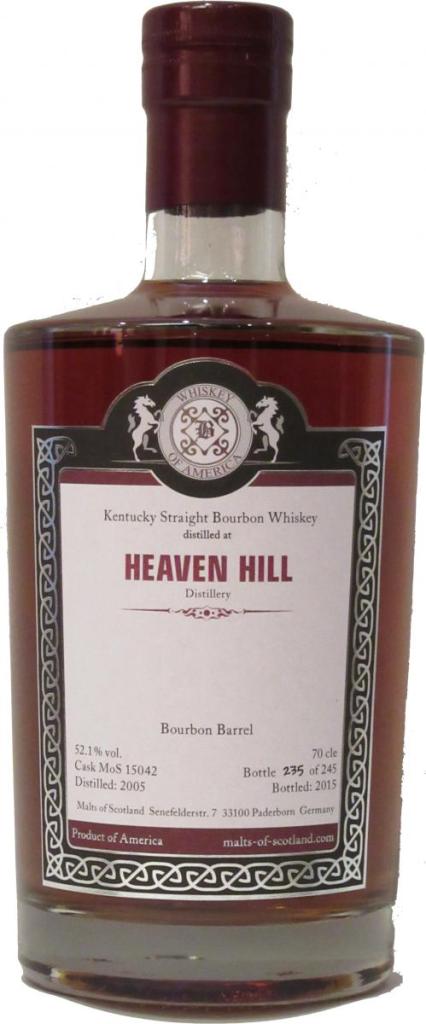
This Heaven Hill comes from German bottler ‘Malts of Scotland’, and surprisingly, it’s from a regular bourbon barrel. I’ve not done a full count, but Malts of Scotland released quite a few Heaven Hills from sherry casks, port pipes and even ex-peated-whisky casks.
Some of those were pretty good, but especially the fortified wine casks were far too sweet in my opinion. That shouldn’t be too surprising since bourbon tends to be on the sweet side anyway, and then you add more sweetness to it…
Anyway, this one then. A regular one. Let’s see how it fairs.
Sniff: Really solid bourbon, with lots of corn, sweetness and rich oak. It’s light with a hint of menthol. Cherries and blackberries.
Sip: The palate has a lot of osky dryness, with some sweetness to back it up. Cherries and blackberries again. Cigars and autumn leaves. Proper bourbon.
Swallow: The finish gentle, with some sweetness and warmth lingering. Some oak towards the end.
I can see this working well on a summer night, on the porch, in a rocking chair. ‘Uncle Jesse’ style. Not that I have a porch, or that summer was particularly sunny this year, but still.
87/100
I’m chucking this one in as a bonus, since I only had a sample and I can’t find a picture of the bottle anywhere.
Heaven Hill 5yo, bottled in 2000, 63% – Cadenhead
Sniff: Very fiery bourbon, no pun intended. Lots of chili heat with lots of sweet corn and typical American white oak. Quite light, with some rather crisp spices. Sage and basil.
Sip: Sharp, but in such a way that it takes a few seconds before you realize it. Very dry because of the high ABV, with lots of weight and richness. Cola, corn syrup, sage. A very interesting way and a flavor combination that makes me want to eat barbecue. After about 20 to 30 seconds the heat becomes rather unbearable.
Swallow: And then we continue straight on towards the rich finish, with more of the flavors from before. Cola, barbecue, marinade, corn syrup, brown sugar, maple syrup. A lot of things that work very well in a bourbon, all combined.
Interestingly the massive sharpness takes it down a notch, but enough notches were earned that it still is quite ‘up there’. The hints of cola and barbecue were very nice! It’s this one, on Whiskybase, but it doesn’t have a picture…
Yesterday, Michiel Wigman’s newest bottles came in. I didn’t buy this one, but I did get a sample of it. I’m simply not one to spend this kind of money on a single bottle. I have never done so, and so far I’m fairly convinced I neverwill.
Although, I was convinced that € 180 for a bottle of Port Ellen or Brora was way more than the booze was worth too, and I’d never spend that much on any bottle. We all can guess how that went.
Anyway, contrary to the ‘They Inspiried’ series for the other whiskies, and the ‘Precious Moments’ series for non-whisky booze (Cognac and Rum so far), this one is called ‘Prometheus’ and I’ve forgotten to ask Michiel why that is.
But, enough rambling. There whisky to be tasted, and that’s what we’re doing here.
Image from Whiskybase
Sniff: It’s an older whisky, that’s for sure. It’s quiet and gentle, not even packing a punch that I would expect for a 53.4% ABV bottle. There are notes of hay and tall grass. Some coastal salinity and a hint of resin. Quite some oak, green and pulpy. To my own surprise I also get a hint of peach, and a tiny bitter note of peach stone. Some seaweed later on.
Sip: Again, the notes of peach and peach stones are here. It’s very consistent with the nose with hay, seaweed, resin. Some salinity and lichen, moss, basalt maybe. Something old, weathered and green.
Swallow: And once more, the consistency between nose, palate and finish is incredible. I do get all the notes from earlier, but there’s a hint of vanilla added to the flavors.
This is a whisky with two different faces, not unlike yesterday’s undisclosed highland whisky. On one hand, it’s a gentle and time-mellowed Islay whisky. It’s rather typical of the distillery and of the island if you disregard the smoke that most distilleries are famed for. Lots of grassy notes, with some salinity.
On the other hand, it does feel a bit closed. I’m not sure if I had to coax out the flavors a bit more (not sure how to do that, by the way), but apart from the grassy and slightly salty notes, there’s not too much going on.
So, much like yesterday’s review, it’s a very good whisky but not entirely in my wheelhouse.
A few years ago when a whisky was from an undisclosed distillery, that generally meant the bottle was a bit cheaper than its named counterparts. That is far less true now, since people have come to realize that the whisky is just as good, if not better than in more regular releases.
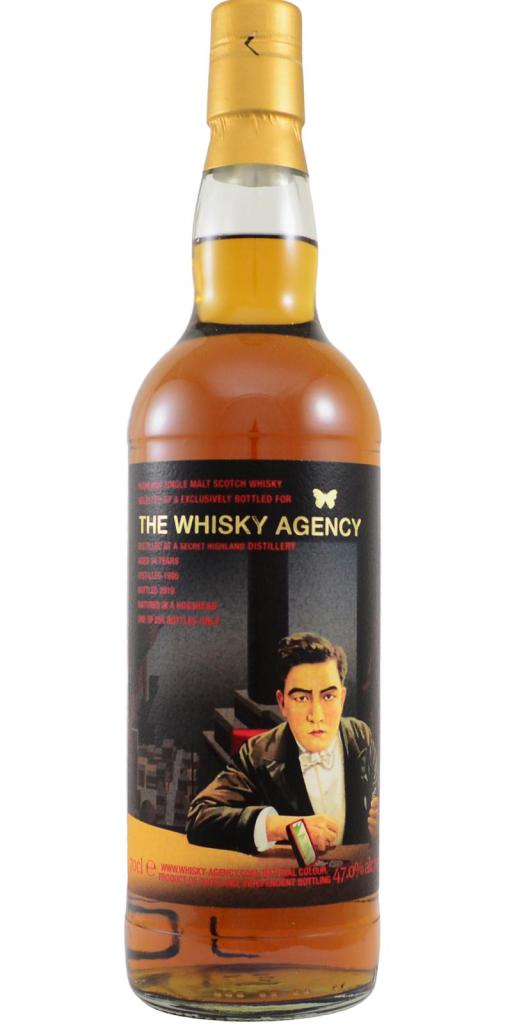
I tried this blind, a little while ago. On top of that I have to admit that I don’t recall where I got the sample from. But, an older bottling like this should be good without knowing its provenance…
Image from Whiskybase
Sniff: On the nose it starts off with wax and oak. Some pine resin too, with old apple and cake batter. Apple pie, cinnamon and some other spices. It’s rather classical, and quite mature too.
Sip: The palate is a bit more intense than I would expect from a 47% dram, but not sharp. White pepper and fresh oak. Some waxiness to follow, with the resin and the apple pie. Baking spices too.
Swallow: The finish is more wood driven than the palate was, but I also get some red fruits. Quite long with lots of oak and a note of beeswax.
This one is a little bit of a conundrum. As in, it’s a very good whisky with lots of lovely flavors. However, it’s not as complex as you would expect such an old dram to be. The flavors, while nice and mature, old even, are good but I do expect this to be a little bit more interesting.
The ‘oldness’ of a whisky should not just be determined by the flavors that tell its age, but also be accompanied by complexity and depth, and that’s where his one lacks a little bit.
Having said that, it still is very good. Very drinkable. Just nog € 400+ good by quite some margin.
With my order going horribly wrong last year, for Cadenhead and Springbank’s Online Tasting Week, I decided to skip this one, especially since Brexit had already happened too.
Of course, most whiskies were probably awesome and very reasonably priced, because that is what Cadenhead does. Most of them I’ve already forgotten after skimming the email about it though. Except this one.
Image from Whiskybase
This blended malt is called Anomaly, because it’s green. And by green it’s not a light bourbon cask that looks a tad green in the right light, but actual, slightly muddy and mossy green. Like ‘water from a fishtank in some post-apocalyptic movie with a decaying goldfish in it’-green.
Initially it sold for some £ 75 and quickly ramped up to € 175 on the secondary market, and even that bottle has sold by now. I doubted about buying it, until I found a sample available online and bought that instead.
Sniff: It’s very woody with ‘green’ oak. The kind that leaves your hands green if you would touch the trunk. Pickled walnuts, somehow, with a slightly moldy hint of vegetables. Later on I get a scent of those big green plums.
Sip: The palate packs a bit more punch that the 49% ABV suggested. A sharp oakiness with a touch of vinegar. Those pickled walnuts again. Walnut shells too, lots of wood, green apples and green plums.
Swallow: The finish is somehow very old fashioned. Very oak driven again with hints of green malt on top of that. Quite a bit more barley notes than before, with some apples and a tiny bitter note.
So, contrary to what you might think after reading the tasting notes, this is actually a very good whisky. It’s something quite different than what you’d normally encounter, but it sure is tasty. Lots of oak and other kinds of green notes, plums, apples, moss, unmalted barley, and so on. I very much enjoyed it, to be honest.
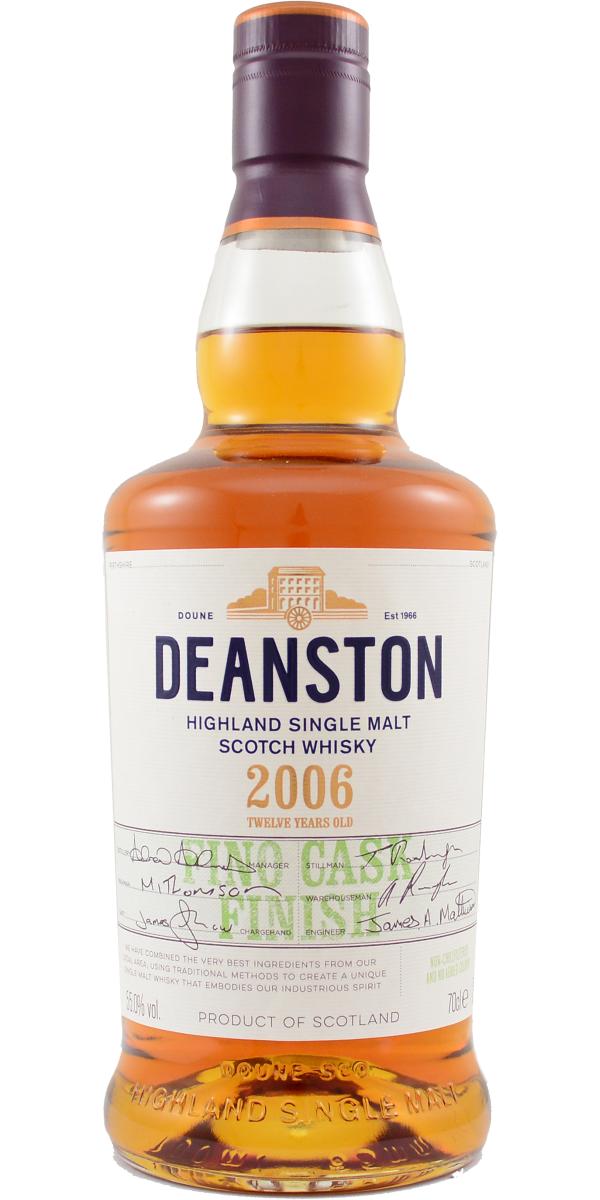
Everytime when a whisky matured, or in this case finished, in a Fino Sherry cask pops up, my interest peaks. Apart from actually liking Fino Sherry, I find it imparts great flavors on whiskies through the reuse of the oak.
It’s more dry and spicy than most other Sherry casks, and sometimes even brings a little bitter note.
Image from Whiskybase
On the other hand, Deanston is not a distillery I enormously enjoy. I often find their whiskies a little bland, or so heavily cask influenced that the pendulum swing the other way entirely. But, if this was a nice bourbon cask before it was transferred into the Fino cask, it should be good. I was game for a sample.
Sniff: A slight salty dryness with grape must. Quite some oak, a grape seed bitter note too. Very drifferent from the more common fruity sherry casks. Some baking spices and sawdust.
Sip: The palate brings more spiciness, the baking spices and the sawdust. Some bitter fruits, with plum stones, almonds, date stones. Again, it’s very dry.
Swallow: The finish is very similar to the palate. Some fruit, lots of spices, a bit of bitterness. Very dry and that touch of salinity from the nose makes a reappearance too.
In this case, I think it’s very nice that Deanston isn’t too flavorful by itself. Generally I want the spirit to shine through as well as the cask, but the Fino does the job very well on its own. I love the dryness, even though most spices and fruits stay a little nondescript. A very drinkable and good Deanston.









 Malt Fascination